Turning 60 does not mean you have to give up on strong, stable tooth replacement. You can still choose dental implants, but your body may heal a bit slower and your bone density may need closer review.
That does not stop many seniors and older adults from getting great results.
For seniors, healing may take slightly longer and bone density matters more, but your overall health plays a bigger role than your age in implant success and candidacy.
A careful consultation helps your dentist check your jawbone, review medical conditions, and decide if you need extra support like bone grafting.
When you understand what changes with age, you can plan ahead and protect your results. This guide explains what to expect with healing, how bone loss affects dental implants after 60, and how to know if you qualify.
Key Takeaways
- Age alone does not prevent you from getting dental implants.
- Bone health and medical conditions affect healing more than your birth date.
- A detailed consultation helps you decide if implants are the right choice.
Table of Content
- What Makes Dental Implants Unique for Seniors
- The Healing Process: What Changes After 60
- Bone Density, Bone Loss, and Implant Success
- Candidacy: What Determines Eligibility Over 60
- Post-Procedure Care and Maximizing Implant Longevity
- Costs, Alternatives, and Making an Informed Choice
- Frequently Asked Questions
What Makes Dental Implants Unique for Seniors
After 60, your bone density, healing speed, and medical history shape how your implant dentist plans treatment. The right implant type and design matter more than your age alone.
Age and Overall Health Factors
Your calendar age does not decide if you qualify for dental implants for seniors. Your jawbone density, gum health, and medical conditions matter more.
As you age, bone can thin, especially after tooth loss. Lower jawbone density can affect how well an artificial tooth root bonds with bone.
Your implant dentist will check bone width and strength with imaging before placing implants for seniors.
Chronic conditions also play a role. Diabetes, heart disease, and certain medications can slow healing. Smoking can reduce blood flow and raise the risk of implant failure.
Still, many people over 60 heal well and keep implants for decades. Studies show that age alone does not prevent success, and implants can work just as well after 60.
Benefits Beyond Tooth Replacement
Dental implants do more than fill a gap. They act as artificial tooth roots, which help keep your jawbone active.
When you lose a tooth, the bone in that area can shrink. An implant stimulates the bone during chewing, which helps slow bone loss. Traditional dentures rest on top of the gums and do not provide this support.
Implants also improve stability. An implant-supported bridge or implant-supported dentures lock into place. You can chew firmer foods without worrying about slipping.
Many older adults choose full mouth implants because they feel closer to natural teeth. You can speak clearly and avoid sore spots that often come with traditional dentures.
Types of Dental Implants Used in Older Adults
Most implants for seniors are endosteal implants. Your dentist places these directly into the jawbone. They work well when you have enough bone height and width.
If bone is limited, your provider may discuss other options. Some clinics use specialized solutions for severe upper jaw bone loss, such as longer implants anchored in stronger bone areas.
In certain cases, advanced options like zygomatic implants help avoid long bone graft healing times.
Subperiosteal implants are less common today but may be considered when bone height is very low and other methods are not suitable.
Your implant dentist will match the implant type to your bone quality, health status, and whether you need a single tooth, an implant-supported bridge, or full mouth implants.
The Healing Process: What Changes After 60
Healing after dental implant surgery often takes a bit longer after 60. Your bone, blood flow, and medical history all play a role in how smoothly recovery moves forward.
Healing Timeline and Expectations
Your healing timeline may stretch out compared to someone in their 30s or 40s. Most older adults still heal well, but the process can move at a slower pace.
In the first 3–7 days, you can expect swelling and mild discomfort. Your oral surgeon will guide you on pain management and may suggest over-the-counter medication or a short prescription.
The deeper healing happens during osseointegration, when your jawbone bonds to the implant. This stage often takes 3 to 6 months.
After 60, bone cells rebuild more slowly, which can extend healing time by several weeks.
If your dentist uses local anesthesia, recovery from the anesthesia itself does not usually change with age. However, your provider may adjust medications based on your health history.
Factors Influencing Recovery
Your overall health matters more than your age alone. Certain medical conditions can slow healing after implant surgery.
Common factors include:
- Diabetes
- Osteoporosis
- Heart disease
- Smoking history
- Medications that affect bone or immune response
Bone density plays a key role in candidacy and recovery. Lower density does not rule you out, but it may mean you need a bone graft or longer healing before the final crown placement.
Good nutrition, stable blood sugar, and careful home care support faster healing. Follow your oral surgeon’s instructions closely to reduce infection risk.
Common Post-Surgery Symptoms
Most symptoms after dental implant surgery stay mild and manageable. You may notice:
- Swelling around the gums or jaw
- Minor bleeding in the first 24 hours
- Bruising near the implant site
- Tenderness when chewing
These symptoms usually improve within a week. Healing in older adults works the same way as in younger patients, but tissue repair may take longer.
Many providers explain how implant healing in older adults depends on circulation, bone response, and health conditions.
Call your dentist if you notice severe pain, persistent swelling, fever, or pus. Early treatment protects osseointegration and keeps your healing on track.
Bone Density, Bone Loss, and Implant Success
Your jawbone density plays a direct role in how well a dental implant bonds and stays stable.
As you age, natural bone resorption and conditions like osteoporosis can change how your dentist plans treatment and protects long-term bone preservation.

Jawbone Density Assessment
Your dentist checks jawbone density before placing an implant. They often use 3D imaging, such as a CBCT scan, to measure bone height, width, and thickness.
Lower bone density can reduce early implant stability. Research on age-related bone density variations and dental implants shows that older adults may have lower insertion torque and stability values at placement.
This does not mean implants will fail, but it can affect how your provider times the final crown.
If you have osteoporosis, your dentist will review your medical history and medications.
Evidence on the impact of osteoporosis on dental implant survival shows that implants can still succeed, though careful monitoring helps protect the surrounding bone.
Your provider may also choose specific systems, such as Straumann implants or narrow-diameter (NDI) implants, based on your bone width and density.
The goal is to match the implant design to your available bone for better long-term support.
Bone Grafting and Alternative Solutions
If your jawbone lacks thickness or height, your dentist may suggest bone grafting. This procedure adds bone material to strengthen the site before implant placement.
Bone grafting supports bone preservation and improves implant stability. Healing can take several months, especially after long-term tooth loss.
When grafting is not ideal, your dentist may recommend alternatives:
- All-on-4 or all-on-x full arch implants, which angle implants to use stronger areas of bone
- Zygomatic implants, which anchor into the cheekbone for severe upper jaw bone loss
- NDI implants, which fit into narrower ridges
Studies on the prognosis of dental implants in patients with low bone density report that implants can succeed with proper planning and technique. Your provider adjusts the approach based on your bone condition, not just your age.
Impact of Bone Resorption in Seniors
After you lose a tooth, your body begins bone resorption in that area. The jaw shrinks because it no longer receives stimulation from chewing.
Bone loss tends to increase over time. Research on bone loss-related factors in dental implants explains that bone changes around implants depend on surgical technique, implant type, and oral hygiene.
If you wait many years before replacing missing teeth, you may face reduced jawbone density. This can limit standard implant placement and require grafting or full arch solutions.
You can reduce further bone loss by replacing teeth early and keeping implants clean. Good home care and regular dental visits protect the bone around full arch implants, single implants, and other restorations.
Candidacy: What Determines Eligibility Over 60
Your age does not decide if you can get implants. Your bone strength, gum health, and medical stability matter more. A detailed implant consultation and careful testing guide the decision.
Evaluating Overall and Oral Health
You start with a full implant consultation. Your dental surgeon reviews your medical history and checks your mouth for signs of gum disease or untreated cavities.
Active periodontitis raises the risk of implant failure. You must treat infection and control inflammation before moving forward. Healthy gums create a stable base for long-term implant success.
A bone density assessment also plays a key role. Your surgeon may use 3D imaging to measure bone height and thickness. Implants need enough solid bone to fuse properly during healing.
Your provider will also review your blood sugar if you have diabetes. Stable glucose levels support healing and improve the dental implant success rate. Poor control can slow recovery and increase infection risk.
Role of Medications and Underlying Conditions
Certain medications affect treatment planning. If you take bisphosphonates for osteoporosis, your surgeon will review how long you have used them. Long-term use can affect bone healing in some cases.
If you take blood thinners, your surgeon and physician may adjust your dose before the implant procedure. This step reduces bleeding risk while keeping you medically safe.
Chronic conditions also matter. Uncontrolled diabetes, autoimmune disorders, or heavy smoking can lower implant success rates. Stable, well-managed conditions usually allow safe treatment.
You should share every medication and supplement during your consultation. Clear communication helps your dental surgeon lower the risk of implant failure and protect your overall health.
Special Considerations for Long-Term Implant Success
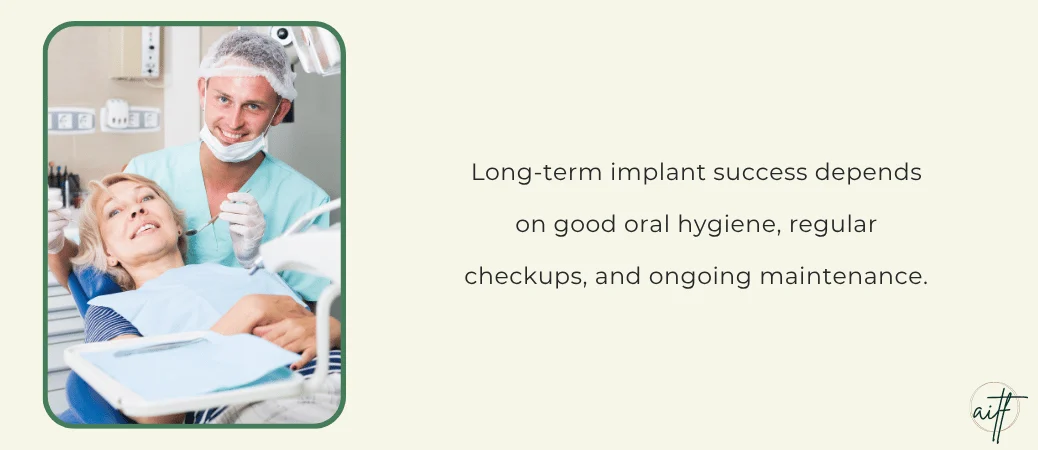
Long-term success depends on dental implant aftercare and regular follow-up visits. You must brush, floss, and attend professional cleanings to protect the implant and surrounding gum tissue.
Bone naturally changes with age. Regular exams help your provider monitor bone levels and detect early problems. Early action protects your implant success rate over time.
Your bite also matters. Uneven pressure can strain the implant. Your surgeon may adjust your crown to spread forces evenly and reduce stress.
Careful treatment planning, precise placement, and ongoing maintenance all work together. When you stay involved in your care, you support strong healing and lasting results.
Post-Procedure Care and Maximizing Implant Longevity
Daily cleaning, routine checkups, and smart lifestyle choices protect your implant and the bone around it. Simple habits can lower your risk of infection and help your artificial teeth stay stable for many years.
Oral Hygiene Practices for Seniors
You need to keep the area around your implant very clean, especially in the first few months. Plaque can build up around artificial teeth just like natural teeth.
Brush twice daily with a soft toothbrush and non-abrasive toothpaste. Use gentle pressure along the gumline to avoid irritation. If your hands feel stiff from arthritis, try an electric toothbrush with a larger handle.
Clean between teeth every day. Many seniors find a water flosser easier to use than string floss. Interdental brushes also work well around implant posts and under bridges.
Your dental team may suggest special tools as part of supportive care and maintenance of dental implants. These visits often include professional cleaning to remove hardened plaque that brushing cannot reach.
Good oral hygiene lowers your risk of gum inflammation and bone loss around the implant. It also supports long-term oral health and helps protect your chewing efficiency and speech clarity.
Importance of Regular Dental Check-Ups
After implant surgery, you should attend all scheduled dental exams and check-ups. These visits allow your dentist to track healing and confirm that the implant bonds well with your jawbone.
Regular follow-up visits also support proper after care following implant treatment. Your dentist checks for early signs of gum infection, loose parts, or bite problems.
Most patients need check-ups every three to six months during the first year. After that, your dentist may adjust the schedule based on your health, bone density, and home care habits.
At each visit, your provider may take X-rays, measure gum depth, and clean around the implant. Early care helps prevent small issues from turning into implant failure.
Nutrition and Lifestyle Tips for Healing
Your body needs steady nutrition to heal after implant surgery. Focus on soft foods at first, such as yogurt, eggs, cooked vegetables, and fish.
As healing improves, add foods rich in protein and calcium. These nutrients support bone repair and strength. Drink enough water each day to keep your mouth moist and reduce dry mouth, which can raise plaque levels.
Avoid smoking and limit alcohol. Tobacco slows blood flow and can delay healing.
If you feel discomfort, follow your dentist’s instructions for pain management. Take medication only as directed, and avoid chewing on the implant side until your dentist says it is safe.
Healthy habits protect the bone around your implant and help you keep strong, stable artificial teeth for years.
Costs, Alternatives, and Making an Informed Choice
You need clear numbers, simple comparisons, and financial options before you decide. Cost, comfort, and long‑term value all matter when you choose between implants, dentures, or other tooth replacement options.
Cost of Dental Implants for Seniors
The cost of dental implants depends on how many teeth you replace and the type of restoration you choose.
A single implant, including the post, abutment, and crown, often costs between $3,000 and $6,000 at a private practice, based on national estimates shared by senior implant dentistry cost data. Dental schools may charge less.
If you need full mouth dental implants, the price can reach tens of thousands of dollars. Costs rise if you need bone grafting or extractions first.
Healing time also affects cost. You may need several visits over a few months before your dentist places the final crown.
While implants cost more upfront than dentures, they often last longer. A long-term study discussed in dental implants for older adults reports a 97% success rate at 10 years, which supports their long-term value.
Comparing Dentures and Implant Options
You have several tooth replacement options, and each works in a different way.
Traditional dentures for seniors rest on your gums. They cost less at first, but they may slip when you eat or speak. Over time, your jawbone can shrink, which may change how they fit.
Implant-supported dentures attach to two or more implants in your jaw. They snap into place and feel more stable than regular dentures.
Many people choose overdentures when they want better support without the cost of full mouth dental implants.
Here is a simple comparison:
| Option | Stability | Bone Support | Upfront Cost |
| Dentures | Lower | No | Lower |
| Overdentures | Moderate to high | Yes | Moderate |
| Full implants | High | Yes | High |
Implants help protect your jawbone because they act like tooth roots. Dentures do not provide that same support.
Insurance and Financing Considerations
Insurance coverage for dental implants can vary, particularly when treatment also requires extractions, bone grafting, or a full-arch restoration.
Patients over 60 should request a detailed cost estimate and confirm which parts of the procedure may be covered by their plan.
All in the Family Dental works with most major insurance providers and helps patients maximize their available benefits. For costs not covered by insurance, the practice offers financing through CareCredit, Sunbit,
Proceed Finance, and Cherry, including short-term promotional plans and extended monthly payment options. Before choosing a plan, review the interest rate, repayment period, and total cost to find an option that fits your retirement income or household budget.
Frequently Asked Questions
After age 60, your health, bone quality, and daily habits matter more than your age alone. Clear exams, careful planning, and good home care help improve healing and long‑term success.
Am I too old to get dental implants, and how do I know if I’m a good candidate?
You are not too old just because you passed 60. There is no upper age limit for implants as long as you are in reasonable health and have enough bone.
Studies show high success rates in older adults, often above 95% in patients over 65, similar to younger people.
Your dentist will review your medical history, check your gums, and take X‑rays or a 3D scan. Good candidates usually have healthy gums, controlled medical conditions, and enough jawbone to hold the implant.
How long does healing usually take for dental implants, and does it tend to be slower as we get older?
Healing happens in stages. Your gums usually close in 1 to 2 weeks, but the bone needs about 3 to 6 months to bond to the implant.
As you age, bone cells rebuild more slowly. That can add a few extra weeks to the process, but age alone does not stop healing. Your overall health plays a bigger role than your birth date.
What role does bone density play in implant success, and how can my dentist check if I have enough bone?
Bone density affects how well the implant fuses with your jaw. Strong, thick bone gives the implant a stable base.
After 60, you may lose some bone, especially if you have been missing teeth for years. Bone loss does not always rule you out, but it may change the treatment plan.
Your dentist will use digital X‑rays or a cone beam CT scan to measure bone height and width. This helps them see if the bone can support the implant or if you need added support first.
If I don’t have enough jawbone, what options do I have (like bone grafting or sinus lifts)?
If your jawbone is too thin or soft, your dentist may suggest bone grafting. A graft adds bone material to build up the area.
You will need time for the graft to heal before placing the implant. This can add several months to your treatment, but it can improve stability.
If you need implants in your upper back jaw, a sinus lift may help. This procedure raises the sinus floor and adds bone so the implant has enough support.
What health conditions or medications could affect implant healing and success?
Diabetes can slow healing if your blood sugar is not well controlled. Keeping your levels stable lowers your risk of infection and implant problems.
Osteoporosis affects bone strength. Some medications for osteoporosis, such as certain bisphosphonates, may change how your jaw heals, so your dentist and doctor should review them together.
Blood thinners, steroids, and drugs that weaken the immune system can also affect healing. Share a full list of your medications so your care team can plan safely.
What can I do before and after surgery to help my implants heal well and last a long time?
Before surgery, manage your medical conditions and stop smoking if you can. Smoking reduces blood flow and raises the risk of implant failure.
After surgery, follow your dentist’s instructions closely. Eat soft foods, keep the area clean, and avoid heavy pressure on the implant site.
Brush twice a day with a soft toothbrush and use any prescribed rinse. Keep all follow‑up visits so your dentist can check healing and confirm the implant is stable before placing the final crown.