Losing teeth can affect how you eat, speak, and feel about your smile. Many older adults face this challenge and wonder if dental implants are a good option at their age.
Dental implants for seniors offer a permanent solution for tooth replacement, with success rates of 97% at 10 years and 75% at 20 years, making them more durable than dentures or bridges.
You might think your age makes you a poor candidate for dental implants, but research shows otherwise. A study comparing patients over 65 with younger groups found only a 2% failure rate across both age groups over 10 years.
Dental implants for older adults have become increasingly popular, with rates rising from 1.3% to 8.4% among people over 50 between 1999 and 2020.
Understanding the benefits, risks, and costs helps you make an informed decision about whether dental implants are right for you.
This guide covers everything you need to know about getting dental implants as a senior, from the procedure itself to long-term care and what to expect during recovery.
Key Takeaways
- Dental implants provide a permanent tooth replacement option for seniors with high success rates even in older age groups
- The procedure involves surgical placement of titanium posts in your jawbone with healing taking several months and costs ranging up to $6,000 per tooth
- Regular dental checkups and proper oral hygiene are essential for maintaining your implants and preventing complications over time
Table of Content
- Understanding Dental Implants for Seniors
- Benefits of Dental Implants for Seniors
- Risks and Considerations
- Dental Implant Procedure in the Senior Population
- Cost and Insurance Considerations
- Long-Term Outcomes and Care After Dental Implants
- Frequently Asked Questions
Understanding Dental Implants for Seniors
Dental implants work as artificial tooth roots that anchor replacement teeth directly into your jawbone. The main types include traditional implants, mini implants, and implant-supported dentures, each offering different benefits compared to removable dentures.
What Are Dental Implants and How Do They Work?
A dental implant is a small titanium post that your dentist surgically places into your jawbone where you’re missing teeth. This post acts as an artificial tooth root that bonds with your bone over time.
The implant process happens in stages. First, the titanium post goes into your jawbone. Over the next few months, your bone grows around the post in a process called osseointegration. This creates a strong foundation.
Once healing is complete, your dentist attaches a connector piece called an abutment to the post. The abutment sits above your gum line and holds the replacement tooth. Finally, a custom-made crown goes on top to complete your new tooth.
The titanium post is key because your body accepts it without rejection. It stimulates your jawbone just like natural tooth roots do. This helps prevent bone loss that often happens when you lose teeth.
Types of Dental Implants for Older Adults
Traditional dental implants are the most common type. They’re about 3.5 to 4 millimeters wide and work well if you have good bone density.
Mini dental implants are smaller options that measure less than 3 millimeters in diameter. Mini dental implants can cost 50-70% less than traditional ones and require less surgery. They work well for stabilizing lower dentures or when you have limited bone.
Implant-supported dentures use multiple implants to hold a full set of replacement teeth. The All-on-4 technique uses just four implants per arch and can give you new teeth in one day. Snap-in dentures attach to two or more implants but you can still remove them for cleaning.
Your dentist will recommend which type fits your bone quality, budget, and needs.
How Dental Implants Differ from Traditional Dentures
Traditional dentures sit on your gums and rely on suction or adhesive to stay in place. They can slip when you eat or talk. Senior dental implants attach directly to your jawbone, so they don’t move around.
With dentures, you might struggle to eat certain foods. Implants restore about 90% of your natural bite force, letting you enjoy a wider variety of foods. You don’t need messy adhesives with implants either.
Dentures don’t stop bone loss in your jaw. Over time, your jawbone shrinks and your dentures need frequent adjustments. Dental implants prevent bone loss by stimulating your jawbone like natural teeth.
The main trade-off is cost and surgery. Implants require a surgical procedure and cost more upfront. But they typically last much longer than dentures and don’t need replacement every few years.
Benefits of Dental Implants for Seniors
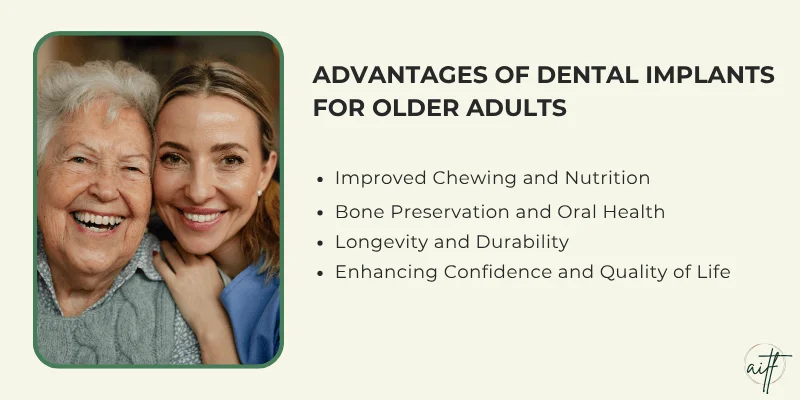
Dental implants offer seniors several important advantages that go beyond just filling gaps in their smile. They help restore normal eating habits, protect jawbone health, last for many years with proper care, and boost self-confidence in daily social situations.
Improved Chewing and Nutrition
When you get dental implants, you regain most of your natural bite strength. This means you can eat foods that might have been difficult or impossible with missing teeth or traditional dentures.
Traditional dentures often slip while eating, making it hard to enjoy tough meats, crunchy vegetables, or fresh fruits. Dental implants stay firmly in place because they’re anchored directly into your jawbone. You won’t need to worry about your teeth shifting when you bite into an apple or chew a piece of steak.
This improved chewing ability leads to better nutrition. When you can eat a wider variety of foods, you’re more likely to include important nutrients in your diet. Fresh vegetables, lean proteins, and whole grains become easier to manage.
While you’ll still need to avoid very hard or sticky foods to protect your implants, your dietary options expand significantly compared to dentures.
Bone Preservation and Oral Health
Your jawbone needs stimulation from tooth roots to stay healthy and strong. When you lose teeth, the bone underneath starts to break down because it’s no longer getting that stimulation from chewing.
Dental implants act like natural tooth roots. They stimulate your jawbone each time you chew, which helps maintain bone density. This process prevents the bone loss that typically happens after tooth loss. Keeping good bone density in your jaw also helps preserve your facial structure and prevents the sunken appearance that can develop over time.
Missing teeth create gaps that are hard to clean properly. Food particles and bacteria can collect in these spaces, increasing your risk of gum disease and tooth decay in surrounding teeth. The gaps can also cause nearby teeth to shift out of position, creating alignment problems.
Getting dental implants helps maintain better oral health by filling these spaces and making it easier to keep your mouth clean.
Longevity and Durability
Dental implants are built to last. The implant posts are made from strong materials like titanium or zirconia that resist wear and damage. With proper care, your implants can last for the rest of your life.
Traditional dentures and bridges need adjustments and replacements every few years. You might spend time and money on repairs, refitting appointments, and eventually buying new appliances. Dental implants don’t require these frequent replacements because they’re designed for permanent use.
The upfront cost of dental implants is typically higher than other tooth replacement options. However, the long-term value often makes them more cost-effective. You won’t pay for repeated replacements or ongoing adjustments.
The durability of implants means you make one investment that serves you for decades.
Enhancing Confidence and Quality of Life
Missing teeth can make you feel self-conscious about smiling, talking, or eating in front of others. You might avoid social situations or feel embarrassed during conversations.
Dental implants look and feel like your natural teeth. They’re custom-made to match the color and shape of your existing teeth, so they blend in seamlessly. There are no visible metal clasps or wires above your gumline. When you smile or speak, people see what looks like a complete set of natural teeth.
The stability of implants gives you confidence in everyday activities. You don’t have to worry about your teeth slipping when you laugh, speak, or eat with family and friends.
This security can be life-changing for elderly patients who have dealt with the frustration of loose dentures. Many seniors report feeling more comfortable in social settings and more willing to participate in activities they had been avoiding.
Risks and Considerations
While dental implants offer many benefits for seniors, you should understand the potential risks before moving forward. Several factors can affect your implant success rate, from surgical complications to existing health conditions and lifestyle habits.
Potential Risks and Complications

Like any surgical procedure, dental implant placement carries certain risks you need to know about. Infection at the implant site is one of the most common concerns, especially since seniors often have weakened immune systems that make fighting off bacteria more difficult.
You might experience bleeding, swelling, or bruising after the surgery. These side effects usually go away within a week or two.
Implant failure can happen when the titanium post doesn’t properly fuse with your jawbone. This occurs in a small percentage of cases and may require removing the implant and trying again later.
Gum disease can develop around your implant if you don’t maintain good oral hygiene. This condition, called peri-implantitis, can cause bone deterioration around the implant and lead to failure if left untreated. Nerve damage is another rare but serious risk that can cause numbness or tingling in your lips, tongue, or chin.
Medical Conditions Affecting Success
Your existing health conditions play a big role in whether dental implants will work well for you. Many people wonder can seniors with diabetes get dental implants, and the answer is yes, but it requires careful management.
Uncontrolled diabetes can slow your healing process and increase infection risk. You’ll need to work closely with both your doctor and dentist to keep your blood sugar levels stable before and after surgery.
Osteoporosis weakens your bones and may affect how well the implant integrates with your jaw. Some medications for osteoporosis, called bisphosphonates, can also complicate the healing process.
Heart disease, autoimmune disorders, and blood-clotting problems are other chronic conditions that need special attention.
The good news is that there is no age limit for dental implants based on your age alone. Your overall health matters more than the number on your birthday cake.
Smoking and Healing Challenges
Smoking creates serious healing challenges that can hurt your chances of implant success. When you smoke, it reduces blood flow to your gums and jawbone, which slows down the healing process after surgery.
Nicotine also weakens your immune system, making infections more likely. Studies show that smokers have much higher rates of implant failure compared to non-smokers.
If you smoke, your dentist will likely recommend quitting at least two weeks before surgery and staying smoke-free during the entire healing period. This can take several months while your implant fuses with the bone.
Even after your implant heals completely, continuing to smoke puts you at ongoing risk for gum disease and bone deterioration around the implant.
Dental Implant Procedure in the Senior Population
The dental implant procedure involves several distinct phases that typically span several months. Your treatment team carefully plans each step to ensure the best possible outcome for your specific needs and health status.
Initial Consultation and Evaluation

Your journey begins with a comprehensive evaluation where your dentist or oral surgeon examines your mouth and reviews your medical history. They take detailed X-rays and often use 3D imaging to assess your jawbone density and structure.
This initial visit helps determine if you need bone grafting before implant placement. Your dentist discusses any medications you take, especially those for osteoporosis or blood thinners, since these can affect healing.
They also review your options for replacing teeth, whether you need a single implant, an implant-supported bridge, or full mouth restoration.
The evaluation includes checking for gum disease and ensuring your remaining teeth are healthy. Your periodontal treatment team creates a customized plan that accounts for your healing timeline and any special considerations related to your age or health conditions.
Implant Surgery and Osseointegration
During implant surgery, your oral surgeon places a titanium post into your jawbone where the missing tooth root once was. The procedure usually takes one to two hours per implant and uses local anesthesia to keep you comfortable.
After implant placement, your body begins osseointegration, which is the process where your jawbone fuses with the titanium post. This healing phase typically takes three to six months and is longer for seniors than for younger patients.
Your jawbone grows around the implant, creating a strong foundation for your new tooth.
You receive specific care instructions to protect the surgical site during healing. Regular follow-up visits let your dentist monitor how well osseointegration is progressing.
Abutment Placement and Restoration
Once osseointegration is complete, you return for abutment placement. The abutment is a small connector piece that attaches to your implant and holds your new tooth. This minor procedure requires only local anesthesia and heals within a few weeks.
Your dentist takes impressions to create your custom crown, bridge, or denture. The final restoration is designed to match your natural teeth in color and shape. After placement, your dentist checks your bite and makes any needed adjustments.
You might experience abutment screw loosening occasionally, which your dentist can easily tighten during regular checkups. Following your dental implant procedure, you care for your new teeth just like natural ones with brushing and flossing.
Cost and Insurance Considerations
The price of dental implants varies widely based on your specific needs, and understanding coverage options can help you plan for this investment in your oral health. Single implants typically cost between $3,000 and $6,000, while full mouth restoration can range from $20,000 to $50,000.
Cost Structure for Senior Dental Implants
A single tooth implant costs between $3,000 and $6,000 on average. This price includes the titanium implant post, the abutment that connects to your jawbone, and the crown that looks like your natural tooth.
The total cost depends on several factors. Your geographic location affects pricing significantly, with urban areas charging more than rural ones. The dentist’s experience level also influences the fee structure.
Many seniors need additional procedures before getting implants. Bone grafts or sinus lifts add $500 to $3,000 to your total cost. These preparatory treatments ensure your jawbone can support the implants properly.
Full mouth options include:
- Traditional full mouth implants: $20,000 to $50,000
- All-on-4 implants: $15,000 to $30,000 per arch
- Mini implants for denture stabilization: $500 to $1,500 per implant
Insurance and Coverage Options
Medicare does not typically cover dental implants, but some Medicare Advantage plans offer partial coverage. You might reduce your out-of-pocket costs by $1,000 to $2,000 with a dental rider.
Medicaid coverage varies by state. Some states provide implant coverage for specific medical conditions, while others exclude cosmetic dental procedures entirely.
Private dental insurance plans may cover 10% to 50% of implant costs. Most plans have annual maximum benefits between $1,000 and $2,000, which only covers a portion of the total expense.
Payment options you can explore:
- In-house payment plans through your dentist’s office
- Third-party financing companies with monthly payment options
- Dental discount plans that reduce procedure costs by 10% to 60%
- Dental school clinics offering reduced rates
Long-Term Value and Investment
Dental implants can last a lifetime with proper care, making them more cost-effective than dentures over time. Dentures need replacement every 5 to 7 years at $1,000 to $3,000 per set.
You’ll need regular dental checkups twice yearly to maintain your implants. These visits cost $75 to $200 each but prevent expensive complications. Proper maintenance includes professional cleanings and examinations of the implant sites.
Implants prevent bone loss in your jaw, which saves you from needing additional procedures later. They also let you eat a wider variety of foods, which can improve your nutrition and overall health.
The upfront cost is higher than alternatives, but the benefits include better comfort, function, and durability compared to removable dentures or bridges.
Long-Term Outcomes and Care After Dental Implants
Dental implants placed in elderly patients show strong results when properly maintained, with studies tracking outcomes for 2-17 years. Your daily habits and regular dental visits play a major role in how long your implants last.
Implant Success Rates and Longevity
Research on dental implants with up to 22 years of follow-up shows that these tooth replacements can last for decades with proper care. The implant success rate for seniors typically ranges from 90-95% over a 10-year period.
Several factors affect how long your implants will last:
- Bone quality and density at the implant site
- Your overall health and any chronic conditions
- Smoking status (smokers have lower success rates)
- How well you care for your implants daily
Age itself doesn’t reduce implant success rates. Studies on patients aged 65-89 years show results similar to younger patients. The key difference is that seniors may need extra time for healing and bone integration. Most implants that fail do so within the first few years, so making it past this period is a good sign for long-term success.
Oral Hygiene and Maintenance
Caring for dental implants long-term requires daily attention to oral hygiene. You should brush your implants twice a day using a soft-bristled toothbrush, just like natural teeth.
Daily cleaning steps include:
- Brushing all sides of the implant crown
- Flossing around the implant with unwaxed tape or implant-specific floss
- Using an antimicrobial mouthwash to reduce bacteria
- Cleaning under bridges or dentures attached to implants
Dental checkups every six months are essential. Your dentist will check the implant stability, examine the gums around the implant, and take X-rays to monitor bone levels. Professional cleanings remove buildup that regular brushing might miss.
Recognizing and Preventing Complications
You need to watch for warning signs that could indicate problems with your implants. Contact your dentist right away if you notice bleeding around the implant, gums that look red or swollen, pain or discomfort near the implant, or the implant feeling loose.
Common complications include:
- Peri-implantitis: infection of the tissues around the implant
- Bone loss: gradual deterioration of supporting bone
- Loose components: screws or crowns that need tightening
Prevention starts with not smoking, as tobacco significantly increases complication risk. Control any medical conditions that affect implant survival like diabetes or osteoporosis. Avoid chewing on hard items like ice or hard candy that could damage the implant crown. If you grind your teeth at night, ask about a protective night guard.
Frequently Asked Questions
Dental implants can improve your ability to eat and speak while helping preserve your jawbone. Cost remains a major concern for many seniors, though several assistance options exist.
What are the benefits of choosing dental implants for senior citizens?
Dental implants function like natural teeth, making it easier for you to chew a variety of foods without discomfort. Unlike dentures that can slip or move, implants stay fixed in place.
Your jawbone receives stimulation from implants, which helps prevent bone loss over time. This is important because bone loss can change the shape of your face and make you look older.
Implants give you a more natural-looking smile compared to dentures. You won’t need to worry about them falling out when you talk or laugh with friends and family.
The implants can last for decades with proper care. While the crown may need replacement after 10 to 15 years, the titanium post usually stays intact for life.
Can seniors receive dental implants at no cost through certain programs?
Most dental implant procedures are not covered by standard insurance plans or Medicare. You will likely need to pay out of pocket for this treatment.
Some dental schools offer reduced-cost implant procedures performed by students under professional supervision. These programs can save you money while still providing quality care.
Nonprofit organizations sometimes provide dental assistance to low-income seniors in specific areas. You’ll need to check what programs are available in your local community.
Veterans may qualify for dental implant coverage through VA benefits depending on their service-connected conditions. Contact your local VA office to learn about your eligibility.
How does bone density affect the success of dental implants in older adults?
Your jawbone needs enough density and volume to support the implant post. The titanium post must fuse with your bone through a process called osseointegration.
Conditions like osteoporosis can reduce your bone density and affect implant success. Your dentist will evaluate your bone quality before recommending implants.
If you have bone loss, you may need a bone graft before getting implants. A bone graft creates a solid foundation that allows the implant to fuse properly with your jawbone.
Years of wearing dentures can cause significant bone loss in your jaw. This is common among seniors, but bone grafting procedures can address this issue before implant placement.
What should an elderly person consider before deciding to get dental implants?
Your overall health matters more than your age when determining if you’re a good candidate. Many patients in their 60s, 70s, and even 80s successfully receive dental implants without complications.
You need to share your complete medical history with your dentist. Conditions like uncontrolled diabetes, osteoporosis, or autoimmune diseases can affect healing and implant success.
The procedure requires several months to complete because your bone needs time to fuse with the implant. You’ll need to attend multiple appointments and follow strict aftercare instructions.
You should consider whether you can maintain good oral hygiene after getting implants. Brushing, flossing, and regular dental checkups are necessary to keep your implants healthy for years.
Are full mouth dental implants a viable option for seniors who need extensive dental work?
Full mouth dental implants can replace all of your missing teeth if you have sufficient bone density. This option provides more stability than traditional dentures that cover your entire mouth.
The procedure typically involves placing four to six implants in each jaw. These implants serve as anchors for a full set of replacement teeth.
Recovery time varies, but the initial healing phase generally takes a few days to a week. The complete osseointegration process can take several months before your permanent teeth are attached.
Full mouth implants cost more upfront than dentures, but they last longer and don’t need frequent replacements. You’ll be able to eat a wider variety of foods and won’t deal with the discomfort of loose dentures.
What financial assistance options are available to help seniors afford dental implants?
Dental discount plans can reduce your implant costs by 10 to 60 percent at participating dentists. These plans charge an annual fee but don’t work like traditional insurance.
Many dental offices offer payment plans that let you spread the cost over several months or years. Ask your dentist about financing options with low or no interest.
Health savings accounts (HSAs) and flexible spending accounts (FSAs) allow you to use pre-tax dollars for dental implants. This can lower your overall cost if you have access to these accounts.
Some dentists provide senior discounts on dental procedures including implants. You should ask about any available discounts when you schedule your consultation appointment.