Dental implants are a popular way to replace missing teeth. You might wonder how long they actually last.
With good care, dental implants can last 15 to 20 years or even longer. This makes them a durable option compared to other tooth replacement methods.
The lifespan of your implant depends on several things like how well it bonds with your jawbone, your oral hygiene, and lifestyle habits such as smoking or teeth grinding. Knowing what affects their durability can help you protect your investment and keep your smile healthy.
Key Takeaways
- Dental implants can last many years with proper care.
- Good habits and regular checkups boost implant durability.
- Certain health and lifestyle factors affect how long implants last.
Understanding Dental Implant Lifespan
Dental implants are made of different parts, each with its own lifespan and care needs. Knowing how long each part lasts and how they work together helps you take care of your implants.
How Long Do Dental Implants Last
The implant post, which is placed in your jawbone, can last a very long time, often 25 years or more. This depends on how well you care for your implants and your overall health.
A 2023 study involving 15,483 dental implants reported an overall success rate of 98.12%, showing how reliable implants are with proper oral hygiene, healthy gums, and regular checkups.
The crown, which is the visible part that looks like your tooth, usually needs to be replaced every 10 to 15 years. Crowns wear down due to normal use, even with the best care.
Differences Between Implant Post, Abutment, and Crown
Your dental implant has three main parts:
- Implant post: This is a titanium screw placed directly into your jawbone. It acts like a tooth root and holds the implant in place.
- Abutment: This connects the implant post to the crown. It sits above the gum line and supports the crown.
- Dental crown: This is the part you see and use to chew. It’s made of strong material like porcelain or ceramic.
Each part has a different role. The post integrates with your bone, the abutment secures the crown, and the crown restores your bite and appearance.
Average Lifespan by Component
| Implant Part | Average Lifespan | Notes |
| Implant Post | 25 years or more | Lasts longest with good care |
| Abutment | About 10-15 years | May need replacement due to wear or damage |
| Implant Crown | 10-15 years | Needs replacement due to chewing wear |
The implant post often lasts the longest because it’s made of durable titanium and bonds with your jawbone. The crown and abutment face more wear from chewing and may need replacement or repair.
Proper oral hygiene, avoiding hard foods, and regular dental visits help extend the life of all these parts.
Key Factors Affecting Dental Implant Longevity
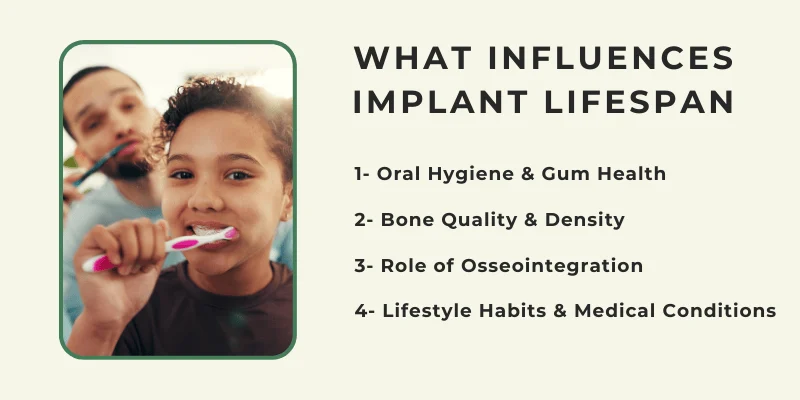
Your dental implant’s lifespan depends on several important factors. These include how well you take care of your mouth, the condition of your jawbone, how well the implant bonds with your bone, and your overall health and habits.
Oral Hygiene and Gum Health
Keeping your mouth clean is essential for implant success. You should brush twice a day and floss carefully around the implant to prevent plaque buildup.
Using tools like interdental brushes or water flossers can help clean hard-to-reach areas. Healthy gums support the implant and prevent infections like peri-implantitis.
This condition causes inflammation and can lead to bone loss and implant failure if untreated. Regular dental checkups every six months let your dentist spot early signs of gum disease and treat them on time.
Good oral hygiene is not just about brushing; it also means following your dentist’s advice for care after surgery to keep your gums healthy and your implant secure.
Bone Quality and Density
Your jawbone’s strength and volume are key to how well your implant holds. Dense, healthy bone helps the implant stay stable and supports chewing pressure.
If your bone is too soft or thin, your dentist might suggest bone grafting before placing the implant. This adds extra bone material to provide a better foundation.
Without enough good-quality bone, your implant may not fuse properly, increasing the chance of loosening or failure. That’s why proper bone assessment is part of the implant planning process.
Maintaining bone health over time with a balanced diet and avoiding habits that cause bone loss is also important.
Role of Osseointegration
Osseointegration is the process where your bone grows around and bonds tightly with the implant. This fusion is what makes implants strong and able to act like natural teeth.
Successful osseointegration depends on your bone quality and careful implant placement by your dentist. If the bone doesn’t bond well, the implant can become loose.
Healing time varies but typically takes a few months. During this time, you should avoid putting too much pressure on the implant, such as eating hard foods or grinding your teeth.
If you have bruxism (teeth grinding), your dentist may recommend a night guard to protect the implant while you sleep.
Lifestyle Habits and Medical Conditions
Certain habits and health problems affect how long your implant lasts. Smoking is one of the biggest risks because it reduces blood flow, slows healing, and raises infection chances.
Chronic diseases like diabetes or osteoporosis can also slow healing and increase implant failure risk if not well-controlled. Make sure to tell your dentist about any health issues before treatment.
Bruxism adds extra force on implants, which can cause damage over time. Wearing a protective guard can help reduce this risk.
Regular dental visits help catch early problems caused by lifestyle or health and keep your implant in good shape.
Schedule a consultation with our Evansville, IN dentists to ensure your dental implants last a lifetime.
Implant Materials and Prosthetic Design
The materials used for your dental implant and the design of the prosthetic part affect how long your implant lasts and how often it needs maintenance. Your choices can influence comfort, strength, and the chance of wearing down or breaking over time.
Types of Implant Materials
Most dental implants use titanium or zirconia for the part that goes into your jawbone. Titanium is strong, durable, and has a long track record of success.
Zirconia is a metal-free option that some choose for allergy concerns or aesthetics. It looks more like natural teeth but may be less common.
For the implant crown, which is the part that looks like your tooth, materials vary. They include porcelain, ceramic, and sometimes acrylic.
Porcelain and ceramic crowns are popular because they look natural and resist wear. Acrylic crowns are less durable and might need replacing sooner.
Impact of Material on Lifespan
The type of implant material has less impact on how long your implant lasts than you might think. Titanium and zirconia both offer good survival rates for the implant itself.
However, the prosthetic material is more important for how long your crown lasts. Crowns made from porcelain or ceramic can last many years but might chip or crack if you bite down hard.
Removable designs might have a higher chance of parts breaking due to movement. Good design spreads forces evenly to avoid damage.
Your daily care also plays a big role in material wear. Brushing, flossing, and regular dental visits help protect your implant and crown from damage and infections like peri-implantitis.
Crown Replacement and Maintenance
Even the best implant crowns don’t last forever. Usually, the implant crown needs replacement or repair every 10 to 15 years because normal chewing causes wear and tear.
You should watch for chips, cracks, or loose crowns. Your dentist may tighten screws or fix fractures during routine visits.
Properly fitting crowns reduce stress on your implant and surrounding bone. Regular maintenance includes cleaning under and around the crown.
Using interdental brushes or floss around implants helps keep bacteria away. When you notice discomfort or damage, contact your dentist to avoid bigger problems.
Care, Maintenance, and Monitoring
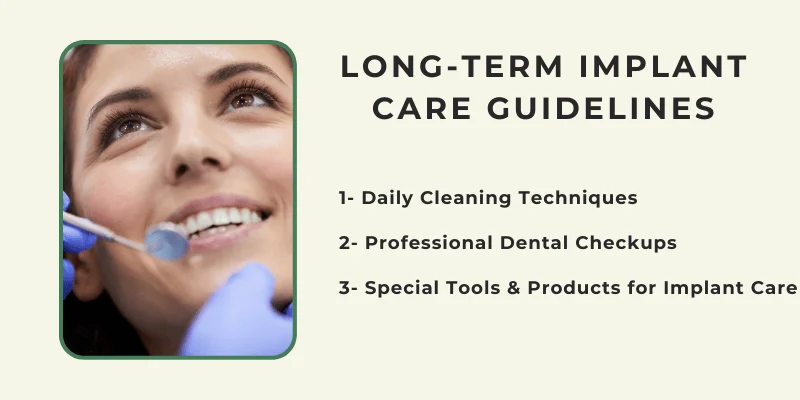
Taking good care of your dental implants means focusing on daily cleaning, seeing your dentist regularly, and using the right tools. Doing these things well helps keep your implants healthy and lasting longer.
Daily Cleaning Techniques
You should brush your implants twice a day using a soft-bristled toothbrush. Use gentle, circular motions to clean all sides of the implant and the gums around it.
Flossing daily is just as important. Since implants don’t have the same natural shape as teeth, traditional floss can be tricky.
Consider using interdental brushes designed to fit between implants and clean hard-to-reach spaces. Rinsing with an antimicrobial mouthwash can reduce bacteria and protect your gums from inflammation.
Avoid harsh toothpaste that can scratch implant surfaces. Your daily routine plays a big role in preventing plaque buildup and keeping your gums healthy.
Professional Dental Checkups
Regular dental visits are key to monitoring the health of your implants. Your dentist will check for signs of inflammation, bone loss, and plaque buildup around your implants.
Usually, you’ll need a checkup every 6 months. During appointments, professional cleaning removes plaque and tartar that brushing can miss.
Your dentist may use special tools like ultrasonic devices for better cleaning. X-rays might be taken to monitor the bone around your implant, ensuring it stays strong and stable.
If needed, your dentist can adjust your care plan and teach you new techniques to keep your implants in good shape.
Special Tools and Products for Implant Care
You can use several helpful products to clean your implants better. Water flossers are great for flushing out debris and bacteria around implants, especially under crowns or bridges.
Chlorhexidine rinses or gels may be recommended to control inflammation and reduce bacteria. However, these should be used as directed because long-term use can stain teeth.
If you grind your teeth at night, a night guard will protect both your implants and natural teeth from damage.
Using the right cleaning tools and products boosts your implant’s health and supports its long-term success.
For personalized implant care recommendations, schedule a visit with our trusted dental professional in Evansville, IN.
Recognizing and Preventing Implant Complications
Knowing how to spot problems with your dental implant early can save you from bigger issues later. You’ll also learn why implants fail and what options exist if your implant needs help staying secure.
Common Signs of Implant Problems
Watch out for swelling, redness, or pain around your implant site. These could be signs of infection or peri-implantitis, an inflammation that damages the tissue and bone around your implant.
You might also notice mobility in the implant or discomfort when chewing. These symptoms can signal implant failure or bone loss.
If you see pus, bad taste, or prolonged bleeding, contact your dental professional right away. Regular dental check-ups help catch these signs early.
Understanding Implant Failure
Implant failure happens when the implant doesn’t properly fuse with your jawbone or when bone loss weakens its support. Common causes include untreated infection, poor oral hygiene, or excessive force on the implant.
Failure may show as pain, implant movement, or gum recession. Sometimes, it happens slowly without obvious symptoms, making regular monitoring key.
Your habits, like smoking or uncontrolled diabetes, can also increase the risk of implant failure.
Bone Grafting and Re-Treatment Options
If you have bone loss, your dentist may recommend bone grafting to rebuild the jawbone before placing or saving an implant. Bone grafting uses donor or your own bone material to strengthen the implant site.
This helps provide a stable base for the implant. When implant failure occurs, removal might be necessary.
After healing and possible bone grafting, a new implant can be placed. Your dentist will guide you through the best options to restore your smile safely.
Contact our dentists in Evansville, IN, to discuss implant re-treatment and personalized care options.
Frequently Asked Questions
Dental implant success depends on many things like your oral health, how well you care for the implant, and your overall health.
What factors can affect the longevity of a dental implant?
Your oral hygiene plays a big role. Brushing twice a day and flossing around the implant help prevent gum disease.
Other factors are your diet, smoking habits, and bone health. A diet rich in calcium and vitamin D supports strong bones and a healthy jaw.
How long can I expect my dental implant to last on average?
Dental implants usually last between 15 to 25 years when cared for properly. Some can even last a lifetime with excellent maintenance.
The materials used and your body’s response may also affect the exact lifespan.
What is the success rate of dental implants after 10 years?
Most patients experience a success rate above 95% after 10 years. Modern dental implant technology offers reliable long-term results under good conditions.
Are there any age considerations for getting dental implants?
Age itself is not a strict barrier, but your bone health and healing ability matter more.
You should have enough healthy jawbone to support the implant, and your dentist will check if your overall health supports healing.
What are the potential drawbacks of opting for dental implants?
The process can take several months since healing time is needed between steps.
Some people may experience discomfort, infection, or implant failure, though these are rare with proper care.
What sort of maintenance is required to ensure the longest life for my dental implant?
You need to brush and floss carefully around the implant every day. Regular dental check-ups are important to monitor your implant and gum health.
Avoid smoking. Eat a balanced diet to keep your bones strong and support healing.