If you’re thinking about a full mouth rehabilitation, you may wonder what stands between you and approval. Dentists do not move forward based on looks alone.
They study your oral health, your habits, and the long-term stability of your teeth and gums.
Dentists approve a full mouth rehabilitation plan only after they confirm your mouth is healthy enough to support it and that the treatment will restore function, comfort, and long-term stability.
They check for gum disease, tooth decay, bone loss, bite problems, and signs of grinding. They also review your medical history to make sure healing will go well.
You can expect a detailed exam, imaging, and a clear plan built around your needs. When you understand what dentists look for, you can prepare your mouth and feel confident about the next steps.
Key Takeaways
- Dentists evaluate your overall oral health before approving treatment.
- They address disease, damage, and bite issues before building a plan.
- Your long-term function and maintenance guide every decision.
Table of Content
- Initial Comprehensive Assessment
- Identifying Underlying Conditions and Oral Health Issues
- Treatment Planning and Customization
- Foundation Preparation and Disease Management
- Prosthetic Choices and Restorative Options
- Long-Term Outcomes and Maintenance
- Frequently Asked Questions
Initial Comprehensive Assessment
Before a dentist approves you for a full-mouth rehabilitation plan, they complete a detailed review of your health, bite, and jaw function.
They gather clear records so they can build a plan that fits your needs and supports long-term oral health.
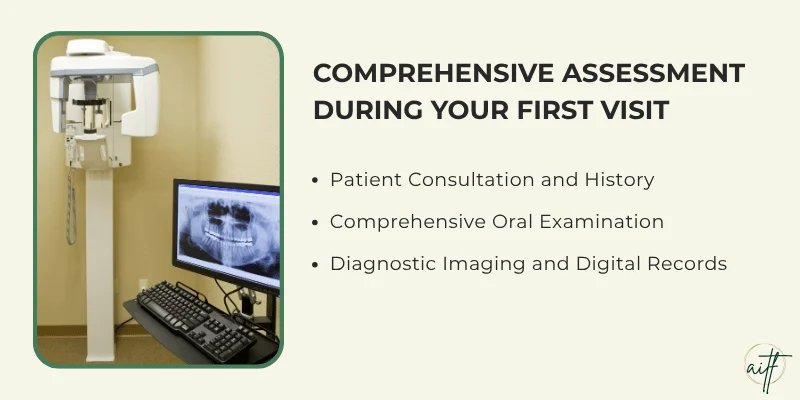
Patient Consultation and History
Your visit starts with a focused conversation about your dental and medical history. You share past treatments, current medications, and any health issues that may affect healing.
Your dentist asks about jaw pain, headaches, clenching, or grinding. These details help them check for temporomandibular joint problems and bite strain. They also ask what you want to change, such as chewing comfort, tooth wear, or appearance.
This step supports accurate diagnosis and realistic planning. Many offices follow a structured approach similar to a comprehensive dental consultation, which looks beyond a simple checkup.
You also receive patient education at this stage. Your dentist explains possible risks, timelines, and costs so you understand what full-mouth treatment involves.
Comprehensive Oral Examination
Next, your dentist performs a comprehensive oral examination. This dental exam checks every part of your mouth, not just damaged teeth.
They assess:
- Tooth wear, cracks, and decay
- Missing teeth and old restorations
- Periodontal health, including gum depth and bleeding
- Signs of infection or bone loss
They also evaluate your occlusion, or how your teeth meet when you bite. A detailed bite analysis shows uneven contact, shifting, or collapse of your bite.
Your dentist checks your temporomandibular joint for clicking, limited movement, or pain. They may guide your jaw into centric relation, a stable jaw position used to plan major restorative cases.
Diagnostic Imaging and Digital Records
Clear records support careful treatment planning. Your dentist collects images and measurements to confirm what they saw during the exam.
You may receive:
- Digital X-rays to check roots and bone levels
- A pano (panoramic X-ray) to view your full jaw
- 3D scans in complex cases
- Digital impressions instead of messy molds
These records help your dentist study bone support, root position, and hidden decay. They also take bite registration records and may use a facebow to relate your upper jaw to your skull for accurate lab work.
Digital impressions and bite records allow detailed bite analysis before final restorations.
Identifying Underlying Conditions and Oral Health Issues
Before you start a full-mouth rehabilitation plan, your dentist checks for active disease, structural damage, and bite problems. These issues must be stable and controlled before long-term restorations can succeed.

Gum Disease and Periodontal Evaluation
Your dentist first looks closely at your periodontal health. Healthy gums and bone must support every crown, bridge, or implant in your plan.
They measure pocket depths around each tooth and check for bleeding, swelling, or bone loss on X-rays. Signs of gum disease such as deep pockets or loose teeth may delay treatment.
If infection is present, you may need scaling and root planing, also called a deep cleaning. This form of periodontal therapy removes bacteria under the gums and helps the tissue heal.
In moderate or severe cases, your dentist may refer you to a periodontist. You must control inflammation and stabilize bone levels before moving forward. Restoring teeth without treating gum disease can lead to failure.
Assessment of Tooth Loss and Damage
Next, your dentist reviews the number and condition of your teeth. Multiple missing teeth or severely damaged teeth affect how your mouth functions.
They check for cracked enamel, large fillings, decay under old crowns, and worn biting edges. Some teeth may need tooth extractions if they cannot support a restoration.
X-rays show hidden decay, root infections, or bone loss. If you have missing teeth, your dentist evaluates bone height and width to see if implants are possible.
An oral surgeon may assist if extractions, bone grafting, or implant placement are needed. Every remaining tooth must have a clear role in your final plan. Weak or infected teeth cannot serve as stable anchors.
Bite Malalignment and TMJ Analysis
Your bite plays a major role in full-mouth rehabilitation. If you have bite misalignment, uneven pressure can damage new restorations.
Your dentist studies how your upper and lower teeth meet when you close and move your jaw. They look for worn spots, shifting teeth, and signs of grinding.
They also assess your jaw joints for clicking, limited opening, or jaw pain. Problems in the temporomandibular joint can affect comfort and long-term stability.
In some cases, you may need a splint or bite adjustment before final treatment. Correcting bite issues first helps protect crowns, bridges, and implants from excess force.
Treatment Planning and Customization
Your dentist does not approve a full mouth rehabilitation without a clear, step‑by‑step plan.
They study how your teeth function, how your bite fits together, and how your smile looks before choosing specific restorative procedures.
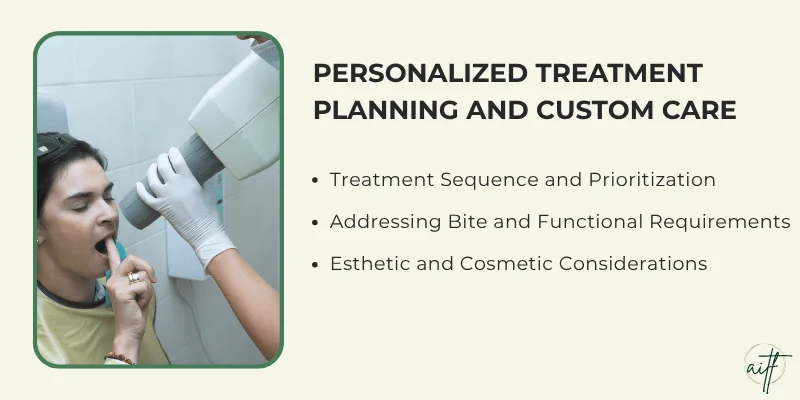
Treatment Sequence and Prioritization
Treatment planning for a full mouth restoration starts with order and timing. Your dentist decides what to fix first and what can wait.
They usually handle urgent problems right away. These include infection, severe decay, broken teeth, or active gum disease. You cannot move forward with a full mouth reconstruction until your mouth is stable and healthy.
Next, they plan major structural work. This may include extractions, implants, periodontal therapy, or orthodontic treatment. Moving teeth or placing implants often must happen before crowns or veneers.
Your dentist may also create a diagnostic wax-up. This model shows how your teeth could look and function after treatment. It helps them plan each step and explain the sequence to you in simple terms.
Addressing Bite and Functional Requirements
A full mouth rehab must restore function before focusing on appearance. Your dentist studies how your upper and lower teeth meet.
They often perform a detailed bite analysis. This may include mounted models, digital scans, and sometimes a facebow record. A facebow helps transfer the position of your upper jaw to an articulator so your dentist can study your bite more accurately.
They check for:
- Uneven wear
- Jaw joint symptoms
- Muscle pain
- Limited range of motion
- Signs of grinding or clenching
If your bite is unstable, restorative procedures alone will not solve the problem. Your dentist may recommend orthodontic treatment, bite adjustment, or temporary restorations to test a new bite position.
Some dentists follow structured frameworks to balance esthetics, function, structure, and biology. This helps protect your new restorations from early failure.
Esthetic and Cosmetic Considerations
Once your bite works well, your dentist focuses on how your smile will look. In a smile makeover, small details matter.
They study:
- Tooth shape and length
- Gum levels
- Smile line
- Tooth color
- Facial proportions
A cosmetic dentist may use digital smile design or a mock-up to show you a preview. This step allows you to give feedback before final crowns, veneers, or bridges are made.
In cosmetic dentistry, changes must still support strength and comfort. A bright white smile does not help if the teeth chip or feel uneven when you chew.
Your treatment planning process blends health, strength, and appearance so your full mouth restoration fits your face and functions in daily life.
Foundation Preparation and Disease Management
Before you begin a full-mouth rehabilitation, your dentist must control infection, protect healthy tissue, and create a stable base. You cannot build lasting restorations on active disease or weak bone support.
Initial Stabilization Procedures
Your dentist first looks for pain, infection, and active decay. You may need deep cleaning to remove plaque and tartar below the gumline. This step, often called periodontal therapy, reduces inflammation and bleeding.
If a tooth has severe decay or infection, you may need root canal therapy. This treatment removes infected pulp and seals the tooth to prevent further damage.
Some teeth cannot be saved. In those cases, your dentist may recommend a tooth extraction as part of disease control.
Many clinicians follow a phased approach that starts with emergency and disease control care before moving to final treatment.
These early steps stop pain and infection so your mouth can heal before complex work begins.
Periodontal and Bone Support
Healthy gums and strong bone hold your restorations in place. Your dentist checks pocket depth, gum recession, and bone levels with X-rays.
If you have gum disease, you may need ongoing periodontal therapy. This can include scaling, root planing, and close follow-up visits. Controlling gum disease lowers the risk of implant failure and crown problems.
When bone loss is severe, your dentist may suggest bone grafting. Grafting rebuilds areas that cannot support implants or bridges on their own.
In some cases, you may need orthodontic treatments before final restorations. Braces or clear aligners can move teeth into better positions. Straight teeth improve bite balance and make long-term results more stable.
Preparation for Restorative Dentistry
Once disease is under control, your dentist prepares your teeth for final restorations. This stage often includes pre-prosthetic treatment to shape gums and bone for crowns, bridges, or dentures.
Your dentist may use a diagnostic wax-up to plan tooth size and shape. They can create reduction guides to remove the right amount of tooth structure. This protects your teeth and helps ensure even spacing.
You will likely wear temporary crowns or other temporary restorations during this phase. These temporaries test your bite, speech, and comfort before the final restorations are made.
Some clinicians follow a structured process from diagnosis to delivery and equilibration. Careful preparation at this stage helps your final restorations fit well and function properly for years.
Prosthetic Choices and Restorative Options
Your dentist reviews your bone level, gum health, bite force, and number of missing or damaged teeth before choosing a prosthetic plan. The goal is to match the right material and design to your daily function, budget, and long-term oral health.
Dental Implants and Supported Restorations
Dental implants replace missing tooth roots with small titanium posts placed in your jaw. Your dentist checks bone density and scans your jaw to confirm you can support implants safely.
After healing, a dental laboratory makes custom crowns, bridges, or full-arch prostheses that attach to the implants. This setup creates implant-supported restorations that feel stable when you chew.
Implants help prevent bone loss and keep nearby teeth from shifting. They also allow single-tooth replacement without cutting down healthy teeth, which often happens with dental bridges.
You may need bone grafting if your jaw lacks enough support. Your dentist also checks for gum disease, smoking habits, and medical conditions that could slow healing.
Crowns, Bridges, and Veneers
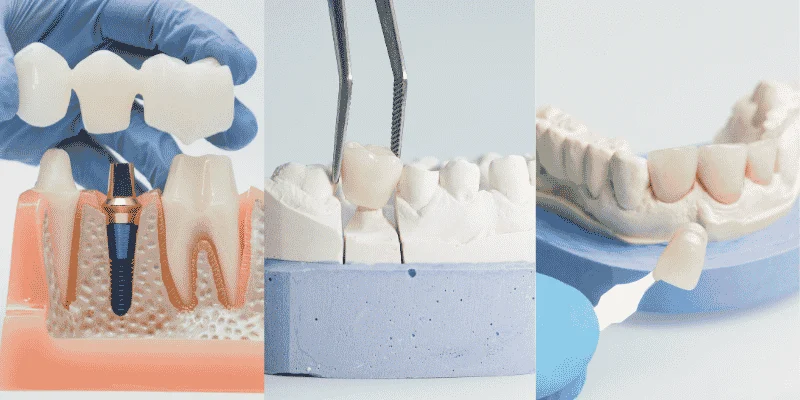
If you still have many healthy tooth roots, your dentist may suggest crowns and bridges instead of implants. These options restore strength and shape without surgery.
Dental crowns cover damaged teeth that have large fillings, cracks, or root canal treatment. Many patients choose porcelain crowns because they match natural tooth color and resist stains.
Dental bridges replace one or more missing teeth by anchoring to nearby teeth. Your dentist reshapes those support teeth so the bridge fits securely.
Veneers work best when your teeth are mostly healthy but have cosmetic flaws like chips, gaps or uneven color. They cover the front surface only, so they do not replace missing teeth.
Your bite alignment and enamel thickness guide this decision. The dental laboratory designs each crown or veneer to fit your bite and avoid excess pressure.
Dentures and Alternative Prostheses
If you are missing most or all teeth, your dentist may recommend dentures. Traditional dentures rest on your gums and replace a full arch of teeth.
Traditional dentures cost less than implant options, but they may shift during eating or speaking. Your dentist checks ridge shape and saliva flow to see how stable they will be.
You may also qualify for implant-supported dentures. These use a few dental implants to lock the denture in place, which improves comfort and chewing strength.
Before approving dentures, your dentist looks for sore spots, bone loss, and jaw joint issues. Proper fit matters, so adjustments and relines often follow after delivery.
Long-Term Outcomes and Maintenance
Your dentist does not approve full-mouth rehabilitation unless they believe the results can last. They look at how your bite functions, how you will care for your teeth, and how well your gums can stay healthy over time.
Adjustments and Occlusal Stability
Your bite must stay balanced after treatment. Dentists check your occlusion to make sure your teeth meet evenly and do not overload certain areas.
Even small bite errors can cause jaw pain, cracked crowns, or worn restorations. During planning, your dentist may use temporary restorations to test your bite alignment before placing the final work.
This step allows careful changes while your mouth adapts.
Stable occlusion protects your restorations, supports your jaw joints, and reduces stress on teeth. Without it, even strong materials can fail.
Follow-Up Care and Oral Hygiene
Long-term oral health depends on regular maintenance. After treatment, you must attend routine exams so your dentist can check restoration integrity, periodontal health, and bite stability.
Research on the assessment of the success and survival of full mouth rehabilitations shows that outcomes depend on gum health, occlusion, and patient care habits.
Healthy gums support crowns, bridges, and implants. Inflamed gums weaken that support.
You will likely follow a strict recall schedule, such as:
- Dental cleanings every 3–4 months
- Bite checks to monitor wear
- X-rays when needed to assess bone levels
Daily care matters just as much. You must brush twice a day, floss or use interdental tools, and clean around bridges or implants as instructed.
Patient Education for Longevity
Your dentist evaluates whether you understand your role in protecting the work. Full-mouth rehabilitation falls under complex restorative dentistry, and it requires long-term commitment.
You need to know:
- What foods to limit if you grind or clench
- How to use a night guard if prescribed
- What warning signs require a visit
Education reduces complications. When you understand how your restorations function, you protect your investment and support stable, healthy results for years.
Frequently Asked Questions
Dentists review your symptoms, health history, bite, and bone support before they approve a full-mouth plan. They also use detailed records and imaging to design treatment that fits your mouth and your goals.
What signs or symptoms indicate that I might need a full-mouth rehabilitation?
You may need full-mouth rehabilitation if you have many missing teeth, broken teeth, or large fillings that keep failing. Ongoing decay across several teeth is another common sign.
Severe tooth wear from grinding can flatten your teeth and change your bite. The American College of Prosthodontists explains that patients with cracked, worn, or multiple damaged teeth may need full mouth reconstruction.
You might also notice jaw pain, trouble chewing, or teeth that feel loose. When these problems affect most of your mouth, your dentist may suggest a comprehensive plan.
Which dental and medical conditions could affect whether I’m a good candidate for a comprehensive treatment plan?
Active gum disease can delay treatment. Your dentist must control infection and inflammation before placing crowns, bridges, or implants.
Medical conditions like uncontrolled diabetes or immune disorders can slow healing. Some medications also affect bone health or bleeding, which can change your treatment steps.
Certain inherited conditions, such as enamel or dentin disorders, may require extensive restoration. Your dentist reviews your full medical and dental history before moving forward.
What diagnostic tests and records are typically needed before creating a full-mouth rehabilitation plan?
Your dentist will take a full set of digital X-rays to check roots, bone levels, and hidden decay. In many cases, they also order a 3D CBCT scan to view bone structure in detail.
They take photos of your teeth and face to study your smile and jaw position. Impressions or digital scans help create study models of your bite.
How do dentists check my bite and jaw alignment before planning extensive restorative work?
Your dentist studies how your upper and lower teeth meet when you close your mouth. They look for uneven contact, worn spots, and signs of grinding.
They may use bite registration materials or digital scanners to record your jaw position. Mounted study models allow them to test how changes will affect your bite.
If you have jaw pain or joint noises, they may check your temporomandibular joints. Stable jaw alignment is important before placing final restorations.
What role do gum health and bone levels play in determining if treatment can move forward?
Healthy gums provide the foundation for crowns, bridges, and implants. If your gums bleed easily or have deep pockets, you may need periodontal treatment first.
Adequate bone supports implants and keeps teeth stable. Low bone levels can require grafting before implant placement.
A full-mouth plan often combines restorative and periodontal care. Many comprehensive cases involve procedures such as crowns, bridges, implants, or dentures as part of full mouth reconstruction treatment options.
What are the main steps and procedures usually included in a full-mouth rehabilitation process?
The process often begins with disease control. Your dentist treats decay, infection, and gum disease before placing final restorations.
Next, they may extract teeth that cannot be saved and place implants where needed. Temporary restorations often help test your new bite and appearance.
Final treatment can include crowns, bridges, veneers, implants, or dentures. These procedures aim to restore function, improve comfort, and rebuild your bite across the entire mouth.