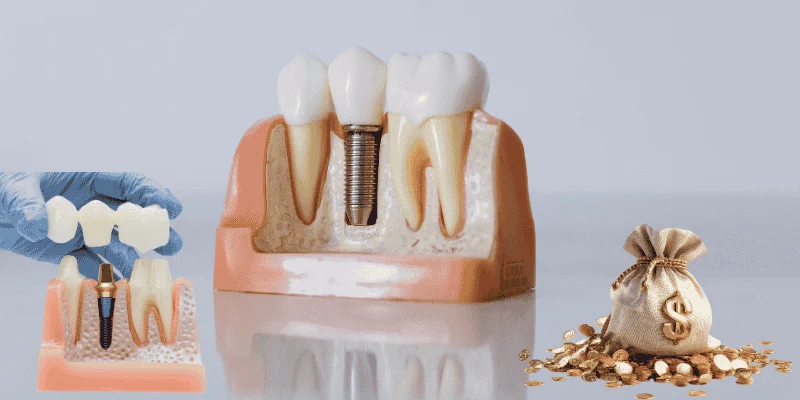
Missing a tooth affects more than your smile. It changes how you eat, speak, and feel about yourself. When you need to replace a tooth, dental implants and bridges are the two main options your dentist will discuss with you.
Dental implants typically cost more upfront than bridges, but they often save you money over 15 to 20 years because bridges usually need replacement while implants can last a lifetime.
A bridge might run $2,000 to $4,500, while a single implant costs between $3,500 and $6,500, depending on where you live. The price difference seems big at first, but the full story includes how long each option lasts and what maintenance they need.
Understanding the real cost means looking beyond the first bill. Your choice affects your jaw bone health, the teeth next to the gap, and how many times you’ll need treatment in the future.
This guide breaks down the dental implants vs bridge cost over the long term, plus what factors change the price and which option gives you better value for your specific situation.
Key Takeaways
- Implants cost more at first but often last 20 plus years while bridges typically need replacement every 10 to 15 years
- Bridges require reshaping healthy teeth next to the gap while implants replace the root without affecting other teeth
- Total lifetime costs favor implants when you factor in replacement cycles and potential complications with anchor teeth
Table of Content
- Understanding Dental Implants and Bridges
- Cost Breakdown: Implants vs Bridges
- Health Impact and Longevity
- Procedure, Maintenance, and Care
- Choosing the Right Tooth Replacement for You
- Frequently Asked Questions
Understanding Dental Implants and Bridges
A dental implant uses artificial tooth roots anchored into your jawbone, while a dental bridge relies on your adjacent teeth for support. Each option uses different materials and techniques to replace missing teeth.
What Is a Dental Implant?
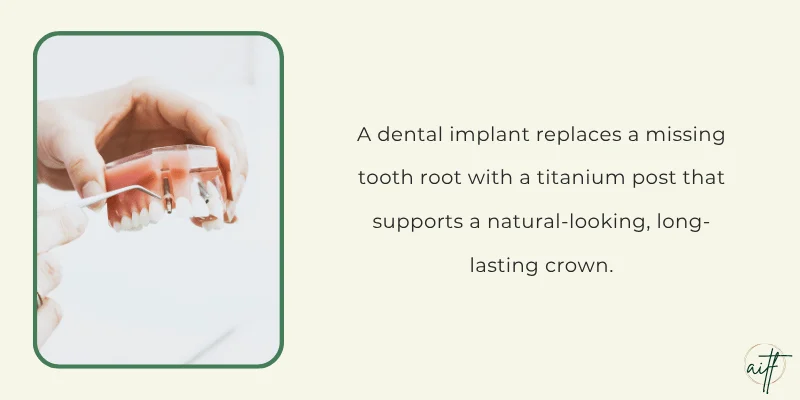
A dental implant is a titanium post that’s surgically placed into your jawbone to act as an artificial tooth root. This post bonds with your bone over time through a process that typically takes several months.
After the implant fuses with your jawbone, your dentist attaches an abutment to connect the implant to a dental crown. The crown is the visible part that looks and functions like a natural tooth.
Dental implants can last a lifetime with proper care because they become a permanent part of your jaw structure. The titanium material is biocompatible, which means your body accepts it without rejection.
The entire process usually takes 4-7 months from start to finish. You’ll need adequate bone density for the implant to succeed, though bone grafting can help if you don’t have enough natural bone.
What Is a Dental Bridge?
A dental bridge is a fixed partial denture that fills the gap left by one or more missing teeth. The bridge consists of a pontic (the artificial tooth) held in place by crowns on your adjacent teeth.
Your dentist will reshape the teeth on either side of the gap by removing some enamel. These prepared teeth, called abutment teeth, receive crowns that anchor the bridge in place.
The pontic sits between these crowns to replace your missing tooth. Bridges typically last 5 to 15 years before needing replacement.
The installation process takes just one to three weeks, making bridges much faster than implants. However, bridges don’t preserve jawbone health the way implants do since they rest on top of your gums rather than in the bone.
Types and Materials of Bridges
Traditional bridges are the most common type and use crowns on both sides of the missing tooth. Your dentist cements these bridges permanently in place.
Cantilever bridges attach to only one adjacent tooth when you don’t have teeth on both sides of the gap. The bridge extends over the empty space, though this puts more stress on the supporting tooth.
Maryland bridges use metal or porcelain wings bonded to the back of adjacent teeth instead of full crowns. This option preserves more of your natural tooth structure.
Implant-supported bridges rest on dental implants rather than natural teeth. This works well when you’re missing several teeth in a row.
Bridge materials include:
- Porcelain fused to metal: Strong and natural-looking
- All-ceramic or all-porcelain: Best for front teeth aesthetics
- Zirconia crowns: Highly durable and tooth-colored
- Gold alloys: Extremely strong for back teeth
Tooth Replacement Options Beyond Implants and Bridges
Partial dentures are removable prosthetic teeth that clip onto your remaining natural teeth. They cost less than bridges or implants but feel less stable and need removal for cleaning.
Implant-supported dentures combine the stability of implants with the coverage of dentures. Several implants anchor a full or partial denture in place, providing better chewing ability than traditional dentures.
A flipper is a temporary partial denture made from acrylic that you can wear while waiting for a permanent solution. It’s the most affordable option but also the least durable.
Your dentist might also recommend doing nothing if the missing tooth is far back in your mouth and doesn’t affect appearance or function. However, this can lead to bone loss and shifting of adjacent teeth over time.
Want to learn more about dental implants vs bridge cost? Contact our Evansville, IN office today.
Cost Breakdown: Implants vs Bridges
A single dental implant typically costs between $3,500 and $6,500, while a three-unit bridge ranges from $2,000 to $5,000.
The gap narrows when you factor in insurance coverage, replacement needs, and the treatment your neighboring teeth may require over time.
Initial Costs Explained

The cost of a dental implant includes the titanium post, abutment, and crown. You’ll pay separately for imaging, bone grafting if needed, and the temporary restoration.
Most patients pay $1,500 to $2,500 for the implant fixture and surgery. The abutment adds $300 to $500. Your final crown costs $1,000 to $3,000 depending on material.
Dental bridge cost breaks down differently. Your dentist reshapes two neighboring teeth and places crowns on them to support the artificial tooth in between. A standard three-unit bridge costs $2,000 to $4,500 for porcelain-fused-to-metal.
All-ceramic bridges run higher at $2,500 to $5,000. If you need a temporary bridge while your permanent one is made, expect $300 to $800 extra.
Insurance Coverage and Out-of-Pocket Expenses
Most dental plans classify both options as a major restorative procedure. That means 40% to 50% coverage after you meet your deductible.
Annual maximums usually cap at $1,500 to $2,500. If your implant cost is $5,000 and your plan covers 50% up to $2,000, you’ll pay $3,000 out of pocket.
Bridge vs implant cost looks different under insurance. Some plans cover bridges more readily than implants because bridges have been around longer.
Check your policy’s waiting period for major work. Many plans require 6 to 12 months before covering these procedures. Ask whether bone grafting counts toward your annual maximum if you need it for an implant.
Long-Term Value and Replacement Cycles
Implants last 15 to 25 years or longer with good care. Bridges typically last 7 to 15 years before needing replacement.
If you replace a bridge twice over 20 years at $3,500 each time, you’ll spend $7,000 total. A single implant at $5,000 that lasts 25 years costs less per year.
Bridge replacement also affects the teeth supporting it. Those anchor teeth face higher stress and decay risk. You might need crowns or other work on them later.
An implant-supported bridge for multiple missing teeth costs more upfront but eliminates stress on natural teeth. The math changes when you’re replacing several teeth at once instead of just one.
Bridge vs Implant Cost Factors
Your final price depends on your bone density, gum health, and how many teeth you’re replacing. Complex cases cost more regardless of which option you choose.
Implant cost increases if you need:
- Bone grafting ($300 to $3,000)
- Sinus lift ($1,500 to $3,000)
- 3D imaging ($150 to $500)
- Sedation ($200 to $800)
Bridge cost changes based on:
- Number of units in the bridge
- Material choice (porcelain, zirconia, metal)
- Condition of anchor teeth
- Lab fees in your area
Your location matters too.

Health Impact and Longevity
Your choice between implants and bridges affects bone health, nearby teeth, and how long your restoration will last.
Implants stimulate bone like natural teeth, while bridges rely on support from adjacent teeth without addressing underlying bone loss.
Preserving Jawbone and Preventing Bone Loss
Bone loss begins as soon as you lose a tooth. Without the stimulation that tooth roots provide, your jawbone starts to shrink.
Dental implants help prevent bone loss through osseointegration. This is when the titanium post fuses with your jawbone, creating the same kind of stimulation your natural tooth root provided.
The constant pressure from chewing keeps your bone density stable.
Bridges don’t offer this benefit. Since they sit on top of your gums without replacing the root, bone resorption continues underneath. You can lose up to 50% of bone width in the first year after tooth loss.
If you wait too long to get an implant, you might need a bone graft or sinus lift first. These procedures add bone volume so the implant has enough support. The healing period for bone grafting adds 3-6 months to your treatment timeline.
Effect on Adjacent and Abutment Teeth
Bridges require permanent changes to your adjacent teeth. Your dentist must reshape the teeth on both sides of the gap to fit the bridge crowns.
These abutment teeth take on extra chewing forces for the rest of the bridge’s life. The supporting teeth carry the load of three teeth instead of one. This increased stress can lead to cracks, decay, or other problems over time.
Implants stand alone. They don’t touch or affect nearby teeth at all. Your natural teeth stay intact and healthy.
The abutment (connector piece) on an implant only affects the implant itself, not neighboring teeth. This makes implants a better choice when your surrounding teeth are healthy and you want to keep them that way.
Expected Lifespan and Durability
Implants can last 25 years or more with proper care, while most bridges need replacement every 10-15 years. The bridge lifespan depends heavily on how well you maintain the abutment teeth.
Implant survival rates:
- 10 years: approximately 95%
- 20+ years: common with good hygiene
Bridge survival rates:
- 10 years: 80-90%
- 15 years: 70-85%
You’ll likely replace a bridge at least once in your lifetime. Each replacement requires more work on the supporting teeth, which can weaken them further.
Risks and Complications Over Time
Peri-implantitis is the main long-term risk for implants. This infection around the implant affects 10-20% of patients and can lead to bone loss if untreated. Good oral hygiene and regular dental exams reduce this risk significantly.
Bridges face different problems. Decay can develop under the crowns where you can’t see it. The cement seal can break down, allowing bacteria inside.
Your oral surgeon or dentist will monitor both options at checkups. Implants need professional cleaning around the gum line. Bridges require special floss threaders to clean underneath the replacement tooth.
Smoking increases failure risk for both options but especially for implants. Controlled diabetes shows similar implant success rates to non-diabetic patients, but poor blood sugar control raises complication risk.
Procedure, Maintenance, and Care
The steps to get a bridge or implant differ significantly, with implants requiring surgery and a longer healing period while bridges involve preparing adjacent teeth.
Both options need regular cleaning and checkups to stay healthy and last as long as possible.
Surgical and Non-Surgical Steps
Getting a dental implant requires implant surgery, where a dentist places a metal post into your jawbone.
This implant procedure typically takes several months because the post needs to fuse with your bone through a process called osseointegration.
After the healing period, your dentist attaches an abutment and then the final crown. The entire process usually takes three to six months from start to finish.
Bridges don’t require surgery. Your dentist will perform tooth reduction on the teeth next to the gap, shaping them to support the bridge. This involves removing some enamel from these healthy teeth.
The dentist then takes impressions and places a temporary bridge while a lab creates your permanent one. You’ll return in a few weeks to have the final dental restoration bonded in place.
Oral Hygiene and Cleaning
Both implants and bridges need good oral hygiene to prevent problems and stay healthy. You should brush twice daily and clean around your dental restoration carefully.
For implants, you can brush and floss like natural teeth. Pay extra attention to where the crown meets your gum line to prevent inflammation.
Bridges require special floss or floss threaders to clean underneath the artificial tooth. A floss threader helps you guide regular floss under the bridge where food and plaque can collect.
Water flossers work well for both options and make cleaning easier. Regular brushing and flossing help prevent gum disease, which can damage your implant or the teeth supporting your bridge.
Follow-Up and Dental Checkups

Regular dental checkups help your dentist monitor your implant or bridge and catch any issues early. You should visit your dentist every six months for cleanings and exams.
Your dentist will check for signs of infection, gum disease, or damage to your restoration. They’ll also clean areas you might miss during daily care.
Implants can develop a condition similar to gum disease called peri-implantitis if not properly maintained. Bridges need monitoring because decay can form on the supporting teeth underneath the crowns.
Professional cleanings remove hardened plaque that regular brushing can’t eliminate. These visits protect your investment and help your restoration last longer.
Bridge vs Implant Daily Care
Your daily care routine differs slightly between these two options. Implants function like natural teeth, so you can maintain them with normal brushing and standard flossing techniques.
Bridges need more attention because food gets trapped underneath. You’ll spend extra time using floss threaders or special floss to clean these hard-to-reach areas each day.
Daily care for implants:
- Brush twice daily with a soft-bristled toothbrush
- Floss once daily using regular dental floss
- Use an antibacterial mouthwash if recommended
Daily care for bridges:
- Brush twice daily, especially around the bridge margins
- Use a floss threader or water flosser to clean under the bridge
- Consider interdental brushes for tight spaces
Both require commitment to oral health, but bridges demand more time and special tools for proper cleaning.
Choosing the Right Tooth Replacement for You
Your decision between dental implants vs bridges depends on your health status, the number of teeth you need to replace, and your financial situation.
These factors work together to determine which option makes the most sense for your specific needs.
Personal Health and Medical Considerations
Your overall dental health plays a major role in determining whether a bridge vs implant is right for you. If you have strong, healthy teeth on both sides of the gap, a bridge can work well.
However, if those neighboring teeth have cavities or previous dental work, they may not be good candidates to support a bridge.
Your jawbone health is equally important. A single dental implant requires adequate bone density to support the titanium post.
If you’ve experienced bone loss from a missing tooth, you might need a bone graft before getting an implant. This adds time and cost to the process.
Certain medical conditions affect your options too. If you have diabetes, autoimmune disorders, or take medications that slow healing, your dentist may recommend a bridge instead of implants.
Your age and lifestyle also matter when weighing tooth replacement options.
Is a Bridge or Implant Best for Multiple Missing Teeth?
The number of missing teeth changes the implant vs bridge comparison significantly. For one missing tooth, you can choose between a traditional bridge or a single implant. For multiple adjacent missing teeth, you have more complex options.
A traditional bridge can replace up to three or four teeth in a row by anchoring to healthy teeth on each end. An implant-supported bridge uses two or more implants as anchors instead of natural teeth.
This protects your healthy teeth from being shaved down.
Multiple Missing Teeth Options:
- Traditional bridge: Covers 2-4 adjacent gaps using natural teeth as anchors
- Implant-supported bridge: Uses implants as anchors for multiple false teeth
- Individual implants: Separate implant for each missing tooth
- Partial dentures: Removable option for scattered missing teeth
Budgeting for Your Dental Future
The bridge vs implant cost difference goes beyond the initial price tag. Bridges typically cost less upfront, ranging from $2,000 to $5,000 per tooth. Implants cost more initially, often $3,000 to $6,000 per tooth.
Your insurance coverage matters significantly. Most dental insurance plans cover bridges more readily than implants. Check your policy to see what percentage of each procedure is covered and what your annual maximum benefit allows.
Think about replacement costs over time. Bridges last 5 to 15 years and require complete replacement. The supporting teeth can also develop problems that need additional treatment.
Implants can last 25 years or longer, making them more cost-effective over your lifetime despite the higher initial investment.
Frequently Asked Questions
Cost differences between implants and bridges become clearer when you look at specific scenarios over time. Insurance coverage and replacement needs play major roles in what you’ll actually pay.
Which option typically costs less over 10–15 years: a dental implant or a traditional bridge?
A dental implant usually costs less over 10–15 years even though it has a higher upfront price. Bridges typically need replacement every 10-15 years, which means you’ll pay for a new bridge at least once during that period.
Dental implants can last 20 years or longer with proper care. You avoid the cost of replacement procedures and new materials.
The initial investment in an implant ranges from $3,000 to $6,000 per tooth. A bridge costs between $1,500 and $5,000 upfront, but adding replacement costs pushes the total higher over time.
How do replacement and maintenance costs (like repairs or re-cementing) affect the long-term price of a bridge compared with an implant?
Bridges require slightly more upkeep than implants throughout their lifespan. You might need re-cementing if the bridge becomes loose, which adds $100 to $300 per visit.
Bridges can also crack or chip, requiring repairs that cost several hundred dollars. If the supporting teeth develop decay underneath the bridge, you’ll need additional dental work.
Implants need routine cleaning and checkups but rarely require repairs. The crown on top of an implant might need replacement after 10–15 years, costing around $1,000 to $2,000.
How does dental insurance usually cover implants versus bridges, and what out-of-pocket costs should I expect?
Most dental insurance plans cover bridges more generously than implants. Many plans classify bridges as a standard restorative procedure and cover 50% to 80% of the cost.
Insurance companies often view implants as cosmetic or elective procedures. Your plan might cover only 0% to 50% of implant costs, leaving you with higher out-of-pocket expenses.
Some plans have annual maximum benefits of $1,000 to $2,000, which covers only a fraction of either treatment. You’ll need to check your specific policy to understand your coverage limits.
What is the typical cost difference between replacing a single missing tooth with an implant versus a bridge?
A single dental implant costs between $3,000 and $6,000 for the complete procedure. This includes the implant post, abutment, and crown.
A traditional bridge for one missing tooth ranges from $1,500 to $5,000. The bridge requires shaping the teeth on both sides of the gap to support the false tooth.
The upfront difference is about $1,500 to $1,000 more for an implant. However, the bridge affects two healthy teeth, which can lead to additional costs if those teeth develop problems later.
Are implants or bridges more cost-effective for front teeth when considering long-term durability and aesthetics?
Implants are usually more cost-effective for front teeth over the long term. Front teeth endure less chewing force than back teeth, so implants in this area often last 25 years or more.
A bridge for front teeth can look natural initially but may need replacement sooner due to gum recession or discoloration. Replacing a front bridge costs the same as the original procedure plus any additional work needed on the supporting teeth.
Implants maintain better gum health around front teeth because they don’t put pressure on neighboring teeth. This preservation helps your smile look more natural as you age.
For a three-tooth gap, how do the long-term costs compare between an implant-supported bridge and a traditional three-unit bridge?
A traditional three-unit bridge costs $3,000 to $10,000 upfront and requires grinding down two healthy teeth. You’ll likely replace this bridge at least once every 10–15 years, doubling your total investment.
An implant-supported bridge uses two implants to support three teeth and costs $6,000 to $15,000 initially. This option preserves your natural teeth and typically lasts 20 years or longer without replacement.
Over 20 years, you might spend $6,000 to $20,000 on traditional bridges including replacements. The implant-supported option stays closer to the original $6,000 to $15,000 range with minimal additional costs.