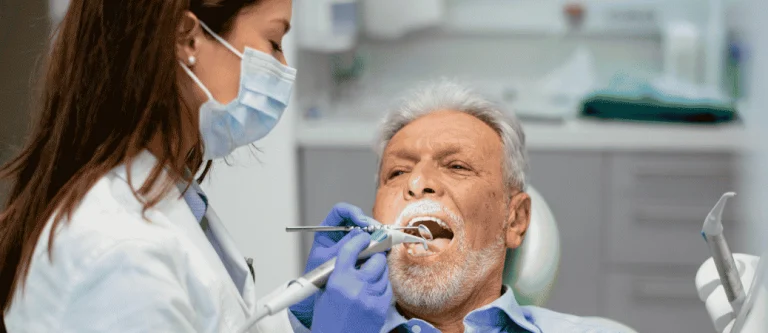
If your dentures have started slipping, rubbing, or trapping food after years of good service, you may be dealing with denture sore spots after years of wear.
This usually means your gums and jawbone have changed shape, not that you’ve done anything wrong. It is a common concern for people who have worn the same denture comfortably for years.
Sore spots and looseness almost always point to a shift in the tissue and bone underneath the denture. That shift is normal after tooth loss, and it keeps happening slowly for as long as you wear a denture.
The good news is that a loose or sore denture rarely means you need to start over with a whole new set.
For many patients, the fix is a reline, a rebase, or in some cases, a conversation about implant-supported options. Knowing which one fits your situation starts with understanding what’s actually changed in your mouth.
Key Takeaways
- Sore spots and slipping after years of denture wear usually come from changes in your gums and jawbone, not a defect in the denture itself.
- A reline or rebase can often restore comfort and fit without replacing the whole denture, depending on the condition of the base and teeth.
- Ongoing looseness despite repeated relines can be a sign to talk about implant-supported dentures with a dentist.
Why a Denture That Once Fit Well Starts Moving
A denture that fit well for years can loosen because the bone and gum ridge underneath it keep changing shape long after your teeth were removed.
This process is gradual, which is why the shift can feel sudden even though it built up slowly.
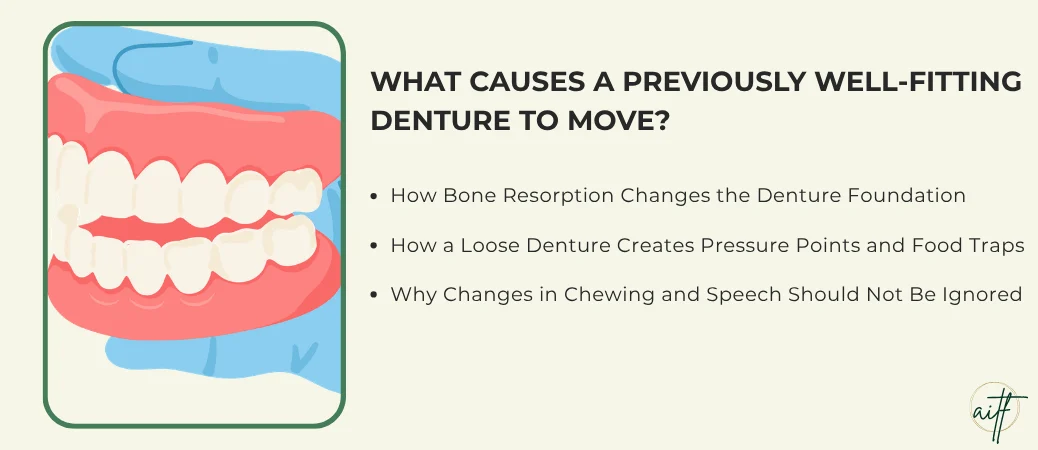
How Bone Resorption Changes the Denture Foundation
Bone resorption is the slow shrinking of your jawbone that happens once teeth are no longer there to stimulate it.
Your denture was shaped to match your ridge at one point in time, but that ridge keeps changing beneath the surface.
This process is fastest in the first year after teeth are removed and continues at a slower pace after that. As bone volume decreases, the denture base no longer matches the contour of your gums.
That mismatch is what creates rocking, slipping, and pressure points, even if the denture itself hasn’t changed at all.
How a Loose Denture Creates Pressure Points and Food Traps
A loose denture shifts slightly with every bite, and that small movement concentrates chewing force on certain spots instead of spreading it evenly.
Over time, those pressure points turn into sore, irritated areas on your gums.
The same gaps that let the denture move also let food slip underneath it. This is common with both full dentures and partial dentures, since partials can loosen further if a supporting natural tooth shifts or is lost.
Food trapping adds to irritation and can make chewing feel unpredictable.
Why Changes in Chewing and Speech Should Not Be Ignored
Changes in how you chew or speak are early warning signs worth taking seriously. Clicking sounds, slurred words, or food that seems harder to manage all point to a denture that no longer sits the way it used to.
These changes rarely fix themselves. Left alone, they tend to get more noticeable rather than settle down, which is why an evaluation sooner rather than later can prevent bigger problems.
What Do Sore Spots and Slipping Tell You About Denture Fit?
Sore spots and slipping tell you the fit between your denture and your gums has changed enough to cause friction and movement.
These symptoms are your mouth’s way of flagging a mismatch, not a sign that you’re doing something wrong with your denture care.
Signs That Call for a Denture Adjustment or Fit Evaluation
Several signs suggest it’s time to have your denture checked. Watch for:
- Rocking or shifting when you chew or talk
- Sore spots, ulcers, or redness on your gums
- Food collecting underneath the denture more than before
- A clicking sound or slurred speech
- A sense that the denture sits differently than it did originally
- Needing more denture adhesive than you used to
Noticing any of these on their own is worth mentioning at your next visit. Noticing several together is a stronger sign that a fit evaluation shouldn’t wait.
When Denture Adhesive Is Helpful and When It Is Hiding a Problem
Denture adhesive works well as a short-term comfort aid for everyday wear. Many long-term denture wearers use it without any underlying problem at all.
The signal to watch for is a change in your adhesive habits. If you find yourself using more adhesive than before, applying it more often, or needing it just to get through a meal, that increase usually means the fit has shifted enough to need attention.
Adhesive can mask a loose fit temporarily, but it does not correct the bone or tissue change causing it.
Why New Dentures Need Early Follow-Up Care
New dentures need a short adjustment period, and minor soreness in the first few weeks is common while your mouth adapts.
Immediate dentures, placed right after extractions, often need more follow-up visits early on because your gums and bone are still healing and changing shape.
Early follow-up appointments let your dentist catch small pressure points before they turn into bigger sore spots.
Skipping these visits is one of the most common reasons new denture wearers end up with avoidable irritation.
Reline, Rebase, or Replacement: Which Repair Matches the Problem?
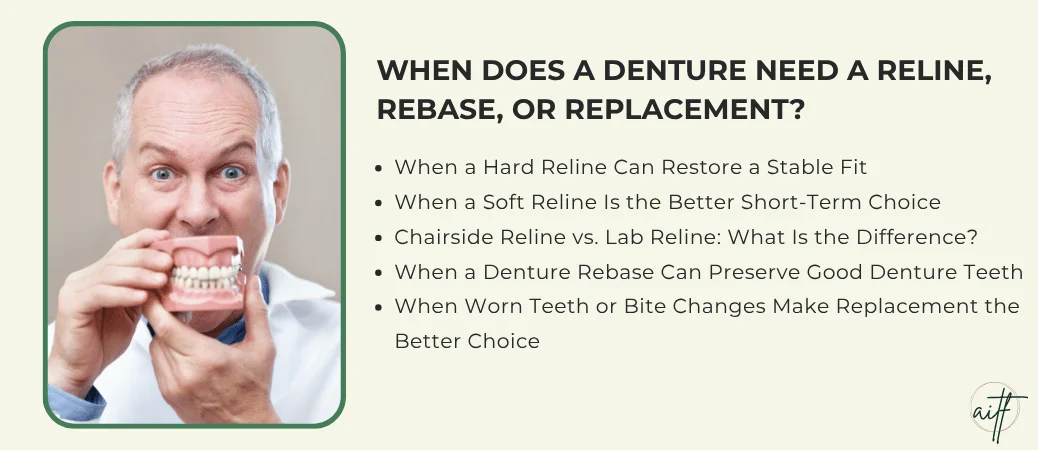
The right fix depends on what part of your denture has changed: the fitting surface, the base material, or the teeth and bite.
A denture reline adjusts only the surface that touches your gums, a denture rebase replaces the entire acrylic base while keeping your existing teeth, and replacement becomes the better option when the teeth are worn down or your bite has shifted.
| Option | What It Changes | Typical Lifespan Before Reassessment | Best For |
| Soft reline | Cushioned layer on fitting surface | Needs replacing more often than hard relines | Sensitive or thin gum tissue |
| Hard reline | Rigid acrylic layer on fitting surface | Roughly 1-2 years | Stable bite, moderate bone change |
| Denture rebase | Entire acrylic base, teeth kept | Similar to a hard reline’s interval | Good teeth, worn or aged base |
| New dentures | Full replacement, base and teeth | Several years, varies by wear | Worn teeth, bite/vertical dimension changes |
When a Hard Reline Can Restore a Stable Fit
A hard reline works well when your bite still feels correct and the change in fit is moderate.
It uses the same rigid acrylic as your original denture base, so it holds up to normal chewing force and lasts about as long as the denture’s typical wear cycle allows.
Many long-term wearers do well with a hard reline every one to two years once their bone resorption has slowed. It’s often the first option a dentist will consider when the base is otherwise in good shape.
When a Soft Reline Is the Better Short-Term Choice
A soft reline suits gums that are thin, sensitive, or prone to sore spots. The cushioned material absorbs some chewing force instead of transferring it directly to your tissue, which can bring quick relief for chronic soreness.
Soft relines wear out faster than hard relines and need replacing more often. Many dentists use them as a bridge while healing occurs or while deciding on a longer-term plan.
Chairside Reline vs. Lab Reline: What Is the Difference?
A chairside reline is done in the dental office in one visit, while a lab reline involves sending your denture out for a technician to complete, usually over a few days.
Chairside relines offer speed and convenience, and lab relines tend to offer a more precise, durable finish because they’re processed under more controlled conditions.
When a Denture Rebase Can Preserve Good Denture Teeth
A denture rebase makes sense when your denture teeth are still in good shape but the acrylic base has become worn, weakened, or discolored. Instead of starting over, your existing teeth are reset into a freshly made base that matches your current gum contour.
This option is often considered when the amount of tissue change is more than a simple reline can correct, but replacing the teeth themselves isn’t necessary yet.
When Worn Teeth or Bite Changes Make Replacement the Better Choice
Replacement becomes the better choice once the denture teeth are visibly worn down or your bite feels different than it used to.
Worn acrylic teeth can flatten over years of chewing, which changes your vertical dimension, the distance between your upper and lower jaw when your teeth come together.
Changes in vertical dimension can affect chewing comfort, facial appearance, and even jaw muscle strain.
At that point, a reline or rebase won’t correct the underlying bite problem, and new conventional dentures (or a conversation about implant-supported options) becomes the more realistic path forward.
When Implant-Supported Dentures May Be the More Reliable Option
Implant-supported dentures are worth considering when relines keep failing to hold or when bone loss has progressed enough to make a removable denture consistently unstable.
This option anchors the denture to your jawbone instead of relying on suction and gum contact alone.
How Dental Implants Help Stabilize a Denture
Dental implants act as anchor points that a denture snaps onto, instead of resting loosely on your gums.
This setup uses two to four implants placed in the jawbone, and it provides noticeably more stability than a conventional denture that depends on suction and adhesive.
The denture still comes out for cleaning, but it stays firmly in place while you eat and talk.
For patients dealing with ongoing slipping despite adhesive and adjustments, this stability can change daily comfort. You can learn more about how dental implants compare with traditional dentures during a consultation.
When Ongoing Relines Suggest More Than a Fit Problem
Needing frequent relines within a short span of time can signal that your bone loss has outpaced what a reline can correct.
If your denture feels loose again within months rather than years, that pattern is worth discussing directly with your dentist.
At that point, the conversation often shifts from repeated repairs toward a more stable, long-term solution.
Comparing dental implants vs. dentures side by side can help clarify what fits your situation.
What Bone Volume Means for Implant Planning
Bone volume determines whether implants can be placed successfully and how many may be recommended.
A dentist evaluates the width and height of your jawbone using imaging before recommending a specific implant plan, since adequate bone volume is what allows implants to integrate securely.
If bone volume has decreased significantly, additional planning or bone grafting may be part of the discussion.
Options such as all-on-X implant-supported dentures are sometimes designed specifically for patients with reduced bone volume, since fewer implants can be strategically placed to support a full arch.
Choosing the Right Next Step for a Comfortable, Secure Denture
The right next step depends on what’s changed in your mouth, not on how long you’ve worn dentures.
A denture that’s been reliable for years can often be restored with a reline or rebase, while ongoing soreness and slipping despite repeated adjustments may point toward implant-supported dentures instead.
The team at All In The Family Dental starts with a clinical evaluation to see exactly what’s causing your symptoms: gum tissue changes, a worn base, worn teeth, or reduced bone volume.
That evaluation is what separates a simple fit issue from a denture that’s reached the end of its useful life.
Good denture care between visits (daily cleaning, careful handling, and regular checkups) helps extend the comfort of whatever option you choose.
Frequently Asked Questions
Can a denture reline get rid of sore spots?
A denture reline can resolve sore spots caused by a mismatch between your denture and your current gum shape.
Once the fitting surface is adjusted to match your ridge, the pressure points that caused irritation are often relieved.
If soreness continues after a reline, your dentist may need to check for other causes, such as worn teeth or bite changes.
How often should dentures be relined after years of wear?
Many long-term wearers need a reline every one to two years, though the right timing depends on how quickly your bone and gum tissue are changing.
Some people need relines more often in the first year after getting a new denture. A dentist can check your fit at a regular visit rather than waiting for a fixed schedule.
Is a soft reline better than a hard reline for tender gums?
A soft reline is often more comfortable for tender or thin gum tissue because the cushioned material absorbs some chewing pressure. A hard reline offers a firmer, more durable fit and tends to last longer.
Your dentist can recommend which type suits your gum health and how you use your denture day to day.
When is a denture rebase better than getting new dentures?
A denture rebase makes sense when your denture teeth are still in good condition but the base has become worn, discolored, or no longer matches your gum shape.
New dentures become the better option once the teeth themselves are worn down or your bite has shifted. A dentist can assess both the base and the teeth to determine which route fits your situation.
Do I need implants if my lower denture keeps slipping?
Not necessarily, but persistent slipping despite relines and adhesive is a common reason patients start exploring implant-supported dentures.
Lower dentures tend to be less stable than upper dentures because of jawbone shape and reduced surface area for suction.
A dentist can evaluate your bone volume and daily symptoms to see if you may be a candidate.
Should I use denture adhesive every day?
Using denture adhesive daily is common and not a sign you’re doing something wrong.
It becomes a signal worth mentioning to your dentist if you notice yourself needing more of it than before or applying it just to get through meals, since that change can mean your fit has shifted.