You want a solution that fits your life, not a one-size-fits-all answer. If you need stable chewing, long-term jaw health, and a near-natural feel, dental implants usually improve quality of life more than traditional dentures.
Implants often give better comfort, function, and lasting results, while dentures can be a quicker, lower-cost option that still restores your smile.
Think about what matters most: eating without worry, smiling with confidence, or keeping costs low. This article compares how dental implants vs dentures affect daily life, oral health, and long-term costs so you can choose the option that best matches your goals.
Key Takeaways
- Implants typically provide better function and comfort.
- Dentures offer a faster, more affordable way to replace teeth.
- Long-term mouth health and costs vary by option and personal needs.
Dental Implants vs Dentures: Key Differences
You’ll learn how each option attaches, what you must do to care for them, and how they affect chewing, speech, and jaw health. Expect clear differences in stability, lifespan, and the steps needed for fitting.
How Dental Implants Work
Dental implants are metal posts (usually titanium) surgically placed into your jawbone to act like tooth roots. A prosthodontist or implant dentist will first check your bone with X-rays or CT scans. If your jaw has enough bone, the implant is placed and left to fuse with bone in a process called osseointegration. This can take a few months.
After healing, an abutment attaches to the post, and a crown or implant-supported bridge is fixed on top. Implants feel and function like natural teeth, so you can chew tougher foods and speak without slipping. You clean them like real teeth, brush, floss, and keep regular dental visits. With good care, they can last many years.
How Dentures Work
Dentures are removable prosthetics that replace some or all of your teeth. Partial dentures clip onto remaining natural teeth using metal clasps or precision attachments. Complete dentures rest on your gums and rely on suction, adhesives, and fit to stay in place.
A prosthodontist takes impressions and adjusts the denture over several visits to improve fit and comfort. Dentures don’t stop jawbone loss because they don’t stimulate the bone. You must clean them daily, remove them at night, and expect relines or replacements every 5–10 years as your mouth changes.
They are usually faster and less costly to get than implants, but they can shift while you eat or speak.
Implant-Supported Dentures and Bridges
Implant-supported dentures use two or more implants to anchor a removable or fixed denture. You get higher stability than regular dentures and less movement when you chew or talk. For full arches, clinicians often use four to six implants to support a fixed implant-supported bridge or a snap-on overdenture.
This option helps preserve jawbone because the implants transmit biting forces to bone. Maintenance includes cleaning around implants and periodic checks by your dentist. Implant-supported options cost more and require surgery and healing time, but they combine denture coverage with the strength and comfort of implants.
Explore dental implant solutions designed to look, feel, and function like natural teeth. Visit our dental implant services page to learn how implants restore confidence, stability, and comfort everyday life.
Quality of Life: Function and Comfort
This section explains how each option affects eating, talking, and how secure your teeth feel every day. It focuses on the real differences that matter: chewing strength, speech, and whether your replacement stays put.
Chewing Efficiency and Bite Force
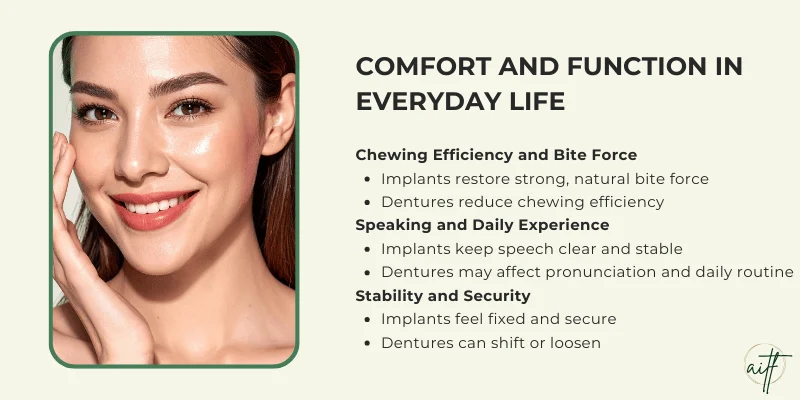
When you lose teeth, your chewing power drops. Dental implants attach to the jawbone and restore much of your natural bite force. That means you can eat firmer foods like apples, nuts, and meat without worrying about slipping or pain.
Traditional dentures rest on the gums and typically provide less chewing efficiency. You may need to avoid hard or sticky foods. Implant-supported dentures, such as All-on-4, improve chewing compared with removable dentures because they anchor to implants and transfer bite force into bone.
If restoring your ability to eat a full range of foods matters, implants or implant-supported prostheses offer a stronger, longer‑term solution than removable dentures.
Speaking and Daily Experience
Missing teeth and loose dentures can change how you speak. Implants hold replacement teeth in a fixed position, so your words stay clear and stable. You won’t have to pause or adjust your speech because of shifting teeth.
Dentures can affect pronunciation at first. They may need adjustment or practice to fit comfortably. Over time, adhesive or relining can help, but you might still notice changes with certain sounds.
Daily life also includes brushing, cleaning, and sleeping with your prosthetic. Implants let you care for replacements much like real teeth. Dentures require nightly removal and special cleaning, which can add steps to your routine.
Stability and Security
Stability affects confidence. Implants fuse to bone through osseointegration, so the crowns or fixed bridges feel permanent and secure. That reduces worries about slipping during meals or social situations.
Removable dentures rely on suction, adhesives, or clasps. They can loosen with bone changes or when eating tough foods. Implant-supported dentures offer a middle ground: a denture that clips onto implants for better hold but may still be removable for cleaning.
If you want a permanent tooth replacement that stays in place and preserves jawbone, implants give the highest stability. If you prefer a non-surgical or lower‑cost choice, dentures remain an option but often mean accepting more movement and maintenance.
Oral Health and Jawbone Preservation
Dental choices affect how your jaw holds up over time and how healthy your gums and bone stay. You will learn how missing teeth change bone density, how implants bond to bone, and why gum health matters for any prosthetic.
Bone Loss and Bone Health
When you lose a tooth, the jawbone in that spot stops getting pressure from chewing. That causes bone resorption, the body removes bone it thinks is no longer needed. Over months and years this can reduce jawbone density and change your facial shape.
Dentures that sit on the gums do not restore chewing force into the bone. That means denture wearers often face gradual bone loss unless they use implant-supported options. If bone loss is advanced, your dentist may recommend a bone graft to rebuild height or width before placing implants.
You should track bone changes with X-rays or CBCT scans. Early detection helps you plan treatments such as grafts, ridge preservation, or implant placement to protect long-term jawbone health.
Jawbone Density and Osseointegration
Dental implants are titanium posts that replace tooth roots and transfer chewing forces into the jaw. This force keeps bone active and helps maintain jawbone density through a process called osseointegration, where bone grows tightly around the implant surface.
Successful osseointegration depends on bone quality and quantity, your general health, and smoking status. If your jawbone is thin, your dentist can place a bone graft or use narrow implants to achieve stable support. Healing usually takes several months before the crown or denture attaches.
You should expect follow-up imaging and checks during healing. Proper oral care and avoiding heavy loads on a new implant help osseointegration succeed and preserve jawbone health over time.
Gum Disease Considerations
Gum disease (periodontitis) causes inflammation and destroys the tissues that support teeth, including alveolar bone. If you have active gum disease, you face higher risk of bone loss and implant failure unless the infection is treated first.
Before placing implants, your dentist will treat gum disease with deep cleanings, improved home care, and possibly antibiotics. After implant placement, you must keep gums healthy with daily brushing, flossing around abutments, and regular professional cleanings to prevent peri-implantitis, infection around implants that can cause bone loss.
If you use dentures, gum health still matters. Inflamed gums change the fit of a denture and speed bone resorption. Control of gum disease protects both natural teeth and any prosthetic you choose.
Cost Comparison and Longevity
You will see higher upfront costs for implants but lower ongoing expenses over time. Dentures cost less initially but often require repairs, relines, or full replacement every few years.
Cost of Dental Implants
Dental implants usually cost more up front because you pay for the implant post, abutment, and crown. A single-tooth implant in the U.S. commonly runs from about $3,000 to $6,000, depending on materials and location. Full-arch options like All‑On‑4 can range from roughly $18,000 to $30,000 per arch.
Surgery fees, 3D imaging, and any bone grafting add to the total. You may also have follow-up visits and occasional crown replacements after many years.
Many patients find implants more cost-effective long term because they reduce the need for frequent repairs and preserve jawbone, factors that lower future dental bills. For more on long-term cost and comfort, see this comparison of dentures vs implants.
Cost of Dentures
Dentures carry a much lower initial price. A single full upper or lower denture commonly costs between $1,000 and $3,000 for a standard set, while premium cosmetic dentures can cost $3,000–$6,000. You avoid surgery and major imaging costs.
However, expect yearly maintenance costs for relines, adhesives, and repairs, often $200–$500 per year. Over 5–10 years, you may need new dentures or adjustments as jawbone and gum shape change.
If you choose a permanent denture option that attaches to implants, costs sit between removable dentures and full implant solutions. Read about cost and maintenance differences in a practical guide to dental implants vs dentures.
Long-Term Value and Durability
Think about total cost over 10–20 years, not just the first bill. Dentures typically last 5–7 years before you need a replacement or major reline. They can accelerate jawbone resorption, which may force more frequent replacements and add reconstructive costs.
Implants offer higher durability; many implant restorations last 15–25 years or longer with proper care. They help preserve bone, so your prosthetic fit stays stable and you avoid some future procedures. Use this simple comparison to weigh choices:
- Dentures: low initial cost, ongoing maintenance, shorter lifespan.
- Implants: high initial cost, low long-term maintenance, greater longevity and bone preservation.
If long-term durability matters most to you, implants often provide better value despite the higher start-up cost.
Have questions about dentures or dental implants? Contact All In The Family Dental in Evansville today to get clear answers, guidance, and friendly support for improving your smile and comfort.
Aesthetics and Lifestyle Factors
This section explains how your choice affects how you look, how you care for your teeth, and what you can eat. It contrasts long-term appearance, daily routines, and eating comfort so you can weigh what fits your life and budget.
Natural Appearance and Confidence
Dental implants mimic natural teeth because they anchor into your jawbone. This support keeps your face shape stable and helps restore your smile in a way removable dentures often cannot.
If you choose an implant-supported bridge or an All-on-4 system, the prosthetic sits securely and looks like real teeth, which can boost your confidence when you talk or smile.
Dentures can match tooth color and shape well, but they may not prevent jawbone shrinkage. If bone loss progresses, you might need relining or a different denture fit.
Denture adhesive can help reduce slipping, yet it won’t restore the root function that preserves bone. Think about how much you value a natural look and long-term facial support when deciding.
Daily Maintenance and Care
Implants require the same daily care as natural teeth: brushing twice a day, flossing, and regular dental checkups. You won’t need denture adhesive, and implant crowns rarely need replacement for many years with good care. Periodic professional cleanings and exams keep implants healthy and detect any problems early.
Dentures require a nightly removal routine. You must clean them with a denture brush and soak them to prevent staining and odor. Adhesives help with fit but add time to your morning and evening routine.
Over time, dentures need relining or replacement as your jaw changes. Factor in this ongoing care when you plan your daily schedule.
Diet, Eating Habits, and Taste
With implants, you regain most chewing force and can eat harder foods like apples, nuts, and steak more comfortably. Implant-supported restorations reduce food restrictions and let you taste and enjoy meals without worrying about slippage. This change often makes social meals less stressful.
Dentures can limit what you eat at first. Sticky or hard foods may dislodge them, and chewing efficiency is lower than with implants. You can use denture adhesive to improve stability, but some foods may still be challenging.
If you value a broad diet and strong bite force, implants or an All-on-4 option may serve your lifestyle better.
Choosing the Right Tooth Replacement Option
You’ll weigh health, time, and daily habits when picking a solution. Think about how each choice affects chewing, speech, bone health, and how much time and care you can commit.
Candidacy and Health Considerations
Your jawbone quality matters. Dental implants need enough bone to hold the implant placement; sometimes you’ll need a bone graft first. Dentures do not require implant surgery but may need extractions or gum treatments before fitting.
General health also affects choices. Implant surgery usually happens under local anesthesia and needs healing; conditions like uncontrolled diabetes or heavy smoking can raise risks. If you take certain medications or had head and neck radiation, tell your dentist so they can assess implant candidacy.
Age isn’t the only factor. Your oral hygiene habits and commitment to follow-up visits determine long-term success. If you want to preserve jawbone and avoid shifting teeth, implants often help. If surgery is not an option, well-made dentures can still restore chewing and speech.
Treatment Timeline and Procedure Overview
Implant placement takes multiple steps. First you’ll have a consult and scans. Then the dentist places a titanium post into your jaw during implant surgery under local anesthesia. You wait months for the bone to fuse (osseointegration) before adding the abutment and crown.
Dentures move faster. You may get temporary dentures right after extractions, with a final set after gums heal in a few weeks. Full-arch implant-supported prostheses exist too; they combine implants with denture-style teeth and shorten adjustment time for stability.
Expect post-op care either way. Implants require careful cleaning around the implant and regular checkups to prevent infection. Dentures need daily removal, cleaning, and occasional relines as your gums change.
Personal Preferences and Lifestyle Goals
Decide how you want to eat and speak. If you want to eat nuts, steak, or chew confidently, implants or implant-supported prostheses offer the strongest bite. Dentures can restore many foods but may limit crunchy or sticky items unless they’re secured by implants.
Consider daily routines. Implants act like natural teeth and don’t need nightly removal, which suits people who want low daily maintenance. Dentures require cleaning, soaking, and adhesives for some people, and you should be willing to perform these tasks.
Budget and timeline matter too. Implants cost more upfront and require several visits. Dentures are less costly and quicker. If keeping jawbone and long-term stability are priorities, implants are worth discussing with your dentist; for lower cost or medical limits, dentures remain a practical option.
Ready to decide between dental implants and dentures? Schedule a visit at the Evansville, IN, clinic to discuss your goals, health, and the option that best supports your lifestyle.
Frequently Asked Questions
This section answers common concerns about function, comfort, cost, and long-term effects so you can compare practical trade-offs. Read the short Q&As to see how implants and dentures differ in everyday life and future needs.
What are the long-term benefits of dental implants compared to dentures?
Implants fuse to your jawbone and act like natural tooth roots. That gives you stronger bite force and more stable chewing over many years.
Dentures can restore appearance and basic chewing, but they often need relines or replacement every 5–7 years. Implants typically require fewer follow-up prosthetic replacements if you keep good oral hygiene.
Can dental implants help preserve jawbone and facial structure better than dentures?
Yes. Implants stimulate the jawbone when you chew, which helps slow bone loss. That preserves facial height and reduces the “sunken” look that can happen after tooth loss.
Traditional dentures sit on top of the gums and do not transmit chewing forces to the bone. That lack of stimulation often speeds bone resorption over time.
How do dentures and implants differ in terms of daily maintenance and care?
Dentures require daily removal and cleaning with a brush and denture cleanser. You also need to soak them overnight and check fit regularly for soreness or looseness.
Implants need the same brushing and flossing you use for natural teeth. You may also need periodic professional cleanings and checkups to monitor the implant and surrounding bone.
Are dental implants more comfortable than dentures for everyday activities like eating and speaking?
Many people find implants more comfortable because they do not shift while you eat or talk. Implants restore chewing efficiency closer to natural teeth, so you can bite firmer foods with less worry.
Dentures can feel bulky at first and may move or cause sore spots. Proper fit and adhesives help, and implant-supported dentures reduce movement compared with traditional removable dentures.
What is the average lifespan of dental implants versus dentures?
Single dental implants can last decades and often remain functional for 25 years or more with good care. The attached crowns or bridges may need replacement sooner due to wear.
Dentures generally last about 5–7 years before needing replacement or relining. Wear, changes in your jaw shape, and material fatigue drive that timeline.
How does the initial cost of dental implants compare to that of dentures over time?
Dentures cost less up front, often making them the more affordable short-term option. Implants have higher initial costs because of surgery, parts, and lab fees.
Over time, implants can be more cost-effective because they need fewer replacements and reduce bone-related problems. Dentures may incur repeated costs for relines, repairs, and new sets every few years.