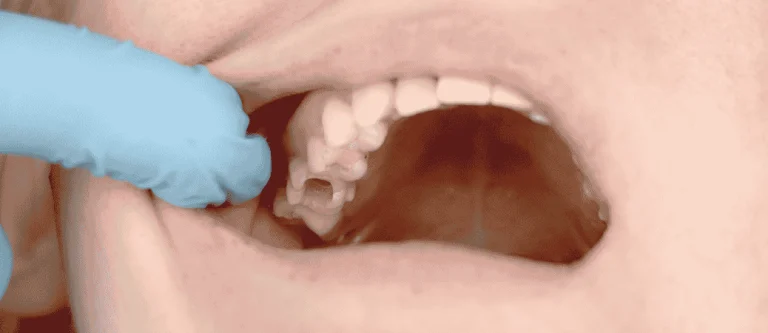
Still have your wisdom teeth in your 30s? You might think you missed your chance to have them removed.
The good news is that it is not too late, and wisdom teeth removal in your 30s is a safe and common choice for many adults.
Third molars often cause problems later in life, even if they seemed fine in your 20s. Pain, swelling, or crowding can show up out of nowhere.
Understanding your options now can help protect your oral health for years to come.
This guide walks you through what to expect if you are thinking about removing your wisdom teeth in your 30s.
You will learn the signs to watch for, why a dentist might suggest extraction, and what recovery looks like at this stage of life.
Key Takeaways
- Wisdom teeth removal is still a safe option for most people in their 30s.
- Pain, swelling, or crowding can be signs that your teeth need a dentist’s evaluation.
- Talking with your dental team can help you decide if surgery and recovery are right for you.
Is Removal Still an Option in Your 30s?
Yes, wisdom tooth removal is still an option in your 30s, even though it may take a bit more planning than it would have in your teens.
Your dentist or oral surgeon can look at your specific situation, including your jawbone and bone density, to decide if surgery is right for you.
Why Age Is Not an Automatic Barrier
Age alone does not rule out wisdom tooth extraction. Many adults have this surgery well into their 30s, 40s, and even later.
Your dentist will look at your overall health, not just your birth date. If your teeth are impacted, infected, or crowding other teeth, removal can still be a smart choice at any age.
Healing might take a little longer than it would for a teenager. But healthy adults usually recover just fine after the procedure.
The main things your oral surgeon will check are your bone density, your health history, and how your teeth are positioned. These factors matter more than your exact age.
How Roots and Jawbone Change Over Time
As you get older, your jawbone becomes denser and harder. This can make wisdom teeth removal surgery a bit more involved than it would be for a younger patient.
Tooth roots also finish growing and become fully formed by your 30s. Fully formed roots can be trickier to remove compared to the shorter, softer roots seen in teens.
Recovery time may be a bit longer because of these changes in bone and root structure. Swelling and soreness might last a few extra days compared to a younger patient.
None of this means the surgery is unsafe. It just means your oral surgeon may use a slightly different approach to make the extraction go smoothly.
When Monitoring May Be Appropriate
Not every wisdom tooth needs to come out right away. If your tooth is healthy, fully grown in, and not causing any pain or crowding, your dentist might suggest watching it instead.
Regular checkups let your dentist track any changes early. This includes watching for signs of infection, decay, or shifting teeth.
Monitoring works best when you can keep the area clean and there are no symptoms like pain or swelling.
Your dentist will check X-rays over time to see if your wisdom tooth stays in a safe position.
If problems do develop, like an infection or damage to nearby teeth, your dentist will likely recommend moving forward with extraction.
Until then, simple monitoring can be a safe and easy path.
Signs Your Wisdom Teeth Need Professional Evaluation
Your body often tells you when something is wrong with your wisdom teeth.
Pay attention to pain, swelling, gum problems, and trouble cleaning your back teeth, since these can point to issues that need a dentist’s help.
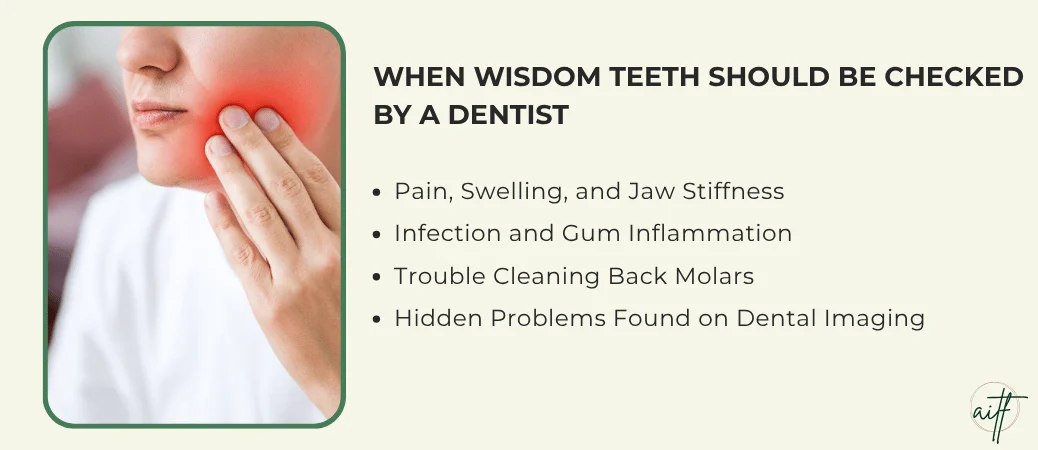
Pain, Swelling, and Jaw Stiffness
Pain near your back teeth is one of the first signs that something might be wrong. This pain can come and go, or it might stay constant and get worse over time.
Swelling in your gums or jaw is another warning sign. You might notice your face looks puffy on one side, or your gums feel tender when you touch them.
Jaw stiffness can also point to wisdom teeth problems.
If you find it hard to open your mouth all the way, or your jaw feels tight when you chew, jaw stiffness could mean your wisdom teeth are pushing against other teeth or bone.
Infection and Gum Inflammation
Infections around wisdom teeth happen when bacteria get trapped in the gum tissue. This can cause redness, inflammation, and a bad taste in your mouth that won’t go away.
Gum disease is a real risk when wisdom teeth don’t fully break through.
Partially erupted teeth create small pockets where food and bacteria collect, which can lead to ongoing gum problems if left untreated.
You might also notice:
- Bad breath that doesn’t improve with brushing
- A bad taste that lingers
- Gums that bleed easily near the back of your mouth
- Swelling that comes with fever or feeling unwell
Left untreated, these infections can spread and cause bigger dental problems down the road.
Trouble Cleaning Back Molars
Good oral hygiene gets harder when wisdom teeth grow in wrong or only partially come through. These teeth sit far back in your mouth, making them tough to reach with a regular toothbrush.
When you can’t clean your back molars well, plaque builds up faster. This raises your risk of cavities and gum disease in that area.
Some people notice food gets stuck around their wisdom teeth no matter how carefully they brush and floss.
If this keeps happening, it may be a sign your wisdom teeth are positioned in a way that makes proper cleaning nearly impossible without professional help.
Hidden Problems Found on Dental Imaging
Not all wisdom teeth problems show up as pain or visible swelling. Some issues stay hidden until a dentist takes a closer look with digital imaging.
X-rays can reveal impacted teeth, cysts, or damage to nearby teeth roots that you can’t see or feel yet. This kind of imaging often shows dental problems before they turn into painful emergencies.
For adults in their 30s, imaging becomes even more useful. Jaw bone density changes over time, and imaging helps your dentist see exactly how your wisdom teeth are positioned and whether they pose a risk to your other teeth or overall oral health.
Reasons a Dentist May Recommend Extraction
A dentist looks at more than just your age when deciding if you need your wisdom teeth out. Instead, they check things like tooth position, nearby teeth, gum health, and X-ray images to spot problems early.
Impacted or Partially Erupted Teeth
When you’re in your 30s, your jaw is fully grown, and there’s often not enough room for wisdom teeth to come in the right way.
This can lead to impacted wisdom teeth, which means the tooth is stuck under your gum or bone and can’t break through normally.
Sometimes a wisdom tooth only partially breaks through your gum line. This creates a small flap of tissue where food and bacteria can get trapped. That flap can get sore, swollen, or infected over and over again.
An impacted wisdom tooth often causes:
- Jaw pain or stiffness
- Swollen, tender gums near your back molars
- Bad breath that doesn’t go away with brushing
- A hard time opening your mouth all the way
Damage to Nearby Teeth and Tooth Decay
Wisdom teeth that grow in at an angle can push against the molar next to them. Over time, this pressure can wear down or crack that healthy tooth.
Your dentist may recommend removal simply to protect the teeth you already have.
Wisdom teeth are also hard to reach with a toothbrush or floss because they sit so far back in your mouth. This makes them more likely to develop tooth decay.
Since they’re partly hidden by gum tissue, cavities can grow without you noticing right away.
If decay spreads to the tooth next to it, you could end up needing more extensive dental work than just one extraction.
Catching this early can save you time, money, and discomfort down the road.
Crowding, Cysts, and Bone Changes
Wisdom teeth can push against your other teeth as they try to come in, leading to crowding. This kind of overcrowding can shift your front teeth out of place, even if you’ve had braces before.
In some cases, a fluid-filled sac called a cyst can form around an impacted tooth. Left untreated, a cyst can grow and cause bone loss in your jaw.
This weakens the area and can make future dental work harder to do safely.
Regular dental X-rays help your dentist spot these changes before they turn into bigger problems.
Removing the wisdom tooth early can stop a cyst from growing and protect your jawbone.
Abscesses and Other Serious Findings
An infected wisdom tooth can lead to an abscess, which is a painful pocket of pus that forms near the tooth root or gum.
Abscesses can cause swelling, fever, and a bad taste in your mouth. If left alone, the infection can spread to other parts of your face or jaw.
Though rare, tumors can also form around an impacted wisdom tooth over time. Your dentist will use imaging to check for any unusual growths near the tooth.
If your dentist finds an abscess, cyst, or other serious issue, they’ll likely recommend the dental procedure to remove the tooth as soon as possible to protect your health.
What the Surgical Process Involves
Getting your wisdom teeth out in your 30s follows the same basic steps as any other age, but your dentist may take extra care with planning.
Here’s what you can expect from your first appointment to the day of your procedure.

Consultation and Imaging Assessment
Before anything happens, you’ll sit down with your dentist or an oral surgeon to talk about your teeth. They’ll ask about your health history and any medications you take.
Next comes digital imaging to get a clear picture of what’s going on. This step matters more once you’re past your mid-20s, since your jawbone is fully formed and denser than it was as a teenager.
The images show your surgeon exactly where your teeth sit and how close they are to nerves in your jaw.
This helps them plan the safest way to remove your teeth. It also lowers your risk of surprises during surgery.
Simple Versus Surgical Extraction
Not all wisdom tooth removals are the same. Some teeth come out easily, while others need more work.
Here’s how the two types compare:
| Type | What It Involves | When It’s Used |
| Simple extraction | Tooth is loosened and lifted out | Tooth has fully broken through the gum |
| Surgical extraction | Gum tissue is cut, and sometimes bone is removed | Tooth is impacted or still under the gum |
By your 30s, you’re more likely to need a surgical extraction than a simple one. Your roots have had more time to grow, and they’re often more curved or fully set into the bone.
Your surgeon may need to divide the tooth into smaller pieces to remove it without damaging the bone around it.
Anesthesia and Sedation Options
You won’t feel pain during your procedure, no matter which method your surgeon uses.
There are a few sedation options to choose from, and you’ll pick one based on your comfort level and the complexity of your case.
Local anesthesia numbs your mouth while you stay awake. You might also get nitrous oxide, or laughing gas, to help you relax.
IV sedation makes you drowsy, and many people don’t remember much of the procedure afterward.
General anesthesia puts you fully to sleep, which is common for more complex cases involving multiple impacted teeth.
Your surgeon will talk you through these choices at your consultation. Adults sometimes need stronger sedation than teens because their extractions tend to be more involved.
Choosing a Dentist or Oral Surgeon
Picking the right person for the job makes a real difference in how smoothly things go.
Your regular dentist can handle simple extractions, but impacted or complex teeth usually call for an experienced dentist.
Oral surgeons have extra training specifically for procedures like this. They deal with tricky cases every day, including teeth close to nerves or deep in the jawbone.
Ask about their experience with adult patients before you book your surgery. You’ll also want to ask how they handle rare risks like nerve damage, since your nerves sit closer to your jaw as you age.
Recovery and Post-Operative Care
Recovery after wisdom teeth removal in your 30s follows the same basic steps as it does for younger patients, though healing may take a bit longer.
Sticking to your post-operative care instructions will help you avoid problems like dry socket and infection while keeping pain and swelling under control.
Expected Recovery Time and Common Symptoms
Your recovery time will depend on how complex your extraction was. Most people need two to three days of rest before they feel ready to return to normal activities.
The soft tissue in your mouth usually takes one to two weeks to heal. You might still notice some mild swelling even after two weeks, and that’s normal.
You can expect some pain, bruising, and swelling in the days right after surgery. A low-grade fever under 101°F is also common and can be treated with acetaminophen.
Call your dentist if your fever climbs above 102°F or lasts more than two days.
Managing Swelling and Discomfort
Swelling and mild pain are normal after your extraction. You can manage both at home with a few simple steps.
For the first 24 hours, use ice packs on the outside of your face near the surgery site. This helps keep swelling down.
Sitting or sleeping with your head propped up can also help.
For pain, over-the-counter medicine works well for most people:
- Acetaminophen (Tylenol)
- Ibuprofen (Advil, Motrin)
You can take both together for better pain relief, but check with your dentist first. If you’re given a stronger prescription pain medication, take it on a regular schedule for the first two to three days.
Some bruising near your jaw, cheeks, or even eyes is normal and should fade on its own.
Soft Foods and Oral Hygiene During Healing
Your diet needs to change for a few days after surgery. Stick to liquids and soft foods like smoothies, mashed potatoes, and applesauce.
Skip anything spicy, acidic, hard, or crunchy. These foods can irritate the surgery site and slow healing.
Good oral hygiene matters just as much as your diet. Keep your mouth clean, but be gentle around the extraction site to protect your gum health and avoid disturbing the healing tissue.
Your dentist will tell you when it’s safe to start rinsing with salt water or brushing near the area again.
Avoiding Dry Socket and Knowing When to Call
Dry socket happens when the blood clot at the extraction site comes loose too early. It’s painful but not dangerous, and your dentist can treat it with a simple dressing at their office.
Watch for signs of infection as you heal. These include new or worsening swelling, especially if it feels full of fluid.
Other warning signs include white or yellow discharge, a bad taste or smell in your mouth, fever, and swollen glands.
Call your dentist if you notice any of these symptoms or if your pain gets worse after it first started improving.
Some bleeding is normal in the first few days, but call your dentist if it seems heavier than expected or won’t stop with steady pressure on gauze.
Making an Informed Decision With Your Dental Team
Deciding whether to remove your wisdom teeth in your 30s is a personal choice.
Your dentist and oral surgeon can help you weigh the benefits and risks based on your own mouth and health history.

Balancing the Benefits and Risks of Waiting
Waiting to remove your wisdom teeth is not always a bad idea. But it does come with some risks you should think about.
As you get older, your jawbone gets denser. This can make wisdom teeth removal at age 30 a bit more involved than it would have been in your teens.
Higher bone density can mean a longer healing time after surgery. It may also raise the chance of problems like nerve damage or damage to nearby teeth.
On the other hand, if your wisdom teeth are not causing pain or other issues, your dentist might suggest keeping an eye on them instead of rushing into surgery.
Questions to Ask at Your Consultation
A consultation with your dentist is the best place to get clear answers. Come prepared with a few key questions.
Ask about the position of your wisdom teeth and whether they are impacted. You can also ask how your bone density might affect the surgery and recovery time.
It helps to ask about the risks of delaying treatment, such as gum disease or infection. You should also ask what kind of anesthesia they recommend and what your recovery will look like.
Do not be afraid to ask about costs, financial options, and how many similar procedures your surgeon has performed on adults your age.
Why Individual Health Factors Matter
No two mouths are exactly alike, so your treatment plan should be based on your own health, not just general age guidelines.
Your dentist will look at things like your gum health, bone strength, and how your teeth are positioned.
If you already have gum disease or other oral health concerns, this can change how your surgeon approaches the procedure.
Your overall health also plays a role. Conditions like diabetes or a weaker immune system can affect healing time after wisdom teeth removal.
By sharing your full health history, you help your dental team create a plan that fits your specific needs and reduces the chance of complications.
Frequently Asked Questions
Getting your wisdom teeth removed in your 30s brings up a lot of questions about safety, recovery time, and whether the surgery is even needed.
Here are answers to the most common questions people ask before deciding what to do.
Is it safe to have wisdom teeth removed in your 30s?
Yes, it is safe to have wisdom teeth removed in your 30s. Millions of people have this surgery done well past their teens and twenties without major problems.
The key is finding an experienced oral surgeon who knows how to handle the denser jawbone and more developed roots that come with age.
As one guide points out, adults in their 30s and 40s can still have successful extractions when the procedure is done by a skilled surgeon.
Is 37 too old to get wisdom teeth removed?
No, 37 is not too old to get your wisdom teeth removed. Age alone does not stop you from having the surgery.
Your dentist will look at things like the position of your teeth, your jawbone density, and your overall health.
Some clinics note that it’s technically never too late to have wisdom teeth taken out, though the procedure may require more planning as you get older.
Does wisdom tooth removal take longer to recover from after age 30?
Yes, recovery often takes longer after age 30. Your jawbone gets denser as you age, and the roots of your wisdom teeth are more fully formed.
This means your body needs more time to heal after the surgery. Younger patients, especially those between 15 and 22 years old, tend to heal faster because their roots aren’t fully formed and their jawbone is less dense.
What are the risks of removing wisdom teeth in your 30s or 40s?
The main risks include a longer healing time, more swelling, and a higher chance of nerve irritation near the lower jaw.
Denser bone can also make the extraction itself more complex.
These risks are manageable with the right surgeon. Many clinics stress that patients in their 30s, 40s, and beyond can still have successful extractions as long as an experienced oral surgeon performs the procedure.
Is it normal to still have wisdom teeth in your 30s?
Yes, it’s completely normal to still have your wisdom teeth in your 30s. Not everyone has problems with these teeth at a young age.
Some people don’t notice any pain, swelling, or pressure until later in life. In fact, some patients only experience wisdom tooth trouble in their 30s, 40s, or even 50s, which is why removal at this age is so common.
Do wisdom teeth need to be removed if they are not causing problems?
No, you don’t always need to remove wisdom teeth that aren’t causing problems. If they are healthy, fully grown in, sitting in the right position, and easy to clean, your dentist may suggest leaving them alone.
However, wisdom teeth often don’t have enough room to grow properly. This can lead to issues like impacted teeth, infections, cysts, or damage to nearby teeth, which are all good reasons to consider removal even without current symptoms.