You wake up with a dull headache, your jaw feels tight, and your partner mentions hearing strange grinding sounds during the night.
These are classic signs of bruxism, or teeth grinding at night, a condition that affects millions of people.
While occasional grinding might not seem like a big deal, regular teeth grinding can lead to serious dental damage and chronic pain. So, wondering, do I need a night guard?
If you notice worn, flattened, or chipped teeth, jaw soreness, or frequent morning headaches, you likely need a night guard to protect your teeth from further damage.
Night guards act as a cushion between your upper and lower teeth, preventing the costly damage that grinding causes.
However, a night guard alone might not be enough if your bruxism stems from sleep apnea, severe stress, or other underlying conditions that need separate treatment.
Understanding when you need a simple mouth guard versus more comprehensive care can save you from thousands of dollars in dental repairs down the road.
Your dentist can spot the warning signs during regular checkups and help you figure out the best approach for your specific situation.
Key Takeaways
- Night guards protect your teeth from grinding damage and are often the most cost-effective solution for bruxism
- Dentists check for signs like worn teeth, jaw tenderness, and facial pain during regular exams to diagnose teeth grinding
- Addressing underlying causes like stress, sleep disorders, or medication side effects may require additional treatment beyond a night guard
Table of Content
- Spotting the Warning Signs Early
- Understanding Why Teeth Grinding Happens
- How Dentists Diagnose and Monitor the Problem
- Night Guards: The Most Reliable Protection
- Beyond the Guard: Addressing Roots and Relief
- Frequently Asked Questions
Spotting the Warning Signs Early
Many people don’t realize they’re grinding their teeth at night until their dentist points out the damage.
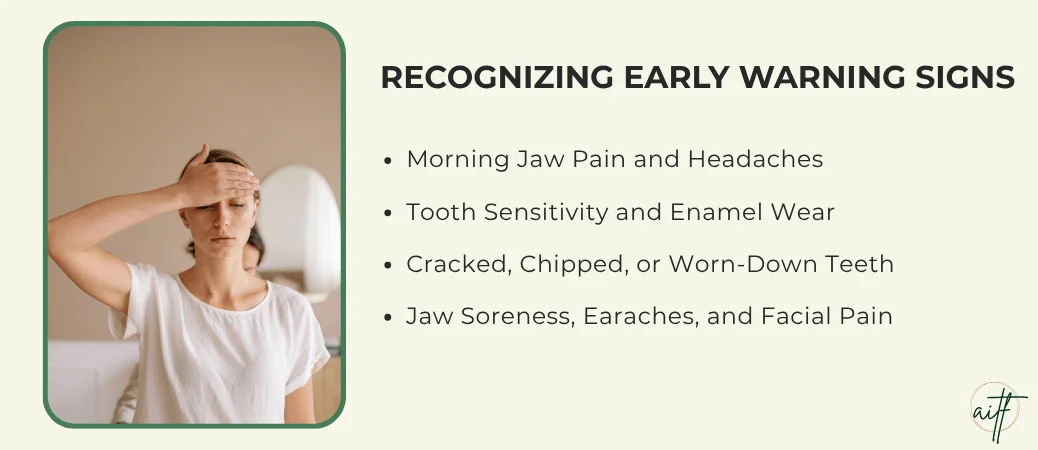
Jaw pain when you wake up, unexplained headaches, and tooth sensitivity are common bruxism symptoms that signal you might be clenching or grinding while you sleep.
Morning Jaw Pain and Headaches
If you wake up with jaw pain or soreness, it’s one of the clearest signs of nighttime teeth grinding. Your jaw muscles work overtime while you sleep, leading to tired or tight muscles by morning.
Some people can’t fully open or close their jaw, or they hear clicking and popping sounds.
Morning headaches are another red flag. These headaches typically start at your temples and feel dull rather than sharp. They happen because the constant muscle tension from grinding spreads from your jaw to your head.
If you notice this pattern regularly, especially if the pain improves as the day goes on, bruxism could be the cause.
Tooth Sensitivity and Enamel Wear
Sensitive teeth often develop when grinding wears down your enamel. You might feel sharp pain when drinking hot coffee or eating cold ice cream.
This happens because the protective outer layer of your teeth gets thinner, exposing the inner layers underneath.
Worn tooth enamel shows up as flat spots on your teeth or a generally smoothed appearance. Your dentist can spot this tooth wear during regular checkups.
The damage progresses slowly, so you might not notice it yourself until sensitivity becomes uncomfortable or your teeth look visibly shorter.
Cracked, Chipped, or Worn-Down Teeth
Cracked teeth are serious warning signs that shouldn’t be ignored. The constant pressure from grinding creates tiny fractures that can grow over time.
You might notice rough edges when running your tongue over your teeth, or see visible chips when looking in the mirror.
Teeth that look flattened or shorter than they used to be indicate significant wear. The biting surfaces lose their natural shape and contours.
Treating cracked teeth that need root canals or extractions costs much more than preventing damage with a night guard. Loose teeth can also develop if grinding continues unchecked.
Jaw Soreness, Earaches, and Facial Pain
Jaw soreness extends beyond just morning discomfort. You might feel pain throughout the day, especially when chewing or talking.
The temporomandibular joints (TMJs) in front of your ears take the brunt of grinding forces and can become inflamed.
Earaches that aren’t actually ear infections often stem from jaw clenching. The pain radiates from your jaw joints to your ear area, making it feel like an ear problem. Facial pain and soreness can spread across your cheeks and down your neck.
Some people develop larger jaw muscles from all the nighttime activity, which changes the shape of their lower face.
Understanding Why Teeth Grinding Happens
Teeth grinding doesn’t have a single cause. Stress and anxiety play major roles, but sleep disorders like obstructive sleep apnea, daily habits involving caffeine and alcohol, and physical issues with your bite or jaw can all trigger grinding episodes.
Stress, Anxiety, and Emotional Triggers
Stress is one of the most significant risk factors for teeth grinding. When you face stressful situations during the day, your body may continue that tension into the night.
Your brain doesn’t simply turn off anxiety when you fall asleep. Clenching your teeth is a common physical response to fear, anger, or worry. This reaction can carry over into both awake bruxism and sleep bruxism.
High anxiety levels keep your jaw muscles tense even when you’re not aware of it. You might grind your teeth while concentrating on work, sitting in traffic, or dealing with relationship problems.
These patterns often continue during sleep when your conscious control is gone.
Sleep Disorders and Sleep Apnea
Episodes of teeth grinding appear connected to changing sleep patterns and brief awakenings during the night. Most grinding happens right before increases in brain and heart activity.
Obstructive sleep apnea creates temporary interruptions in your breathing while you sleep. These breathing lapses cause microarousals that can trigger grinding episodes.
If you also experience snoring or wake up gasping for air, sleep apnea might be contributing to your bruxism.
Sleep bruxism occurs most often during stages 1 and 2 of non-REM sleep, early in your sleep cycle. Other sleep issues like sleep talking and sleepwalking may increase your risk of nighttime teeth grinding as well.
Lifestyle Habits That Increase Risk
Several daily habits have been linked to higher rates of teeth grinding:
- Caffeine intake stimulates your nervous system and can increase jaw muscle activity
- Alcohol consumption disrupts normal sleep patterns and muscle control
- Tobacco use affects sleep quality and increases grinding risk
These substances don’t guarantee you’ll grind your teeth, but they do increase the likelihood. Cigarette smoking, alcohol, and caffeine have all been associated with sleep bruxism in research studies.
Depression can also play a role in teeth grinding. Your mental health affects your physical responses, including jaw tension and clenching patterns.
Bite Problems and Medical Conditions
Problems with how your teeth fit together can cause grinding. When your bite feels uneven or uncomfortable, your jaw may try to correct the alignment during sleep.
Issues with the temporomandibular joint (TMJ) can both cause and result from teeth grinding. The temporomandibular joint connects your lower jaw to your skull, and problems with this joint lead to TMJ disorder or TMD.
Certain medications increase your risk of bruxism. Selective serotonin reuptake inhibitors (SSRIs), amphetamines, and some antipsychotic drugs have been linked to teeth grinding.
Talk to your doctor if you started grinding after beginning a new medication.
Genetics also play a role. About half of people with sleep bruxism have a close family member who grinds their teeth too.
How Dentists Diagnose and Monitor the Problem
Your dentist uses several methods to check if you grind your teeth and how much damage it causes. They look for physical signs during regular visits and may suggest additional tests if your grinding is severe.

Dental Exams and Checkups
During regular dental exams, your dentist checks your teeth and jaw for signs of grinding. These routine visits are the best way to catch bruxism early.
Your dentist looks at the surfaces of your teeth to see if they appear flat or worn down. They also check for chips, cracks, or loose teeth that grinding can cause.
The inside of your cheeks might show damage from biting or pressure too.
They will feel your jaw muscles to see if they are tender or tight. Your dentist also checks how your jaw moves when you open and close your mouth. Pain or stiffness when moving your jaw is a common sign of grinding.
Identifying Tooth and Jaw Damage
Your dentist looks for specific types of damage that grinding causes to your teeth and jaw. Worn enamel is one of the most common signs they spot during exams.
You might need crowns, fillings, or veneers if your teeth are damaged from grinding. Your dentist checks if the damage affects the bone under your teeth or the soft tissue inside your mouth.
X-rays help them see problems that are not visible during a regular exam.
Signs of bruxism include flattened, broken, or missing teeth. Your dentist also looks for changes in how your upper and lower teeth fit together. They check your jaw joints for clicking sounds or limited movement.
When a Sleep Study is Needed
If your dentist thinks you have severe grinding during sleep, they might refer you to a sleep specialist. A sleep study called polysomnography tracks what happens while you sleep.
This test checks for teeth grinding and other sleep problems like sleep apnea. The specialist monitors your jaw movements, breathing, and brain activity overnight.
Sleep apnea can make grinding worse, so treating it may help reduce your bruxism.
Not everyone needs a sleep study. Your dentist will recommend one if regular treatments are not working or if they suspect other sleep disorders.
Monitoring Progress Over Time
Your dentist tracks changes in your teeth and jaw over several visits. This helps them see if your grinding is getting worse or if treatment is working.
They compare photos or measurements from different dental checkups to spot new damage. If you wear a night guard, your dentist checks it for wear patterns that show where you grind the most.
They adjust your treatment plan based on what they find.
Regular monitoring helps catch problems before they become serious. Your dentist might schedule more frequent visits if your grinding is severe or causing rapid damage.

Night Guards: The Most Reliable Protection
Night guards create a protective barrier between your upper and lower teeth to absorb grinding forces while you sleep. The right fit and material make all the difference in how well they work and how long they last.
Custom Night Guards vs. Store-Bought Mouthguards
Custom night guards from your dentist offer the best fit because they’re made from molds of your actual teeth. Your dentist takes impressions and sends them to a lab that creates a guard designed specifically for your mouth.
These custom-fit options typically cost between $300 and $800.
Store-bought mouthguards cost much less, usually between $20 and $100. You can find boil-and-bite guards that soften in hot water so you can mold them to your teeth.
You can also buy one-size-fits-all guards ready to wear right out of the package.
The main trade-off is comfort and protection. Custom night guards fit better, stay in place all night, and last longer than store versions.
Many people find store-bought guards bulky and uncomfortable, which makes them less likely to wear them consistently.
How a Night Guard Protects Your Smile
Night guards protect your teeth by absorbing the force you create when you grind or clench. Without this protection, you can wear down your tooth enamel, chip teeth, or damage existing dental work like crowns and fillings.
The guard acts as a cushion that spreads out the grinding pressure across all your teeth instead of letting it concentrate on just a few spots.
This helps prevent cracks and fractures that can lead to expensive repairs later.
Your jaw muscles also benefit because the night guard can help reduce tension. Many people notice fewer morning headaches and less jaw soreness after they start wearing a guard regularly.
Getting the Right Fit
A properly fitted night guard should feel snug but not tight or painful. Pain from your night guard means it’s not working correctly and needs adjustment.
You have options for where to wear your guard. Most people wear them on their upper teeth, but some situations work better with a lower guard. If you have a large tongue, an upper guard usually works best.
If you have a small palate, a bottom guard might be more comfortable.
Key fit considerations:
- The guard shouldn’t block your airway
- You should be able to breathe normally through your mouth
- It should stay in place when you move your jaw
- There should be no sharp edges or rough spots
How Long Do Night Guards Last?
Most custom night guards last between one and five years depending on how hard you grind. Heavy grinders might need a new guard every year or two. Light grinders can get five years or more from a single guard.
Store-bought mouthguards wear out faster, typically lasting three to six months. The softer materials break down quickly under constant grinding pressure.
You’ll know it’s time for a replacement when you see holes, cracks, or thin spots in the material. Your guard should also fit snugly each night.
If it starts feeling loose or falls out while you sleep, the material has stretched and lost its shape.
Clean your night guard daily with a soft toothbrush and mild soap to help it last longer. Store it in a ventilated case to prevent bacteria growth and material breakdown.
Beyond the Guard: Addressing Roots and Relief
While night guards protect your teeth from damage, tackling the underlying causes of grinding can reduce how often you clench and improve your overall well-being.
Managing stress, improving sleep quality, treating medical conditions, and safeguarding existing dental work all play important roles in long-term relief.
Stress Reduction and Relaxation Techniques
Stress is one of the biggest triggers for teeth grinding. When you’re anxious or overwhelmed, your body often responds by clenching your jaw, even while you sleep.
Taking steps to reduce and manage stress may help naturally decrease teeth grinding. Try practicing deep breathing exercises for 5-10 minutes before bed. Focus on slow, controlled breaths that help your body shift into a calmer state.
Meditation and progressive muscle relaxation are also effective tools. Progressive muscle relaxation involves tensing and then releasing different muscle groups, which can reduce overall body tension.
You might also benefit from cognitive behavioral therapy, which helps you reframe negative thoughts and develop healthier stress responses.
Even simple activities like taking a warm bath, reading, or listening to calming music can signal to your body that it’s time to unwind.
Improving Sleep Hygiene

Poor sleep patterns can worsen teeth grinding. Episodes of teeth grinding appear to be connected to changing sleep patterns or microarousals from sleep, making quality rest essential.
Create a consistent sleep schedule by going to bed and waking up at the same times each day. Your bedroom should be cool, dark, and quiet to promote deeper sleep.
Limit caffeine and alcohol, especially in the evening. Both substances can disrupt your sleep cycle and may increase grinding episodes.
Avoid screens for at least an hour before bed, as blue light interferes with your body’s natural sleep signals.
Consider your sleeping position too. Some people find that sleeping on their back rather than their stomach reduces jaw tension during the night.
Managing Underlying Medical Conditions
Certain health issues can contribute to nighttime grinding and need proper treatment. Sleep apnea is closely linked to bruxism and requires medical attention.
If you snore loudly, wake up gasping, or feel tired despite sleeping a full night, talk to your doctor about a sleep study. Treating sleep apnea often reduces grinding significantly.
The temporomandibular joint (TMJ) connects your lower jaw to your skull. Problems with this joint, known as TMD, can both cause and result from teeth grinding.
Symptoms include jaw pain, clicking sounds when you chew, or difficulty opening your mouth fully.
Your dentist or doctor might recommend physical therapy, jaw exercises, or anti-inflammatory medications for TMJ issues. Some people benefit from Botox injections to reduce muscle activity in severe cases.
Protecting Dental Work and Preventing Further Damage
If you have existing dental restorations, grinding poses extra risks. Dental crowns, fillings, and implants can become damaged from the excessive force of clenching.
Veneers are particularly vulnerable because they’re thinner than crowns. The pressure from grinding can cause them to crack or come loose. A night guard creates a protective barrier that shields these investments.
Beyond wearing your guard consistently, avoid chewing gum and hard foods like ice or hard candies during the day. These put additional stress on your jaw muscles and dental work.
Schedule regular dental checkups so your dentist can monitor any changes. They’ll look for signs of wear, check the fit of your restorations, and catch problems early before they become serious.
If you notice any chips, cracks, or loose dental work, make an appointment right away rather than waiting for your next scheduled visit.
Frequently Asked Questions
Many people don’t realize they grind their teeth until they experience symptoms like jaw pain or tooth damage. Understanding the signs and treatment options can help you protect your teeth and get better sleep.
How can I tell if I’m grinding or clenching my teeth while I sleep?
You might wake up with a sore jaw, tired facial muscles, or a dull headache around your temples. Your bed partner may hear grinding sounds during the night.
Check your teeth in the mirror for signs of wear. Flat, chipped, or cracked teeth are common indicators of nighttime grinding.
Your tongue or cheek may show indentations from pressing against your teeth. You might also notice increased tooth sensitivity to hot or cold foods.
What symptoms might mean I need a night guard rather than just stress relief?
If you’re experiencing tooth damage like chips, cracks, or worn enamel, you need a night guard to protect your teeth. Dentists look for specific clues during routine exams that point to nighttime grinding or clenching.
Persistent jaw pain or tightness that doesn’t improve with stress management requires physical protection. A night guard creates a barrier between your upper and lower teeth.
If you have damaged dental work like crowns or fillings, a night guard prevents further harm. Stress relief techniques are helpful but won’t stop the physical damage once grinding becomes severe.
Can teeth grinding cause headaches, jaw pain, or earaches in the morning?
Yes, grinding can lead to morning headaches that feel like tension headaches. The pain comes from tightening your jaw muscles repeatedly during sleep.
Jaw pain and discomfort are among the most common symptoms. Your temporomandibular joint (TMJ) can become inflamed from the constant pressure and movement.
Earaches often occur because your jaw joint sits very close to your ear canal. The pain radiates from your overworked jaw muscles into the surrounding areas.
What’s the difference between a store-bought night guard and a custom one from a dentist?
A custom night guard from your dentist is made from molds of your specific teeth. It fits precisely and stays in place better throughout the night.
Store-bought guards use a one-size-fits-all or boil-and-bite approach. They’re cheaper but may feel bulky or uncomfortable.
Custom guards last longer and provide better protection because they’re made from higher quality materials. Your dentist can also adjust the fit if needed and ensure it’s the right type for your specific grinding pattern.
When should I see a dentist because teeth grinding might be a sign of a bigger issue?
Visit your dentist if you notice tooth damage, persistent pain, or difficulty chewing. These symptoms suggest the grinding has progressed beyond a minor issue.
If you experience clicking or locking in your jaw joint, you need professional evaluation. This could indicate TMJ problems that require specific treatment.
Teeth grinding can be connected to sleep disorders like obstructive sleep apnea. If you also snore loudly, gasp during sleep, or feel extremely tired during the day, tell your dentist so they can refer you for a sleep study.
What can I do at home to reduce nighttime grinding besides wearing a night guard?
Work on reducing your stress levels through relaxation techniques before bed. Try deep breathing, meditation, or gentle stretching to calm your mind and body.
Avoid caffeine and alcohol in the evening. Both substances can interfere with your sleep quality and increase muscle activity during the night.
Apply a warm compress to your jaw before bed to relax the muscles. Facial exercises and massage can help reduce tension in your jaw and neck area throughout the day.