You brush, you floss, you swish with mouthwash, and your breath still smells bad by mid-morning.
Bad breath that won’t go away can be frustrating, especially when you’re already following a consistent oral hygiene routine.
When bad breath keeps coming back despite mouthwash, it’s often a sign of an underlying dental problem, like gum disease or a cavity, that a rinse simply can’t reach. Mouthwash works on the surface.
Persistent bad breath, often called halitosis, usually starts below it, in gum pockets, inside a cavity, or on the back of the tongue where bacteria settle in and keep producing odor.
Figuring out which of those applies to you starts with knowing what mouthwash actually does and doesn’t do, then matching your specific symptoms to the most likely cause.
Key Takeaways
- Mouthwash only masks odor temporarily; it doesn’t reach the bacteria below the gumline or inside a cavity that keep producing the smell.
- Gum disease, tooth decay, tongue coating, and dry mouth account for most cases of chronic bad breath, though sinus, reflux, and other conditions can play a role too.
- A dental exam can pinpoint the actual source and lead to a treatment that resolves the odor instead of covering it up.
Why Does Bad Breath Return After Mouthwash?
Bad breath can return after mouthwash when the rinse does not address the underlying source of the odor.
Mouthwash may temporarily freshen your breath, but bacteria can remain in areas that a rinse alone does not adequately clean.
Where Does the Odor Come From?
Most mouth odor traces back to anaerobic bacteria, the kind that thrive without oxygen, breaking down proteins and releasing volatile sulfur compounds.
Two of these, hydrogen sulfide and methyl mercaptan, make up the bulk of what you’re smelling.
These oral bacteria live in low-oxygen hiding spots: the rough surface at the back of the tongue, the space between gum and tooth, and deep grooves in old fillings or decayed teeth.
A rinse washes over these areas without actually dislodging what’s hiding in them.
When Can a Rinse Help
Some therapeutic mouth rinses can help reduce oral bacteria when recommended as part of a dental care plan.
However, mouthwash should support brushing, flossing, and professional care rather than replace them.
Think of mouthwash as the last step in your routine, not the main event.
What Can’t It Fix?
A rinse can’t clean out a periodontal pocket, reach bacteria packed into a cavity, or resolve the dryness that lets odor-causing bacteria multiply.
If your breath turns sour again within an hour or two of swishing, that timing itself is a clue the source lies somewhere mouthwash doesn’t reach.
Which Dental Problems Can Keep Breath Smelling Bad?
Several dental conditions can cause breath odor that no amount of rinsing resolves, and gum disease sits at the top of the list.
Plaque buildup, tartar, cavities, and problems with old dental work all create pockets where bacteria settle in and stay.
How Do Gum Disease and Deep Pockets Cause Odor?
Gum disease starts as gingivitis, a milder inflammation that often causes bleeding gums, and can progress to periodontitis, where the infection reaches deeper tissue and bone.
As gum infection advances, gums pull away from teeth and form periodontal pockets, small gaps that trap bacteria out of reach of a toothbrush, floss, or rinse.
A pocket just a few millimeters deep creates a sealed, low-oxygen space, exactly the environment odor-producing bacteria prefer.
The deeper the pocket, the more bacteria it holds and the stronger the smell tends to be. Loose teeth, persistent bad taste, and gums that bleed when you brush often show up alongside this kind of odor.
Can a Cavity, Tooth Infection, or Dental Work Trap Bacteria?
Yes. A cavity creates a hole where food particles and bacteria collect and decompose, and a deep cavity that reaches the nerve can turn into a tooth infection that produces a noticeably foul smell.
Older dental work, like a dental crown with a loose margin or a filling with a small gap, can trap debris the same way.
If one specific tooth seems to be the source, or if you notice pain, swelling, or sensitivity along with the odor, that combination points toward a dental problem rather than a general hygiene issue.
Gum disease can leave gums pulled away from teeth with deep pockets that fill with odor-causing bacteria, and faulty fillings can serve as a breeding ground for bacteria as well.
What If the Cause Isn’t a Dental Infection?
Not every case of persistent bad breath starts with a gum or tooth problem. Tongue bacteria, dry mouth, and a handful of conditions outside the mouth can all produce a similar smell.
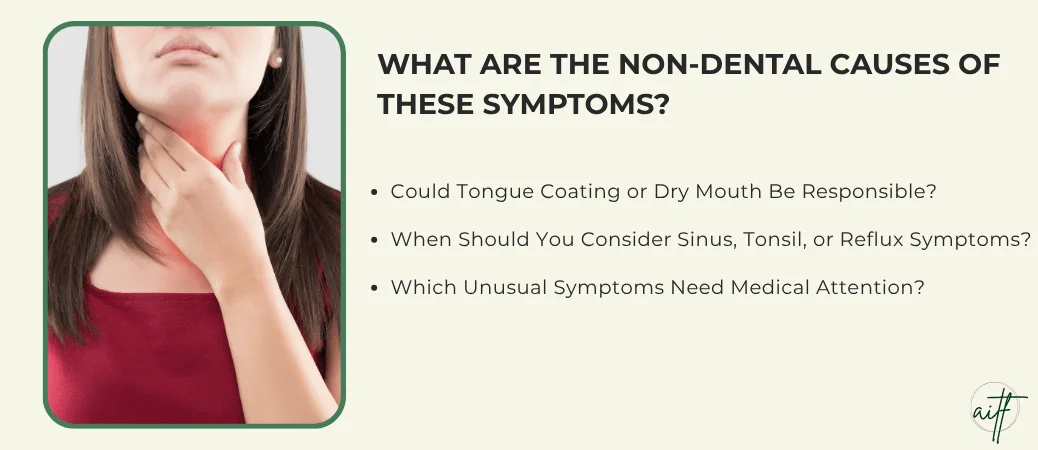
Could Tongue Coating or Dry Mouth Be Responsible?
The back of the tongue often collects a visible coating made of bacteria, dead cells, and food debris, and this coating is a frequent source of odor even when gums and teeth look healthy.
A tongue scraper or gentle brushing can noticeably improve breath within days if this is the main contributor.
Dry mouth matters just as much. Saliva flow washes away food particles and bacteria throughout the day, so when saliva production drops, whether from medication, mouth breathing, or dehydration, odor-causing bacteria have an easier time building up.
This is part of why breath tends to be worse first thing in the morning, after hours without much saliva moving through the mouth.
When Should You Consider Sinus, Tonsil, or Reflux Symptoms?
A sinus infection, chronic sinusitis, or ongoing post-nasal drip can produce breath odor that originates above the mouth rather than inside it.
Tonsil stones, small deposits that form in the tonsils from trapped debris, are another possible source, especially if you notice small white or yellow bits when you cough.
Acid reflux and gerd (gastroesophageal reflux disease) can also bring a sour or sulfur-like smell up from the stomach.
These causes tend to come with their own symptoms, like a sore throat, frequent coughing, or a burning sensation in the chest, alongside the breath odor itself.
Which Unusual Symptoms Need Medical Attention?
A smell alone rarely confirms a diagnosis, but certain patterns are worth mentioning to a physician.
A sweet or fruity smell can sometimes relate to diabetes, and a breath odor described as ammonia-like has been associated with kidney failure in some cases.
If a dental exam rules out gum disease, decay, and tongue coating, and the odor persists, that’s the point to loop in your primary care doctor for further evaluation.
How Will a Dentist Identify and Treat the Source?
A dentist identifies the source of persistent bad breath through a dental exam that checks your gums, teeth, tongue, and existing dental work for signs of infection or decay.
This exam is often quick and gives you a clear answer instead of another guess.
What Happens During a Bad Breath Dental Exam?
During a dental visit for chronic bad breath, your dentist typically measures gum pocket depth around each tooth, checks for cavities, and looks closely at the tongue and any crowns, bridges, or fillings.
They’ll likely ask about your medical history, medications, and when the odor tends to be worst, since timing and other symptoms help narrow down the cause.
This exam usually takes just part of a normal visit and doesn’t require any special preparation beyond showing up as you normally would.
Which Treatments Address the Underlying Problem?
Treatment depends entirely on what the exam finds. For gum disease, a professional dental cleaning called scaling and root planing removes bacteria and tartar from below the gumline, shrinking pockets so bacteria lose their hiding spot.
For a cavity or tooth infection, treating the decay or addressing the infected tooth removes the source directly, usually through a root canal treatment.
Ongoing gum concerns may call for a dedicated periodontal treatment plan to keep pockets shallow over time. Once the underlying issue is addressed, odor tends to improve noticeably, often faster than people expect.
When Should You Book a Visit or Seek Prompt Care?
Book a routine dental visit if bad breath has lasted more than two weeks despite good oral hygiene, or if you notice bleeding gums, a bad taste, or loose teeth.
Seek prompt care instead of waiting for your next regular check-up if the odor comes with facial swelling, fever, or significant pain, since those signs can point to a spreading infection.
What Can You Do While Waiting for an Appointment?
While you wait for your appointment, focus on the hygiene steps that actually reduce bacteria instead of just masking smell.
These habits won’t resolve a dental infection on their own, but they can meaningfully improve breath caused by plaque, food particles, or mild tongue coating.
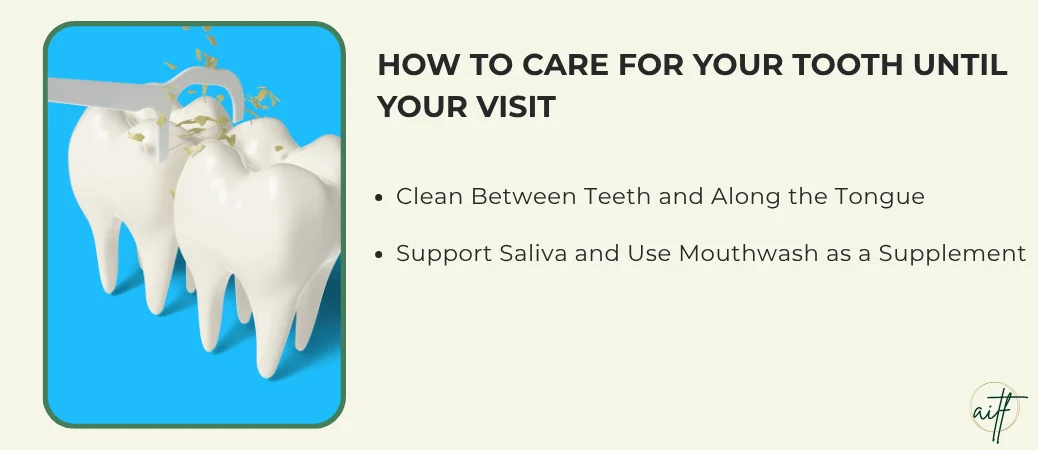
Clean Between Teeth and Along the Tongue
Thorough brushing and flossing removes plaque and trapped food particles from spots a rinse never reaches. Flossing matters especially, since it clears the space between teeth where a toothbrush bristle can’t fit.
Add tongue cleaning to your daily routine using a tongue scraper or the back of your toothbrush. Reaching toward the back of the tongue, gently, targets where bacteria concentrate most heavily.
If you smoke or use tobacco, cutting back supports both gum health and saliva flow, since tobacco use dries out the mouth and worsens gum disease risk.
Support Saliva and Use Mouthwash as a Supplement
Drink water throughout the day to keep saliva production steady, since a dry mouth gives odor-causing bacteria room to multiply. Chewing sugar-free gum can also stimulate saliva flow between brushings.
Use mouthwash as a finishing step after brushing and flossing, not as a replacement for them. An alcohol-free antibacterial rinse supports oral health without drying out your mouth further.
Find the Source Instead of Masking the Smell

Persistent bad breath can have an underlying cause, and identifying that cause is more useful than repeatedly trying to mask the odor.
The causes of chronic bad breath, whether gum disease, a cavity, tongue bacteria, or something outside the mouth entirely, respond to targeted treatment far better than to another rinse.
If you’ve been cycling through mints and mouthwash brands without real improvement, that pattern is worth bringing up at your next dental visit.
A short exam can tell you more about what’s actually happening than weeks of guessing.
Frequently Asked Questions
Why does my breath smell bad even after brushing, flossing, and mouthwash?
Bad breath that persists despite good hygiene often comes from bacteria hiding in spots your routine can’t reach, like gum pockets, the back of the tongue, or inside a cavity.
Common causes of bad breath in this pattern include gum disease, tooth decay, and dry mouth. A dental exam can confirm which one applies to you.
What does bad breath from gingivitis smell like?
There’s no single smell that confirms gingivitis on its own, but bacteria involved in gum disease commonly produce a sulfur-like or rotten-egg odor as a byproduct of breaking down tissue and plaque.
Bleeding gums and a bad taste often show up alongside it. A dentist checking your gums directly is the only reliable way to confirm gum disease as the cause.
Can a dentist tell whether gum disease is causing my bad breath?
Yes, a dentist can check for gum disease during a dental exam by measuring pocket depth around each tooth and checking for bleeding, swelling, or recession.
These measurements show whether bacteria have built up below the gumline where a rinse can’t reach. The exam usually takes just a few minutes per side of the mouth.
Does bad breath that keeps returning mean I have a tooth infection?
Not necessarily. Returning bad breath points toward several possible causes, including gum disease, tongue bacteria, and dry mouth, with tooth infection being just one possibility among them.
Pain, swelling, or sensitivity alongside the odor make a tooth infection more likely, and a dental exam can confirm or rule it out.
Can bad breath come from the stomach if my dental exam is normal?
Yes, some persistent bad breath comes from outside the mouth, including acid reflux, sinus infections, or other medical conditions.
If a dental exam rules out gum disease, decay, and tongue coating, your dentist may recommend following up with your doctor to look into these other possible sources.