You bite into a sandwich and feel a sharp jab in one tooth, but your last dental X-ray showed nothing wrong.
Tooth pain when biting down can happen even when an X-ray looks normal, and it does not mean the pain is in your head.
A normal x-ray only means the tooth and bone look structurally fine in that picture.
It cannot always catch a fine crack, bite pressure sitting wrong on one tooth, an inflamed ligament, or a tooth nerve that is just starting to react. Your symptoms still count as real evidence, even without a visible mark on film.
Also, pain when biting down with a clear x-ray usually points to a short list of causes that a focused exam can sort out, even when imaging alone cannot.
Key Takeaways
- A normal x-ray rules out some problems but cannot see fine cracks, ligament inflammation, or early nerve irritation.
- Clues like pain on release, a recent filling, or lingering temperature sensitivity help a dentist choose the right tests.
- Most causes of biting pain are treatable once identified, but swelling, fever, or worsening pain call for prompt care.
Why Can Biting Hurt When the X-Ray Is Clear?
Biting pain with a clear x-ray usually means the problem is happening in soft tissue, in a crack line, or under pressure conditions that a still image cannot capture.
Pain when biting and pain when chewing are symptoms, not a diagnosis on their own.
The same ache can come from several different causes of tooth pain, which is why the pattern of your symptoms matters as much as the pain itself.
What Dental X-Rays Can and Cannot Show
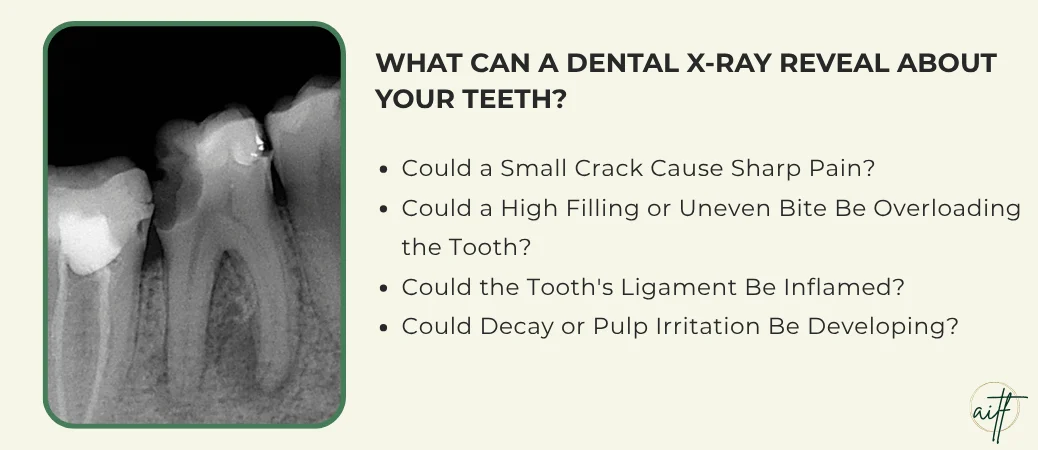
X-rays are good at finding cavities between teeth, bone loss, and larger infections near a root tip.
They are much less reliable for catching hairline cracks, especially ones that run in a direction the x-ray beam does not capture well, a limitation described in research on the painful tooth and odontogenic pain diagnosis.
Early inflammation inside the tooth or around its ligament also tends not to show up until it has progressed further.
What the Timing of Your Pain May Suggest
When your pain happens gives real clues. Pain that builds while you are actively biting down often points to pressure on something already irritated, like an inflamed tooth nerve or a filling sitting too high.
Pain that hits the moment you release your bite is a more classic sign of a crack, since the tooth flexes slightly open again and tugs on the nerve inside.
Which Tooth Problems Can Hide on an X-Ray?
Several specific problems can cause biting pain without showing on a routine x-ray: a small crack, a high filling, bite imbalance, periodontal ligament inflammation, bruxism, early decay, or pulp inflammation.
Each one has a slightly different feel, which is part of why a hands-on exam matters more than the image alone.
Could a Small Crack Cause Sharp Pain?
Yes, and this is one of the most commonly missed causes. Cracked tooth syndrome happens when a crack is too fine or runs in a direction the x-ray beam does not capture clearly.
The American Association of Endodontists notes that cracked teeth are tricky to diagnose because symptoms can come and go, and a crack may not be visible even during a close clinical look.
Pain that sharpens the moment you let go of your bite is a strong clue pointing toward this cause.
Could a High Filling or Uneven Bite Be Overloading the Tooth?
This is one of the easiest problems to fix once it is found. A filling or crown that sits even slightly too high makes that tooth absorb more force every time you close your mouth, and the same thing can happen with a broader bite imbalance.
The tooth often feels bruised or tender rather than sharply painful, and symptoms usually start soon after new dental work.
Could the Tooth’s Ligament Be Inflamed?
Grinding, clenching, or chewing something hard can inflame the periodontal ligament, the tissue that holds your tooth in its socket.
This creates a dull, lingering soreness and tenderness when you tap the tooth, which is different from the sharp zing of nerve pain.
Bruxism is a common trigger, and ongoing grinding habits are worth discussing since teeth grinding affects more than just the tooth surface over time.
Could Decay or Pulp Irritation Be Developing?
Early decay or pulp inflammation can cause pain before it is visible on an x-ray. The tooth nerve may react to biting pressure first, with temperature sensitivity following later as the inflammation progresses.
If pulp inflammation does not settle on its own, root canal treatment can often save the tooth before the problem spreads further.
Could the Pain Be Coming from Somewhere Else?
Sometimes the tooth itself is healthy, and the pain is coming from the gums, sinuses, or jaw joint instead.
Gum disease, sinus pressure, and TMJ disorders can all create sensations that feel exactly like a toothache when you bite or chew.
Gum Problems Around the Tooth
Gum disease and gum recession can make a tooth feel sore under pressure, especially once the supporting bone has started to weaken.
A deep gum pocket or trapped food between teeth can also mimic biting pain, often alongside bleeding gums or tenderness when you floss.
Periodontal treatment addresses the infection and helps protect the tissue supporting your teeth.
Sinus and Jaw Pain That Feels Like a Toothache
The roots of your upper back teeth sit close to your sinuses, so sinus pressure or congestion can ache in a way that feels like dental pain.
TMJ disorders, which affect the jaw joint, can also radiate pain into nearby teeth. A dentist typically rules out tooth-based causes first before pointing you toward a sinus or jaw explanation.
How Will a Dentist Find the Cause and Treat It?
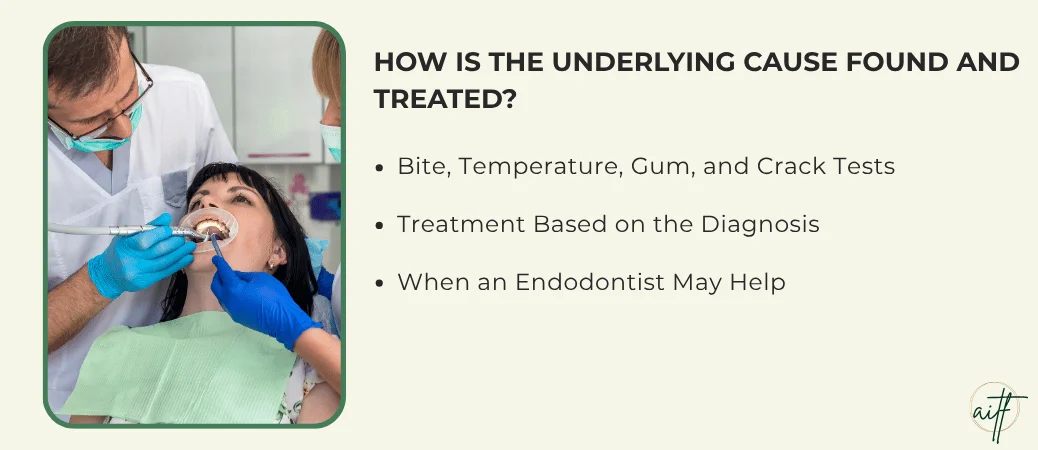
A dentist finds the cause of biting pain through a series of hands-on tests rather than repeating the same x-ray.
Bite tests, temperature tests, gum checks, and tapping each give a different piece of the puzzle, and the results guide which treatment actually fixes the problem.
Bite, Temperature, Gum, and Crack Tests
A bite test using a small stick or tool can reveal a crack or cusp fracture, since pain often shows up on biting or right after release.
Tapping on the tooth checks for ligament inflammation, while a cold test checks whether the tooth nerve is reacting normally or showing signs of pulp inflammation.
Bite paper can mark exactly where a high filling is making first contact, and gum probing checks for pockets that might be contributing to the pain.
Treatment Based on the Diagnosis
Treatment lines up directly with whatever the tests reveal:
- High bite: a quick adjustment, often with fast relief
- Crack: bonding, a crown, or an onlay depending on depth
- Ligament inflammation: reduced overload, sometimes paired with a night guard
- Pulp inflammation that does not recover: root canal treatment to save the tooth
If a filling or crown turns out to be the problem, restorative dentistry options can repair or replace it before more tooth structure is at risk.
When an Endodontist May Help
An endodontist specializes in the tooth nerve and pulp, and a referral makes sense when bite pain has no clear cause, symptoms continue despite treatment, or the x-ray stays normal while pain persists.
These specialists use advanced diagnostics suited to subtle crack and nerve problems that are hard to pin down in a general exam.
What Can You Do Until Your Appointment?
Protect the tooth and avoid making the problem worse while you wait to be seen. Tooth pain when biting down and pain when chewing both respond well to a few simple precautions in the meantime.
Ways to Avoid Making the Pain Worse
- Chew on the opposite side of your mouth
- Stick to softer foods and skip hard crusts, nuts, ice, and sticky sweets
- Keep up gentle, thorough brushing and flossing to clear trapped food
- Note patterns, like pain on release, cold sensitivity, or pain that wakes you at night, to share with your dentist
Signs That Call for Prompt or Emergency Care
Some symptoms should not wait for a routine appointment. Seek prompt care for facial, gum, or jaw swelling, fever, a bad taste that suggests spreading infection, difficulty swallowing or breathing, severe pain that wakes you at night, or a tooth that feels loose after an injury.
If you are unsure which category your symptoms fall into, a quick review of signs you need to see a dentist right away can help you decide.
A Normal X-Ray Is a Starting Point, Not an Answer

A clear x-ray narrows down the possibilities, but it does not close the case on tooth pain when biting down.
Fine cracks, bite overload, ligament inflammation, and early pulp irritation can all exist alongside a normal-looking image, and the only way to sort them out is a focused clinical exam paired with the tests described above.
Pain on release, a bruised feeling, tenderness after a new filling, and lingering temperature sensitivity are all worth mentioning to your dentist, since each one points the exam in a different direction.
If the pain persists past a few days or keeps coming back, it deserves a second look rather than being written off because the picture looked fine.
Frequently Asked Questions
Why does my tooth hurt only when I bite down?
Pain that only shows up under bite pressure usually means something is being compressed or irritated only when force is applied, like a crack, a high filling, or an inflamed ligament.
The tooth may feel completely normal otherwise because the resting state does not put stress on the sensitive area. The exact cause depends on whether the pain happens during the bite or right after you release it.
Can a tooth be infected without showing on an X-ray?
Yes, especially in the early stages before enough bone change has occurred to show up clearly on film. Pulp inflammation can exist before it progresses to a visible infection near the root tip.
This is one reason dentists use temperature and bite tests alongside imaging rather than relying on the x-ray alone.
Will biting pain go away on its own?
Some mild cases, like a very minor ligament bruise from biting something hard, can settle within a few days.
Pain linked to a crack, a high filling, or developing decay usually does not resolve without treatment and can worsen with continued chewing. Pain lasting more than a couple of days is worth having checked.
Why does my tooth hurt when I bite but not with cold drinks?
This pattern often points toward a mechanical cause, like a crack, a high filling, or ligament inflammation, rather than a nerve problem reacting to temperature.
Nerve-related pain tends to show up with both pressure and temperature changes as it progresses. A bite test can help confirm whether pressure alone is triggering the pain.
What if the painful tooth also feels loose?
A tooth that feels loose alongside biting pain needs prompt attention, since this can signal advanced gum disease, bone loss, or trauma to the tooth.
This combination is not something to monitor at home. Treat it as a reason to contact your dentist sooner rather than waiting for a routine visit.