Sedation dentistry, the use of anxiolytics (nitrous oxide, oral or IV sedatives, or general anaesthesia) to improve patient comfort, is increasingly recognized as vital for treating anxious, special-needs, or very young patients.
An estimated 30–80% of adults report some dental fear, and roughly half of dentists now offer some form of sedation.
However, only a minority of U.S. dentists hold formal sedation permits (often under 10% in most states), limiting access.
Recent years have seen steady growth in sedation provision and training, driven by rising demand and updated guidelines (e.g., ADA’s 2026 sedation guidelines), as well as regulatory complexity and mixed payer coverage.
The COVID-19 pandemic temporarily suppressed sedation services due to practice shutdowns. Projected market and census data suggest sedation dentistry will expand in the coming years.
For example, Grand View Research projects that the U.S. dental anesthesia market will grow from US$332.5 M (2023) to $477 M by 2030.
This report reviews national sedation-dentistry trends (2019–2024), including types of sedation used, patient demographics, clinical indications, regulatory changes, safety and training issues, reimbursement shifts, and COVID impacts, and examines how these patterns may vary in Evansville, IN, and Indiana.
Sedation dentistry statistics and data gaps are noted, and forecasts beyond 2026 are outlined based on market research and expected policy changes.

Sedation Dentistry: Overview
Sedation dentistry encompasses a spectrum of techniques to relax patients during treatment.
Common methods include nitrous oxide (laughing gas) inhalation, oral sedatives (e.g., benzodiazepines) taken before the appointment, intravenous (IV) sedation for deeper conscious sedation, and general anaesthesia (GA) for full unconsciousness.
Mild sedation (nitrous oxide) allows patients to remain awake but calm; oral and IV sedation induce progressively deeper relaxation and amnesia; GA is reserved for extensive procedures or highly uncooperative patients.
These modalities are chosen based on patient anxiety level, medical status, and treatment complexity.
Offering multiple options, often in combination, lets dentists tailor care and improve access: for example, a fearful young adult might receive nitrous or oral sedation during a filling, whereas a child with severe phobia or special needs might require GA in an operating-room setting.
By mitigating fear and motion, sedation dentistry can accelerate treatment and prevent avoidance of care.
National Trends (2019–2024)
Prevalence and Sedation Modalities
Quantifying how often sedation is used nationally is challenging due to limited data. However, several indicators suggest modest uptake and growth. In a 2024 survey, about 24% of U.S. dentists reported offering sedation dentistry.
State licensure data show similarly that only a fraction of dentists hold sedation permits. For example, in Texas, over 40% of dentists had minimal-sedation permits by 2023, but in most states, the figure was under 10%.
Analyses of board permit data report that the percentage of dentists with moderate (conscious) sedation permits grew slightly from 7.4% in 2015 to 8.1% in 2023 (about 9.3% growth). Thus, sedation-trained providers remain a minority.
Among sedation types, nitrous oxide is by far the most widely available and frequently used modality. It is simple, safe, and has a rapid onset/offset, so it is routinely offered even in many general practices.
In one study cited globally, nitrous comprised roughly 86% of dental sedation cases, far outpacing other methods.
Oral sedation (usually with benzodiazepines) is the next most common, often used for moderate anxiety cases. IV sedation and GA are much less common and generally limited to practices with special credentials or to hospital-based clinics.
Nationwide data on actual usage rates by modality are scarce, but sedation market research suggests the U.S. “dental anesthesia” segment (including conscious sedation and GA) is growing.
Grand View Research estimates the U.S. dental anesthesia market at US$332.5 million in 2023, rising to $477.1 M by 2030 (CAGR ~5.3%). (This figure broadly covers sedation/GA products and services in dentistry.) Globally, the conscious-sedation dentistry market was forecast at $4.85 billion in 2024, doubling by 2033.
In summary, while reliable national statistics are limited, available data indicate sedation use is rising steadily, driven by patient demand (dental anxiety) and demographic trends.
Patient Demographics

Sedation dentistry primarily serves patients with dental anxiety/phobia, special needs, or complex medical issues.
Dental fear is extremely common: surveys estimate roughly 30–80% of adults have some dental anxiety, and 3–16% have a severe phobia.
Anxiety tends to be higher in women and younger adults. It disproportionately affects patients of lower socioeconomic status and those with prior traumatic experiences.
Sedation is also more often needed for young children (who may be uncooperative), older adults (who have medical comorbidities or mobility issues), and people with disabilities.
For example, many children with developmental disabilities or extreme fear require sedation or GA to receive routine dental care. Nationally, Medicaid and CHIP programs recognize this: in most states,
Medicaid covers nitrous and limited conscious sedation for all ages, and GA for children under 21. (Medicaid coverage of adult dental sedation varies, but in Indiana IV and nitrous sedation are available to all Medicaid enrollees.)
Patient demographics by age/gender for sedation specifically are not well tabulated in the U.S.
However, one study of pediatric residency programs found 37% of pediatric dentistry programs use clinic-based sedation/GA, and nearly all (88%) of those procedures are administered by dental anesthesiologists.
Overall, sedation dentistry spans all ages, but is especially prominent in pediatric dentistry and in caring for medically complex elders.
The lack of detailed national data is a gap; local impressions suggest high demand for sedation in low-income or urban areas where dental anxiety is more prevalent.
For instance, Evansville’s population (~117,000) is older and lower-income (median household ~$53,400; ~18% below poverty), implying significant Medicaid enrollment and potentially higher sedation needs for vulnerable groups.
Clinical Indications
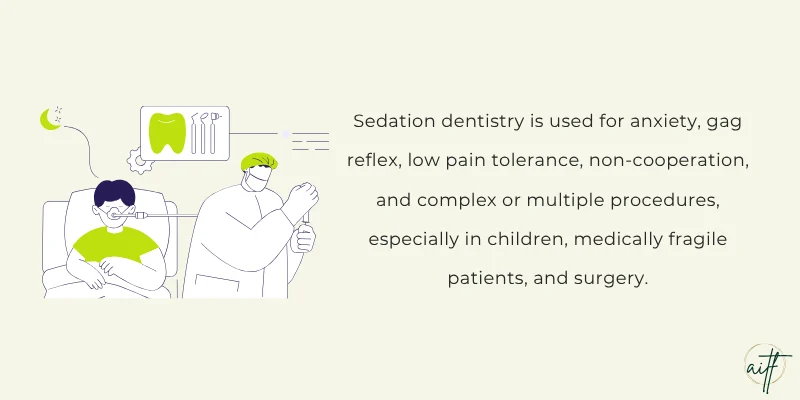
Common indications for sedation include: severe dental fear/anxiety; low pain tolerance; reflexes (gag, fainting); inability to cooperate (e.g., autism, cognitive impairment); and the need to perform multiple or lengthy procedures in one visit.
Sedation can be critical in breaking the cycle of avoidance by enabling anxious patients to undergo otherwise refused care.
Pediatric dentists in particular often use sedation for very young children or those with special needs to avoid premature extractions and failed treatment. In adults, procedures like third-molar extractions, complex restorations, or surgeries may be done under sedation for comfort and efficiency.
Importantly, sedation is not only for nerves: it also facilitates dental care in medically fragile patients (e.g., severe cardiac/pulmonary disease where stress/anxiety is hazardous).
Regulatory and Licensure Changes (2019–2026)
Sedation dentistry is tightly regulated. Nationally, the ADA and American Academy of Pediatric Dentistry (AAPD) set practice guidelines, and state dental boards set licensure requirements.
In 2016, the ADA issued comprehensive Guidelines for the Use of Sedation and General Anesthesia (aligned with ASA standards) that still underpin state regulations. In 2025–2026, the ADA updated these guidelines for the first time in a decade.
The 2026 ADA guidelines (approved October 2025) incorporate ASA physical-status criteria, precise weight-based dosing/documentation, mandatory supplemental oxygen for moderate to deep sedation, and stronger training/emergency preparedness requirements.
These align with evolving Commission on Dental Accreditation (CODA) standards for dental education. ADA sedation teaching guidelines were also updated to reflect current CODA requirements.
At the state level, regulations vary widely. Some key developments: in 2023 Indiana passed Senate Bill 273, which permits anesthesiologists, nurse anesthetists, and anesthesiologist assistants to administer moderate/deep sedation or GA in dental offices under defined standards.
(Previously, only dentists or supervised medical anesthetists could.) This legislation aims to expand sedation workforce capacity in Indiana.
Most states distinguish minimal (often just nitrous/local analgesia), moderate (conscious), and deep/GA sedation in their permit rules.
Indiana’s administrative code (Title 828) requires dentists to complete extensive training (often a year or more of postdoctoral anesthesia education) before receiving a deep/GA permit; moderate sedation often requires fewer hours but still continuing-education credits.
Nationally, a few states (e.g., CA, TX) have moved to allow office-based anesthesia by dental anesthesiologists or credentialed non-dentists under oversight, reflecting a trend toward broadening provider roles.
Safety and Adverse Events
Safety in sedation dentistry is paramount. Contemporary guidelines mandate intensive patient monitoring (pulse oximetry, capnography, blood pressure, EKG when needed) and emergency protocols.
Morbidity and mortality in properly administered dental sedation are very low.
For example, a large retrospective study in British Columbia (over 1.0 million dental procedures under deep sedation/GA from 1984–2019) found only three anesthesia-related deaths (all in the 1980s, due to equipment misuse) and no serious morbidity.
This underscores that with qualified providers and modern standards, even out-of-hospital sedation is remarkably safe.
Minor adverse events (e.g. prolonged drowsiness, nausea) occur at low rates; serious respiratory or cardiovascular events in conscious sedation are typically under 1%.
Nonetheless, training and protocols stress preparedness: every sedation office must have emergency drugs (flumazenil, naloxone, epinephrine), resuscitation equipment, and staff certified in ACLS/PALS as appropriate.
The 2026 ADA guidelines specifically require documented emergency drills and strict fasting guidelines.
Training and Workforce Capacity
Providing sedation in dental practice requires special credentials.
Dentist Anesthesiologists (those with hospital-based anesthesia fellowships) are few (only a few dozen nationally), so most sedation is done by general dentists with permits or by operating-room anesthesiologists.
As noted, only around 8–10% of dentists have conscious/IV sedation permits.
Dental schools have increased sedation training hours in recent accreditation standards, and continuing education courses (such as through dental anesthesia academies and programs like DOCS, ADMA) are widely attended.
State boards typically require renewal of sedation permits with CE (e.g., Indiana requires 5 CE credits biennially for sedation).
Workforce surveys suggest demand is growing: 88% of pediatric dentistry residencies now rely on dentist anesthesiologists for GA services, and directors expect increased need for sedation providers.
Nonetheless, shortages remain a barrier: many dentists cite a lack of local qualified anesthesiologists and cumbersome regulations as limits on offering sedation.
Payer and Reimbursement Trends
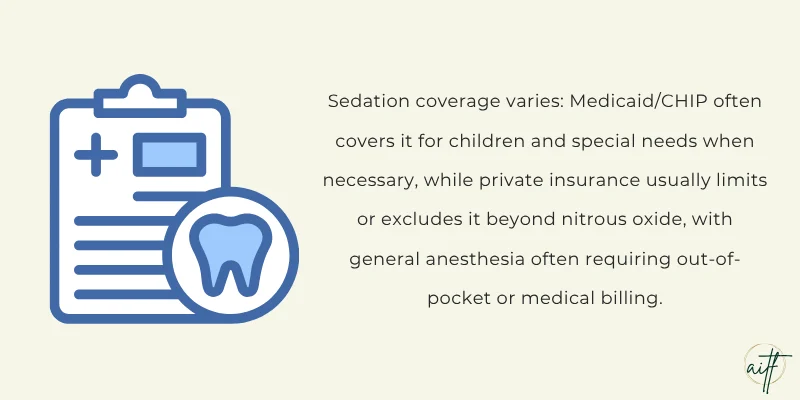
Insurance coverage of sedation dentistry varies. Medicaid/CHIP generally covers sedation for children (often under age 21) and for patients with special needs, recognizing sedation as medically necessary for treatment.
For example, Indiana Medicaid covers IV sedation and nitrous for all enrollees, and even GA codes for children. However, adult dental insurance (private plans) often excludes sedation beyond nitrous oxide, considering it elective.
Patient pay or medical insurance (if a certified anesthesiologist bills medical coverage) may be the only avenues for GA.
Notably, states have recently adjusted Medicaid sedation policies. In 2025, Maine proposed an emergency increase in Medicaid rates for pediatric dental services under GA, citing high costs.
For example, California’s Medi-Cal program almost saw large cuts to adult dental (including sedation) funding, prompting dentists to threaten withdrawal. Other states are exploring waivers to enhance sedation coverage for special-needs adults.
These movements illustrate that sedation, especially GA for children and disabled patients, is a significant driver of Medicaid dental spending and is politically sensitive.
In 2026, the ADA continues to advocate for federal oversight of dental benefits, arguing for better transparency and coverage of medically necessary anesthesia.
Market Size and Forecasts
Market research predicts robust growth in sedation dentistry products and services. The global dental anesthesia market (local, sedation, GA) is projected at US$2.81 billion by 2030 (5.2% CAGR).
Conscious-sedation dentistry alone was valued at $4.85 billion globally in 2024, doubling by 2033. In the U.S., the dental anesthesia segment (focused on sedation and GA) is expected to grow from ~$332.5 M (2023) to ~$477 M by 2030.
These forecasts are driven by rising demand for minimally invasive procedures, an aging population needing more dental surgery, and broader acceptance of sedation.
Technological innovations (needle-free delivery, closed-loop IV dosing) and teledentistry may further expand access.
COVID-related backlogs in dental care (see below) may also boost future sedation use as practices attempt to see more patients.
COVID-19 Impact
The COVID-19 pandemic temporarily disrupted sedation dentistry. Early in the pandemic (spring 2020), nearly 80% of dental offices were closed except for emergencies, and 71% of patients reported reluctance to seek even routine dental care by mid-2020.
Elective procedures (including cosmetic and non-urgent sedation cases) plummeted. Many sedation providers paused or reduced services due to PPE shortages, infection fears, and high-risk AGPs.
By mid-2021, most practices had reopened (over 98% open by Feb 2021), but patient volumes remained slightly below pre-pandemic.
To our knowledge, no sedation-specific national data on COVID effects exist, but industry reports indicate that practices using sedation did see declines in case volume in 2020, then a gradual recovery in 2021–2022 as patients returned for delayed care.
Infection-control protocols (enhanced ventilation, pre-visit screening) have become standard in sedation procedures.
Evansville, Indiana Focus
Regional Demographics and Care Context
Evansville is a mid-sized city (117,000 population) with socioeconomic and health indicators relevant to sedation dentistry. The city’s median household income is $53,400 (below the 2020 US median), and 18.4% of residents live in poverty.
About 21% are children, and 17.6% are seniors. These figures suggest a significant Medicaid-eligible population (especially children), and notable elderly and disabled cohorts, all groups often needing sedation for dental care.
Moreover, 9.8% of adults lack health insurance, implying many may have only emergency or out-of-pocket access to oral care.
Local oral health is also challenged; Indiana’s adult oral health outcomes lag national averages, leading to high needs for extractions and complex restorative work.
Evansville’s dental infrastructure includes several sedation-capable practices (e.g., pediatric dental offices and some specialists advertise IV sedation) and hospital facilities.
However, detailed local data on sedation utilization or capacity are unavailable.
It is likely that sedation services in Evansville mirror wider Indiana patterns: general dentists offer nitrous/enteral sedation (Indiana allows dentists to administer nitrous without a special permit), while deeper sedation and GA are handled in hospital settings by oral surgeons or anesthesiologists.
The passage of Indiana’s SB 273 (2023) may increase local capacity by permitting non-dentist anesthetists to assist. Clinically, one Evansville practice advertises being the only periodontal office with IV sedation, suggesting a limited specialty sedation workforce.
State Regulatory Context (Indiana)
Indiana’s sedation rules (828 IAC) require dentists to secure special permits for conscious sedation or GA. To obtain a moderate sedation permit, Indiana dentists must complete didactic and clinical training (e.g., 16 didactic hours and documented cases).
For deep sedation/GA, one year of postgraduate residency (e.g., OMFS or pediatric dentistry) is required.
Continuing education (5 CE biennially) is mandated for sedation permit renewal. Indiana Medicaid’s policy (from 1999) allows IV sedation and nitrous to all ages, but limits GA reimbursements in office to children <21, a policy that remains in effect.
The new SB 273 (2023) amended state law so that licensed anesthesiologists, nurse anesthetists, or anesthesiologist assistants can administer moderate/deep sedation (under specified accreditation standards).
This change may help Evansville patients access deeper sedation locally without needing a hospital OR.
Local Workforce and Access
Specific data on Evansville’s sedation-capable workforce is not available. Indiana has roughly 4,000 practicing dentists (1 per 1,000 population), but the share with sedation permits is unknown. Evansville likely has a few dozen such providers.
Dental service organizations (DSOs) and large group practices are not as prominent here as in some states, so referral networks fill sedation demand. Barriers to access remain: travel distance to hospitals, cost of anesthesia, and limited Medicaid reimbursement rates can delay care.
The lack of publicly reported sedation data at the county level is a gap; future local health surveys could clarify utilization by children and the elderly.
Barriers to Access
Common barriers to sedation dentistry include cost, regulations, and workforce shortages. Many patients cannot afford sedation (especially IV/GA) without insurance; typical out-of-pocket GA charges run into thousands of dollars.
Insurance often excludes sedation unless medically justified. Regulatory hurdles (state permits, accreditation requirements) restrict the number of dentists who can sedate.
For example, some states require office accreditation for moderate/deep sedation, which is costly. Patients in rural or underserved areas (like parts of Indiana) may face long waits or travel for sedation appointments.
Moreover, misconceptions (myths) about sedation safety can deter both patients and dentists. In short, although demand is high, access to sedation dentistry is constrained, especially for low-income and rural communities.
Summary of Key Findings
· Prevalence: Sedation dentistry use is rising, but still limited. About one-quarter of U.S. dentists offer it, and often only for minimal or moderate cases. Formal sedation permits remain <10% of dentists in many states.
· Modalities: Nitrous oxide dominates as the most common dental sedative. Oral and IV sedation are used less frequently, and GA (often by hospital providers) is used only for severe cases.
· Patient Demographics: Dental fear (in ~30–80% of adults) drives much of sedation demand. Children, special-needs patients, and anxious adults are key sedation populations.
Evansville’s population (older median age, lower income) suggests a large share of Medicaid/CHIP patients who may need sedation services.
· Regulations: National guidelines (ADA 2016; updated 2026) set rigorous standards for sedation practice. State rules vary; Indiana’s recent SB 273 (2023) expands who can administer sedation in dental offices.
· Safety: Dental sedation, when performed by qualified professionals under standard protocols, has very low mortality. Extensive monitoring and emergency readiness are standard. Recent research confirms essentially negligible mortality in office-based dental anesthesia.
· Training/Workforce: Sedation training for dentists has increased, but few general dentists attain deep sedation permits. Dental anesthesiology programs report growing demand for their graduates in pediatric practices.
· Reimbursement: Medicaid funding and coverage for sedation vary by state. Some states (ME, CA, AR) have recently debated increasing Medicaid rates or waivers for anesthesia in dentistry. Private dental insurers generally provide poor coverage for sedation beyond nitrous.
· Market: Industry analyses project steady growth in sedation dentistry market share (U.S. dental anesthesia market to ~$477M by 2030). This expansion is attributed to aging demographics, patient comfort demand, and technology improvements.
· COVID-19: The pandemic caused a sharp but temporary drop in sedation cases (over 70% of patients deferred care mid-2020). By 2021, most practices had reopened with backlogged demand.
Long-term effects include more telehealth consultations and stricter infection controls in sedation suites.
Data Gaps & Assumptions
Reliable statistics on sedation dentistry usage (especially by age group, gender, or payer) are sparse. No national survey tracks sedation rates among dental procedures.
We assume, based on partial data, that nitrous oxide is used in the majority of conscious sedation cases, with oral sedatives and IV each representing smaller shares.
Indiana-specific data are mostly from policy documents; we assume Indiana’s trends roughly mirror the national picture, with some local variation due to demographics and recent legislation.
Market forecasts are proprietary estimates; we cite them for general magnitude only. In all cases, more granular data (state dental board permit counts by year, insurance claim analyses, patient surveys) would strengthen future analysis.
References
Seven Common Questions on Dental Fear and Anxiety – CareQuest Institute
Trends in Dentistry 2024 | Inside Dentistry
Trends in Dental Sedation Permits in Select U.S. States, 2015–2023, DOAJ
ADA releases updated sedation and anesthesia guidelines | American Dental Association
Dental Anesthesia Market to be Worth $2.81 Billion by 2030: Grand View Research, Inc.
Dental Anxiety & Sedation Dentistry Statistics | Rank My Dentist
U.S. Census Bureau QuickFacts: Evansville city, Indiana
2021 Agenda • Sedation Safety Week
IN SB0273 | 2023 | Regular Session | LegiScan
Title 828, ARTICLE 3. ANESTHESIA AND SEDATION | IARP
[PDF] state board permit to administer light parenteral c information a
Research Confirms Low Mortality in Dental Anesthesia – Dentistry Today
828 IAC 5-1-6 – General anesthesia, deep sedation, or light …
Medicaid, Medicare updates for dentists to know – Becker’s Dental Review – DSO + Dental News