Not every smile responds to whitening strips or bleaching treatments. Some stains run too deep into the tooth structure for standard whitening products to reach.
When teeth stay discolored despite your best efforts with whitening, it’s frustrating and can leave you wondering what options you have left.
Porcelain veneers offer a reliable solution for teeth with deep or stubborn discoloration that doesn’t respond to traditional whitening.
These thin shells cover the front surface of your teeth and provide a bright, natural-looking result that lasts for years.
Unlike bleaching treatments that work only on certain types of stains, veneers can mask even the most resistant discoloration.
If you’ve tried whitening products without success, understanding how veneers for severe discoloration work can help you make an informed decision about your smile.
This guide covers what causes deep tooth discoloration, how veneers address it, and what to expect from the treatment process.
Key Takeaways
- Some tooth stains are too deep for whitening treatments to fix and require alternative cosmetic solutions
- Veneers cover stubborn discoloration by placing thin porcelain shells over the front of your teeth
- Porcelain veneers maintain their color for 10 to 15 years or longer with proper care
Table of Content
- Why Teeth Become Stained Beyond Whitening
- How Veneers Address Deep Tooth Discoloration
- Suitability and Candidacy for Veneers
- Long-Term Results and Maintenance
- Comparing Veneers to Other Cosmetic Solutions
- Frequently Asked Questions
Why Teeth Become Stained Beyond Whitening
Some tooth stains go deeper than the surface and won’t respond to regular whitening treatments. These stubborn discolorations form inside the tooth structure itself or result from specific conditions that bleaching agents simply can’t fix.
Types of Discoloration Resistant to Whitening
There are two main types of tooth discoloration, and understanding the difference helps explain why some stains won’t budge.
Extrinsic stains sit on the outer layer of your teeth. Coffee, tea, and tobacco typically cause these surface-level discolorations. Most whitening products work well on these stains because they can reach and break down the pigments.
Intrinsic stains form inside the tooth structure, within the dentin layer beneath your enamel. These are the stubborn intrinsic stains that don’t respond to whitening.
Your teeth might show discoloration in various colors. You could notice yellow, brown, white, gray, or even green tones. The color often provides clues about what caused the staining and whether it’s treatable with whitening.
Common Causes of Persistent Tooth Stains
Several factors create deep stains that resist standard whitening methods.
Medications are a major culprit. Tetracycline antibiotics taken during childhood cause gray or brown bands that form deep within developing teeth. These stains are notoriously difficult to remove with bleaching alone.
Tooth trauma can cause internal bleeding or damage to the tooth’s pulp. This creates dark discoloration from within that whitening agents can’t reach.
Fluorosis occurs when you consume too much fluoride during tooth development. It creates white spots or brown staining that won’t lighten with traditional methods.
Genetics play a role too. Some people naturally have thinner enamel or yellower dentin, which shows through despite whitening efforts.
Age also affects your teeth as enamel thins over time, revealing more of the yellow dentin underneath.
When Whitening Treatments Fail
You might try multiple whitening approaches only to see minimal or no improvement. Over-the-counter products like strips and toothpaste work on light surface stains but lack the strength for deeper discoloration.
Professional whitening treatments use stronger bleaching agents combined with heat or light. These can address deeper stains.
But if your teeth haven’t whitened after this, the discoloration is likely intrinsic. Your dentist may recommend dental bonding if you have deep tooth discoloration that doesn’t improve with whitening.
Dead teeth from root canals often turn gray or brown from the inside. No amount of external bleaching will fix this because the problem originates in the tooth’s core. This is when you need to look beyond whitening to cosmetic solutions like veneers.
How Veneers Address Deep Tooth Discoloration
Veneers work by covering the entire front surface of discolored teeth with a thin shell of porcelain or composite material.
The application involves careful preparation, material selection, and customization to create results that look natural while permanently hiding stains that whitening can’t touch.
Veneer Application Process for Stained Teeth
Your dentist starts by examining your teeth to determine if veneers are the right choice for your type of discoloration. They’ll take digital images and impressions to plan your treatment.
During the first appointment, your dentist removes a thin layer of enamel from each tooth getting a veneer. This is usually about 0.5 millimeters. The removal creates space so the veneer sits flush with your other teeth.
After preparation, your dentist takes detailed impressions of your teeth. These get sent to a dental lab where technicians create your custom veneers.
You’ll wear temporary veneers for about two weeks while the permanent ones are made.
At your final appointment, your dentist checks the fit and color of each veneer before bonding. They clean and etch your tooth surface to help the veneer stick.
A special cement bonds the veneer permanently to your tooth, and a UV light hardens it in place.
Porcelain vs. Composite: Which Is Best for Severe Stains
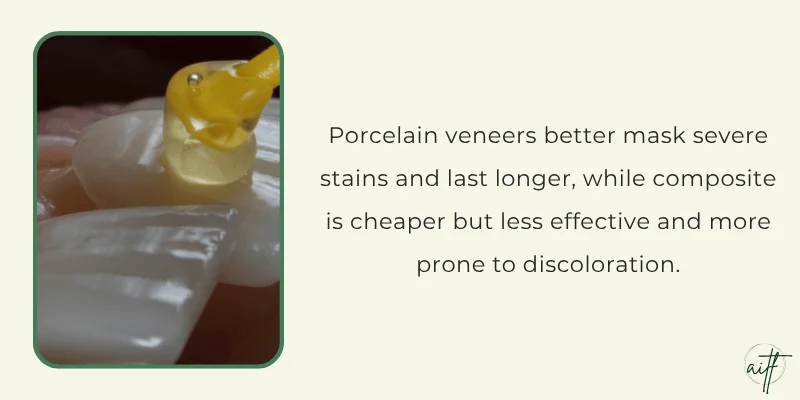
Porcelain veneers are the better choice for covering severe tooth discoloration because they’re more opaque and can hide even the darkest stains. They resist staining better than composite and last 10 to 20 years with proper care.
Composite veneers are made from tooth-colored resin applied directly to your teeth in one visit. They cost less than porcelain but aren’t as effective at masking deep stains. Composite can stain over time from coffee, tea, and wine.
For tetracycline stains, fluorosis, or trauma-related discoloration, porcelain is almost always recommended. The material’s thickness and opacity provide complete coverage that composite can’t match.
If you have gray or brown stains that didn’t respond to whitening, porcelain gives you the best long-term results.
Customizing Color and Shape for a Natural Look
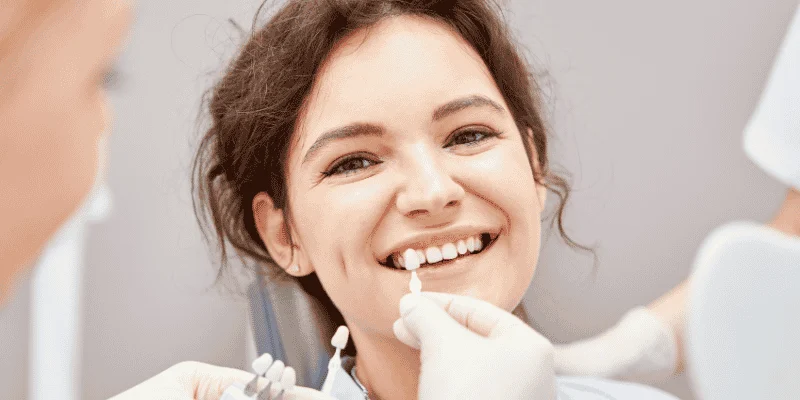
Your dentist works with you to choose a veneer shade that matches your goals. You can match your natural teeth or go several shades whiter for a brighter smile. The dental lab uses shade guides to create the exact color you want.
Porcelain has translucent properties similar to real enamel. This means light passes through it naturally instead of looking flat or fake. Your dentist can layer different shades within each veneer to create depth and realism.
Shape customization goes beyond color. Your dentist adjusts the length, width, and contour of each veneer to fit your face and smile. They consider your lip line, facial proportions, and personal preferences.
Small details like texture and edge shape make veneers look completely natural instead of artificial.
Suitability and Candidacy for Veneers
Not everyone with discolored teeth is a good fit for veneers. Your oral health status, lifestyle habits, and specific dental concerns all play a role in determining whether veneers are the right solution for you.

Ideal Candidates for Veneers
You’re likely a good candidate for veneers if you have teeth that are severely stained or discolored and haven’t responded to traditional whitening treatments.
This includes discoloration from medications, genetics, or years of consuming coffee and wine.
Beyond staining, veneers work well if you have chipped, cracked, or worn-down teeth. They can also fix gaps between teeth, slightly misaligned teeth, or uneven tooth shapes.
Your teeth and gums need to be in good overall health. You should have enough natural tooth enamel remaining since a thin layer gets removed during preparation.
If you’re only getting veneers on some teeth, you’ll need to whiten your remaining natural teeth first. Veneers are matched to your desired shade and can’t be whitened after they’re placed.
Health Considerations Before Treatment
Your dentist will check for tooth decay, gum disease, and other oral health issues before approving you for veneers. These problems need treatment first.
You’re not a good candidate if you grind or clench your teeth heavily. This habit can crack or damage veneers over time.
People with weakened tooth enamel or significant tooth loss may need different treatments. Your dentist will examine how much healthy tooth structure you have left.
Active cavities or gum infections must be resolved before veneer placement. The bonding process requires a clean, healthy foundation to work properly.
Alternatives if Veneers Aren’t an Option
Dental bonding uses tooth-colored resin to cover stains and fix minor chips. It’s less expensive than veneers and requires minimal tooth preparation.
Crowns might be better if your teeth are severely damaged or decayed. They cover the entire tooth instead of just the front surface.
Professional whitening treatments combined with bonding can address some discoloration issues. Your dentist might recommend trying these options first before committing to veneers.
Long-Term Results and Maintenance
Veneers designed to cover discolored teeth typically last 10 to 15 years or longer with proper care.
While the porcelain material resists staining better than natural teeth, protecting the margins and maintaining good oral hygiene helps preserve their appearance over time.
Longevity of Veneers for Discolored Teeth
High-quality porcelain veneers maintain their color and appearance for many years. The ceramic material doesn’t absorb pigments like natural tooth enamel does, which means your veneers should stay bright even when your daily habits might normally stain teeth.
Most veneers need replacement after 10 to 15 years, though some last even longer. The lifespan depends on how well you care for them and the quality of the original placement.
Porcelain veneers offer shade stability when properly bonded and designed with good margins.
Your natural teeth beneath the veneers can still change color over time. If gum recession occurs, the exposed tooth structure may appear darker than the veneer surface.
Protecting Veneers from Future Staining
While porcelain doesn’t stain easily, the edges where veneers meet your natural teeth can accumulate buildup. Coffee, tea, red wine, and tobacco can leave deposits along these margins.
Daily care tips:
- Use non-abrasive fluoride toothpaste
- Floss carefully around veneer margins
- Rinse with water after consuming staining beverages
- Avoid charcoal or aggressive whitening products
Professional cleanings remove plaque and surface deposits that regular brushing might miss. Your dental hygienist can polish your veneers without damaging the glazed surface.
Abrasive toothpastes can create tiny scratches that make the surface more prone to collecting stains.
Potential Issues and When to Seek Replacement
Discolored veneers cannot be whitened with traditional bleaching treatments since whitening products only work on natural tooth enamel. If your veneers appear darker or uneven, the cause determines whether you need repair or replacement.
Common issues that may require attention:
- Darkening along the gumline or margins
- Visible cement discoloration showing through thin porcelain
- Chips or cracks in the veneer surface
- Gum recession exposing natural tooth structure
Sometimes professional polishing can restore brightness when discoloration is just surface buildup.
However, when the bonding cement has darkened or the veneer itself has structural problems, replacement becomes the most reliable solution.
Contact your dentist if you notice color changes that don’t improve with regular cleaning.

Comparing Veneers to Other Cosmetic Solutions
When whitening doesn’t work for your discolored teeth, you have several treatment options beyond veneers. Each approach offers different benefits in terms of appearance, durability, and cost.
Veneers vs. Dental Bonding
Dental bonding uses tooth-colored resin applied directly to your tooth surface to cover stains and minor imperfections. Your dentist shapes the material by hand during a single visit, making it faster and more affordable than veneers.
However, bonding material is less durable than porcelain. It typically lasts 3-7 years compared to 10-15 years for veneers. Bonding also stains more easily over time, which means your discoloration issues might return.
Dental bonding is generally more affordable than veneers but requires more frequent replacement. If you have severe or stubborn stains that didn’t respond to whitening, veneers provide better long-term coverage.
The porcelain material resists staining from coffee, wine, and other foods that caused your original discoloration.
Bonding works well for small areas or single teeth. For multiple discolored teeth, veneers give you a more uniform and lasting result.
Veneers vs. Crowns for Discolored Teeth
Crowns cover your entire tooth, not just the front surface like veneers do. Crowns serve different purposes, focusing on restoration rather than pure cosmetics.
Your dentist removes more tooth structure for crowns than for veneers. This makes crowns better suited for teeth with significant damage or decay along with discoloration.
If your teeth are structurally sound but severely stained, veneers are the less invasive choice.
Crowns cost about the same as veneers per tooth, ranging from $1,000 to $2,500. Both options effectively hide deep stains that whitening cannot fix. The key difference is how much of your natural tooth needs to be modified.
Key Differences:
- Veneers require minimal tooth removal
- Crowns cover the entire tooth
- Both hide stubborn discoloration permanently
- Crowns are better for damaged teeth
Cost and Insurance Factors

Porcelain veneers typically cost $900-$2,500 per tooth. Teeth whitening and bonding are more affordable options, with whitening ranging from $300-$800 per session and bonding from $300-$600 per tooth.
Most dental insurance plans don’t cover cosmetic procedures. However, if your discolored teeth result from injury or medication side effects, you might qualify for partial coverage. Check with your provider about your specific situation.
The upfront cost of veneers is higher, but they last much longer than other treatments. When you calculate cost per year, veneers often become competitive with options that need frequent replacement or touch-ups.
Many dental offices offer payment plans to spread the cost over several months. This makes veneers more accessible even if you can’t pay the full amount immediately.
Frequently Asked Questions
Some stains resist traditional whitening methods because they form inside the tooth structure rather than on the surface.
Veneers offer a reliable solution for these deep discolorations, with porcelain options lasting 10 to 15 years or longer while maintaining their original color.
Why do some tooth stains not improve with professional whitening?
Whitening treatments work by breaking down stain molecules in your tooth enamel. They’re great for surface stains from coffee, tea, or smoking.
But some discoloration happens inside your tooth structure. These internal stains don’t respond to whitening gels because the bleaching agents can’t reach them.
Tetracycline antibiotics taken during childhood can cause deep gray or brown banding in your teeth. Excessive fluoride exposure during tooth development leads to fluorosis, which creates white or brown spots.
Trauma to a tooth can cause it to darken from the inside out.
Dead or root canal treated teeth often turn gray or yellow over time. This happens because the inner tooth structure has changed, not just the outer surface.
Are veneers a good option if my teeth are still discolored after whitening?
Yes, veneers can fix teeth that are discolored, even when whitening hasn’t worked. They’re designed specifically for this type of problem.
Veneers are thin shells that cover the front surface of your teeth. They completely mask the natural color underneath.
Your dentist can match the veneer shade to your other teeth or make your whole smile brighter. The porcelain material blocks out even severe staining.
Veneers work well when you’ve already tried whitening without good results. They give you a permanent solution rather than repeated treatments that don’t help.
How do I know whether I need veneers, bonding, or crowns for stubborn discoloration?
The best choice depends on how severe your staining is and the condition of your teeth. Bonding uses tooth-colored resin applied directly to your tooth surface.
Bonding works for minor discoloration and small areas. It’s less expensive than veneers but doesn’t last as long. The composite material can stain over time, usually within 5 to 7 years.
Veneers handle moderate to severe discoloration better. They cover more of your tooth and resist staining much better than bonding. They’re thinner than crowns and require less tooth reduction.
Crowns cover your entire tooth, not just the front. You need a crown when your tooth has extensive damage, large fillings, or severe structural problems along with discoloration.
Your dentist will examine your teeth and discuss which option makes the most sense for your situation.
What types of stains can veneers cover (like tetracycline or fluorosis stains)?
Veneers can cover almost any type of tooth discoloration. Tetracycline stains are some of the most challenging to treat, appearing as gray, brown, or blue horizontal bands across your teeth.
These antibiotic stains form deep in the tooth during development. Veneers completely hide them when designed with the right opacity level.
Fluorosis stains show up as white spots, yellow patches, or brown areas on your enamel. Veneers mask these irregularities and give you an even tooth color.
Dead teeth that have turned gray or brown get covered completely. Age-related yellowing that doesn’t respond to whitening also disappears under veneers.
Stains from smoking, medications, or excessive coffee consumption all hide beneath the porcelain surface.
Your dentist may need to use more opaque porcelain for very dark stains. This blocks out the underlying color more effectively.
How long do veneers last, and will they keep their color over time?
Quality porcelain veneers typically last 10 to 15 years or longer. Many people keep their veneers for 20 years with proper care.
The porcelain material is highly resistant to staining. Unlike natural teeth, it doesn’t absorb pigments from food and drinks. Your veneers will keep their original color throughout their lifetime.
Composite veneers don’t last as long, usually 5 to 7 years. They’re more porous than porcelain and can pick up stains over time.
How long your veneers last depends on your oral hygiene and habits. Grinding your teeth, biting hard objects, or poor dental care can shorten their lifespan. Regular dental checkups and cleanings help keep your veneers in good condition.
What’s the process and recovery like for getting veneers to cover deep stains?
Getting veneers usually takes two dental visits. At your first appointment, your dentist removes a thin layer of enamel from your tooth surface. This creates room for the veneer so it doesn’t look bulky.
Your dentist takes impressions of your prepared teeth. You’ll choose your veneer shade during this visit. Temporary veneers protect your teeth while the lab makes your permanent ones.
This preparation appointment typically takes 1 to 2 hours. Your teeth might feel sensitive for a few days after enamel removal.
Your second visit happens about 2 to 3 weeks later. Your dentist bonds the permanent veneers to your teeth using special cement. This appointment usually takes 1 to 2 hours.
You can return to normal activities right away. Some people feel slight sensitivity to hot or cold for a week or two. This usually goes away on its own as your mouth adjusts to the veneers.