If you want to improve your smile with a natural look, the porcelain veneers procedure is a popular choice in cosmetic dentistry. Porcelain veneers are thin shells placed on your teeth’s surface to fix issues like discoloration, chips, or minor gaps, giving you a bright and even smile.
The process is straightforward and designed to fit your unique look. The procedure usually involves a few visits to your dentist, where your teeth are gently prepared, impressions are taken, and your custom veneers are made to match your natural teeth.
This approach is minimally invasive and can last many years if cared for properly.
Key Takeways
- Porcelain veneers offer a lasting, natural-looking smile improvement.
- The procedure is simple and involves minimal tooth alteration.
- Proper care is important to keep your veneers looking their best.
Porcelain Veneers Procedure Step-By-Step
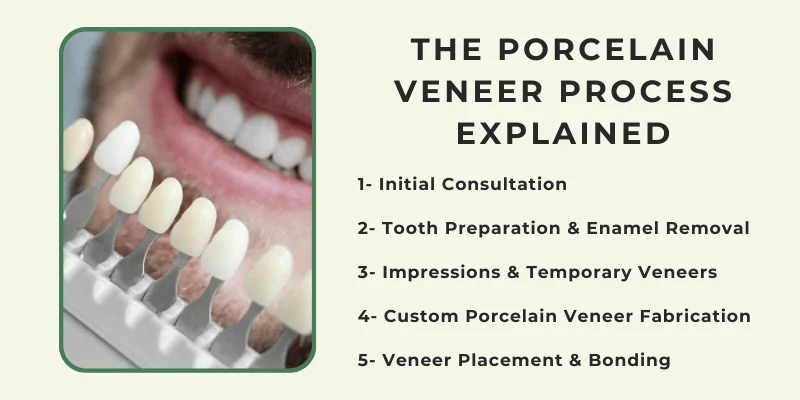
The process to get porcelain veneers involves careful planning, precise tooth work, and skilled crafting of your new smile. Each step builds on the last to ensure your veneers fit well, look natural, and last a long time.
Initial Consultation
Your journey begins with a detailed chat with your cosmetic dentist. During this visit, you’ll talk about what you want to improve in your smile.
The dentist will examine your teeth and gums closely to make sure they’re healthy enough for veneers. X-rays or photos might be taken to study your teeth better.
This helps create a personalized plan just for you. You’ll also get to ask questions and discuss how many teeth you want to fix and what shade or look you prefer.
This meeting sets the foundation for the whole process.
Tooth Preparation and Enamel Removal
Before your porcelain veneers can be placed, a small layer of enamel is gently removed from the front of your teeth. This step is important because it allows the veneers to fit smoothly and look natural.
Your dentist usually removes about 0.5 millimeters of enamel, which feels like a tiny amount. Local anesthesia can be used to keep you comfortable while this happens.
The goal is to prepare your teeth without causing pain or damage. This part ensures your new veneers sit properly and do not feel bulky.
Impressions and Temporary Veneers
After preparing your teeth, your cosmetic dentist will take precise molds or impressions. These impressions capture the exact shape and size of your teeth and gums.
They are sent to a dental laboratory where your custom porcelain veneers are made. While you wait for your permanent veneers, temporary veneers may be placed on your teeth.
These protect your prepared teeth and keep your smile looking good during the 1-2 weeks it takes to craft the final veneers. These temporaries help you maintain normal function while you wait.
Custom Porcelain Veneer Fabrication
The dental laboratory plays a key role in creating your veneers. Skilled technicians use the impressions from your teeth to make thin, strong shells from high-quality porcelain.
They carefully match the shape, size, and color of your veneers to your natural teeth. This step can take about one to two weeks depending on the lab’s schedule.
The porcelain material mimics the look of real tooth enamel, so your veneers will have a natural shine and translucency.
Veneer Placement and Bonding
When your custom veneers arrive, your dentist will check the fit and color first. They make sure your veneers feel comfortable and look just right with your smile.
If needed, small adjustments are done before bonding. The dentist then uses a strong dental adhesive to attach each veneer to your tooth surface.
A special light hardens the adhesive, securing your veneers in place. After bonding, your dentist may polish the veneers and give you tips on caring for your new smile.
To ensure a smooth and successful veneer placement, schedule an appointment with us to guide you through every step.
Who Is a Good Candidate for Porcelain Veneers?
To get the best results from porcelain veneers, you need strong teeth, healthy gums, and clear cosmetic goals. It’s important to have any dental issues fixed first and understand what veneers can realistically do for your smile.
Oral Health Requirements
You need healthy teeth and gums before getting veneers. This means no tooth decay or gum disease.
If you have problems like cavities or gum inflammation, your dentist will want to treat those first. Your natural enamel also needs to be strong.
Veneers bond to the enamel, so if it’s thin or weak, they may not stick well. Good oral hygiene is a must.
You should brush and floss daily and see your dentist regularly to keep your mouth healthy and help your veneers last.
Addressing Dental Concerns Before Treatment
Before you get veneers, your dentist will check for any dental concerns that could affect the process. This includes fixing chips, cracks, or any infections in your teeth or gums.
If you have large gaps, severe crowding, or big alignment problems, veneers might not be the best fix. In those cases, you might need orthodontic treatment first, like braces or Invisalign.
Your dentist will also look at how much enamel you have since veneers need enough tooth surface to bond well. Any cosmetic dentist worth their skill will make sure your teeth are in good shape for the best outcome.
Considerations for Smile Goals
Porcelain veneers are great if you want to brighten your smile, fix small chips, close gaps, or correct minor misalignment. But they work best if you have realistic expectations about what veneers can do.
If you want a whiter smile, your natural teeth may need whitening first to match the veneers perfectly. It’s also important to know that veneers are designed to enhance your smile but not replace deep dental issues.
Talk with your cosmetic dentist about your smile goals. They can help you decide if veneers suit your needs and how they will look once placed.
If you’re considering porcelain veneers and want personalized guidance, schedule a consultation with our trusted cosmetic dentists in Evansville, IN, to explore your options.
Types of Dental Veneers
When choosing dental veneers, you’ll mainly come across porcelain and composite options. Each has unique features, costs, and lifespans, so knowing the differences helps you pick what fits your needs and smile goals best.
Porcelain Veneers and Their Benefits
Porcelain veneers are thin shells made from strong ceramic material. They fit over the front of your teeth and look very natural because they mimic tooth enamel.
These veneers are stain-resistant, so your smile stays bright longer. Porcelain veneers can fix many issues like discoloration, chips, gaps, and slightly crooked teeth.
The process usually requires a bit of enamel removal for a perfect fit. Porcelain veneers are more durable and can last 10 to 15 years with good care.
They require professional lab crafting to match your teeth exactly, which makes them a popular choice for lasting, natural-looking results.
Composite Veneers vs. Porcelain Veneers
Composite veneers are made from a tooth-colored resin applied directly to your teeth. They are usually quicker to place and cost less than porcelain veneers.
These may only last 4 to 8 years and are more prone to staining and chipping. Because they don’t require enamel removal, composite veneers can often be done in one visit.
Porcelain veneers take longer to make because they are crafted in a lab, but they offer better strength, shine, and a more natural look. If budget or time is a concern, composite can be a good option.
But if you want a longer-lasting solution with better aesthetics, porcelain veneers might suit you better.
Benefits and Limitations of Porcelain Veneers
Porcelain veneers can improve your smile in many ways, but they also come with some important limits you should know about. You will get natural-looking teeth, and they stay strong and stain-resistant for years.
Still, there are risks, costs, and care needs that affect if veneers are right for you.
Aesthetic Enhancements
Porcelain veneers are made to look just like your real teeth. They mimic the shine and translucency of natural enamel, so no one can easily tell the difference.
They can fix many issues at once, like discoloration, chips, cracks, and small gaps. You can complement veneers with teeth whitening before placement to get the perfect color match.
Veneers also allow dentists to reshape your teeth for a better smile. This is why they are popular in cosmetic dentistry, as they provide quick, noticeable results in just a few visits.
Durability and Stain Resistance
One big advantage of porcelain veneers is their strength. They can last between 10 and 15 years with proper care. A systematic review of over 6,500 ceramic veneers found that more than 95% remained successful after 10 years, highlighting their long-term reliability.
The porcelain surface also resists stains better than natural enamel, keeping your smile bright even after drinking coffee, tea, or red wine. You should still avoid biting very hard foods like ice or nuts to prevent chips or cracks.
Using a night guard is recommended if you grind your teeth, and regular dental checkups help catch any issues early to keep your veneers in excellent condition.
Potential Risks and Considerations
Veneers are permanent since a thin layer of your enamel must be removed for bonding. This is why you should be sure about getting them.
You might feel some sensitivity after the procedure, but it usually fades. Cost is another factor.
Veneers can be more expensive than options like bonding or whitening. Also, if you have unhealthy gums, tooth decay, or heavy grinding that isn’t managed, veneers might not be suitable for you.
They can chip if you bite hard objects or clench your teeth a lot. Porcelain veneers cannot be whitened after placement, so the color choice is important.
Sometimes, veneers may need repairs or even replacement after several years due to normal wear or damage.
Caring for Porcelain Veneers

Keeping your porcelain veneers looking great takes a little care every day. You’ll want to focus on gentle cleaning, choosing the right products, and visiting your dentist regularly to keep your smile bright and healthy.
Daily Cleaning and Oral Hygiene
You should brush your veneers twice a day with a soft-bristled toothbrush. This helps remove plaque without scratching the porcelain.
Flossing is very important because it cleans between your teeth and around the veneers. Make sure you floss carefully to avoid loosening your veneers.
Avoid harsh scrubbing or abrasive tools. Using gentle, consistent care prevents damage and keeps your veneers looking natural and shiny.
Best Toothpaste and Products
When selecting toothpaste, use a non-abrasive toothpaste to protect the surface of your veneers. Avoid whitening or abrasive toothpastes because they can wear down the porcelain over time.
Mouthwash without alcohol is best since it won’t dry out your mouth or damage your veneers. You can consider a fluoride rinse if your dentist recommends it.
This helps protect your natural teeth around the veneers.
Dental Check-Ups and Maintenance
Regular dental visits every six months are needed for professional cleaning and to check the condition of your veneers. Your dentist will look for any chips, cracks, or looseness and make fixes as needed.
If you grind your teeth at night, ask about a nightguard. This protects your veneers and your smile.
Routine check-ups help keep your veneers in good shape and catch issues early before they become bigger problems.
For continued care and checkups, contact our trusted cosmetic dentist in Evansville, IN, to keep your veneers looking their best.
Frequently Asked Questions
Porcelain veneers can be a big decision, so it helps to know what to expect about costs, steps, timing, and risks.
How much does a porcelain veneers procedure typically cost?
The cost usually ranges from $1,000 to $3,000 per tooth in the United States. Prices depend on factors like the number of veneers you need and the dentist’s location.
What is the full process involved in getting porcelain veneers?
You start with a consultation to discuss your smile goals and decide if veneers are a good fit. After that, your teeth get prepared and impressions are taken.
Temporary veneers protect your teeth while the permanent ones are made. Finally, your dentist bonds the veneers to your teeth.
What are the steps involved in the porcelain veneer procedure?
First, your dentist removes a thin layer of enamel. Then, impressions or digital scans are taken.
Temporary veneers are placed while the permanent ones are crafted in the lab. At the last appointment, the permanent veneers are carefully placed and bonded to your teeth.
Are porcelain veneers considered a permanent solution for teeth?
Yes, veneers are permanent because some enamel must be removed to fit them properly. Once you get veneers, you will always need some form of restoration on those teeth.
How long does it typically take to complete the porcelain veneer procedure?
The full process usually takes about two to three weeks. This includes two to three appointments from consultation to the final bonding of your new veneers.
Why might some dentists advise against getting veneers?
Dentists may recommend against veneers if you have tooth decay, gum disease, or not enough enamel. Poor oral health can affect how well veneers will last or fit.
Some dentists also worry about habits like grinding that might damage veneers.