You bite down and something feels wrong. Maybe your new crown sits a bit too high, or your filling doesn’t quite match up with your other teeth.
It’s been weeks since your dental work, and you’re wondering if this odd feeling will ever go away.
Most bite issues after dental work should improve within a few days to two weeks, but persistent signs of discomfort beyond this period usually mean you need a bite adjustment from your dentist.
Your teeth are incredibly sensitive to even tiny changes. What feels like a major problem might just need a quick polish or adjustment that takes only minutes in the dental chair.
The tricky part is knowing when to wait it out and when to pick up the phone. Some sensations are part of normal healing, while others signal that your crown feels wrong after placement.
Understanding the difference can save you from unnecessary worry and prevent long-term problems with your jaw, teeth, and that expensive dental work you just had done.
Key Takeaways
- Bite issues after crowns or fillings should improve within a few days, but ongoing discomfort beyond two weeks requires professional adjustment
- High spots on restorations can cause jaw tension, headaches, and tooth sensitivity that won’t resolve on their own
- Early bite correction prevents crown damage, enamel wear on surrounding teeth, and chronic jaw problems
Why Your Bite Feels Off After Dental Work
When you get a crown or filling, the shape of your tooth changes slightly. This can affect how your upper and lower teeth come together, which may cause your bite to feel different or uncomfortable.
Understanding Occlusion and Bite Alignment
Your bite, also called occlusion, refers to how your upper and lower teeth come together when you close your mouth. In a healthy bite, your teeth align properly and work smoothly when you chew, speak, or rest your jaw.
When your bite alignment is correct, pressure spreads evenly across all your teeth. But when even one tooth sits slightly higher or lower than it should, it disrupts this balance. You might feel like that tooth hits first before the others touch, or your jaw might shift slightly to avoid the uneven contact.
Bite misalignment can cause several problems:
- Uneven pressure on certain teeth
- Jaw muscle tension
- Discomfort when chewing
- Headaches near your temples or jaw
- Clicking or popping sounds in your jaw joint
Even a small change of less than a millimeter can make your bite feel noticeably off.
Common Causes of Post-Procedure Discomfort
A high filling or high crown is the most common reason your bite feels off after dental work. When the restoration sits even slightly taller than your natural tooth surface, it hits first when you bite down.
Several dental procedures can create situations where the affected tooth changes shape. Your dentist shapes the filling or crown to match your bite, but this requires precision.
Sometimes the numbing medication makes it hard for you to tell if your bite feels normal during the appointment.
Other causes include:
- Swelling or inflammation around the tooth that temporarily changes how it fits
- Slight movement of the restoration as dental cement fully sets
- Jaw muscle tension from holding your mouth open during the procedure
- Sensitivity that makes you chew differently and notice the bite more
Your teeth and jaw muscles need time to adjust to any changes in tooth shape or height.
Differences Between Crowns and Fillings
Crowns and fillings affect your bite in different ways because they involve different amounts of tooth structure. A dental filling replaces a small portion of your tooth, usually on the chewing surface or between teeth.
The material builds up the missing part and gets shaped to match your bite.
Fillings can feel off because the filling material may sit slightly high or the contact with nearby teeth might feel too tight or too loose.
Composite resin fillings can also shrink slightly as they harden, which might change how they feel over the first few days.
A crown covers your entire tooth above the gum line. This means more surface area is involved in your bite, giving more opportunities for the height or shape to feel different.
Crowns also affect how you floss between teeth and how your tongue touches the tooth.
Key differences:
| Aspect | Filling | Crown |
| Coverage | Partial tooth | Entire visible tooth |
| Adjustment time | 1-2 weeks | 2-4 weeks |
| Contact points | Usually one surface | Multiple surfaces |
| Bite impact | Localized to filling area | Affects full chewing surface |
Crowns generally take longer for your mouth to adjust to because they change more of the tooth structure.
High Spots and Bite Adjustment Essentials
A high bite occurs when your crown or filling touches down before your other teeth, creating uneven pressure that your jaw cannot ignore.
Dentists use specific tools and techniques to identify these high spots and reshape the restoration until your bite feels balanced again.
Spotting a High Bite Versus Natural Adjustment
You might wonder if what you’re feeling is a problem or just your mouth adapting to the new dental work. A high bite creates specific symptoms that are different from normal adjustment.
When you have a high spot, you’ll notice one tooth hits first when you close your mouth. This happens every single time you bite down. The affected tooth takes all the pressure before your other teeth can touch.
Natural adjustment to a new filling typically involves mild awareness of the restoration for a few days. Your tongue explores the new surface and it might feel slightly different.
But your bite still feels even when your teeth come together.
A high filling or high crown causes ongoing discomfort when chewing. You might feel jaw soreness, tooth pain, or pressure that doesn’t go away after a week.
Some people develop headaches or find themselves avoiding chewing on that side of their mouth.
How Dentists Check and Fix Your Bite
Your dentist will ask you to tap your teeth together gently while they watch and listen. They’re looking for which teeth contact first and listening for the timing of those contacts.
Next, they’ll have you grind your teeth side to side and forward and backward. This shows them how your teeth slide against each other during chewing movements.
Problems with crown fit often become obvious during these movements.
The dentist will then use a small polishing tool to carefully remove tiny amounts of material from the high spots. They work slowly, checking your bite repeatedly between adjustments.
Most bite adjustments only require removing a very small amount of material.
After grinding down the high areas, they’ll polish the surface smooth. You’ll be asked to bite down several more times to confirm the adjustment feels comfortable.
The whole process usually takes just a few minutes.
Role of Articulating Paper in Diagnosing Problems
Articulating paper is a thin colored paper that dentists place between your teeth. When you bite down on it, the paper leaves colored marks on the areas where your teeth contact.
The dentist will use different colors of articulating paper to check different aspects of your bite. Red or blue paper shows where teeth touch when you close straight down.
Black paper might be used to show grinding movements.
Heavy dark marks indicate high spots where too much pressure concentrates. These high spots in dentistry need to be reduced through occlusal adjustment.
Light marks show normal contact that’s properly balanced.
Your dentist will have you tap multiple times to make sure the marks are consistent. Inconsistent marks might mean you’re not biting in your natural position.
The articulating paper gives them a precise map of exactly where to adjust your crown or filling.
When to Wait and When to Contact Your Dentist
Some discomfort after getting a crown or filling is normal and will go away on its own. However, certain symptoms mean you need to see your dentist right away to prevent bigger problems.
Normal Sensations Versus Concerning Symptoms
It’s normal to feel some mild sensitivity or tightness in your jaw muscles for a few days after dental work. Your mouth needs time to adjust to the new filling or crown shape.
The numbing medicine can also make it hard to tell if your bite feels off after dental work until it wears off completely.
You should wait a few days if you only have mild symptoms. Light sensitivity to hot or cold foods usually goes away within a week.
Some muscle tension around your jaw is also common as your mouth gets used to the new tooth shape.
Call your dentist right away if you have:
- Strong pain when you bite down
- Teeth that scrape or hit each other in a strange way
- Trouble eating or speaking normally
- Swelling, fever, or severe sensitivity that gets worse
- A tooth that feels obviously too high
Signs That Your Bite Won’t Fix Itself
Can a high filling fix itself? The answer is no. Your mouth cannot reshape filling material, crowns, or other dental work on its own.
If the tooth feels too high when biting, a dentist needs to grind down the material with special tools.
A bite misalignment won’t get better over time. The problem will only get worse if you ignore it. Your other teeth and jaw muscles will try to compensate for the uneven bite, which creates new problems.
You have a high bite that needs fixing if your teeth don’t touch the same way they did before. You might also notice increased pressure on certain teeth when you chew.
Potential Long-Term Effects of Ignoring Symptoms
Waiting too long to fix an uneven bite can damage your teeth and jaw. The constant pressure on certain teeth can cause them to crack or wear down faster than normal. This means you’ll need more dental work later.
Your jaw muscles may become strained from trying to adjust to the wrong bite position. This leads to tension in your face and neck muscles.
Many people develop headaches, facial pain, or neck pain from an uneven bite that goes unfixed.
Some research shows that bite problems can even affect your balance. The muscle imbalances in your jaw can throw off your whole body’s alignment.
Getting your bite adjusted is quick and painless, so there’s no reason to put it off.
Lasting Bite Issues: Causes and Solutions
Bite problems that persist beyond the first few weeks often signal underlying alignment issues or untreated high spots that need professional correction.
These lasting complications can affect your jaw function and overall comfort if left unaddressed.
Delayed Onset Symptoms and Misalignment
Some bite problems don’t appear immediately after dental work. You might feel fine for the first week or two, then gradually notice discomfort when chewing or closing your mouth.
This delayed reaction happens because your jaw muscles try to compensate for minor misalignment at first. Over time, the constant adjustment wears out your muscles and joints.
You may develop headaches, facial pain, or jaw fatigue that wasn’t there initially.
Bite misalignment can also shift gradually as surrounding teeth respond to pressure changes. If your crown or filling sits slightly too high, neighboring teeth may begin to shift position to avoid the contact point.
This creates a domino effect that makes the problem worse over several weeks.
Your temporomandibular joint may start clicking or popping as it adapts to the uneven bite pressure. Bite issues can develop gradually or show up after changes are made to the teeth, even from small adjustments.
Complications from Untreated High Spots
Ignoring a high crown or filling creates serious problems beyond simple discomfort. The tooth that hits first absorbs excessive force every time you bite down or chew.
This concentrated pressure can crack the restoration itself or damage the tooth structure underneath. You might also wear down the enamel on opposing teeth that constantly strike the high spot.
Common complications include:
- Fractures in the crown or filling material
- Cracks in adjacent teeth from uneven pressure
- TMJ dysfunction and chronic jaw pain
- Worn enamel on teeth that contact the high spot
- Gum inflammation around the affected tooth
- Persistent headaches and facial muscle tension
The longer you wait to address the issue, the more likely you’ll develop secondary problems. Your jaw joints may become inflamed, requiring additional treatment beyond a simple bite adjustment.
What to Expect During an Occlusal Adjustment
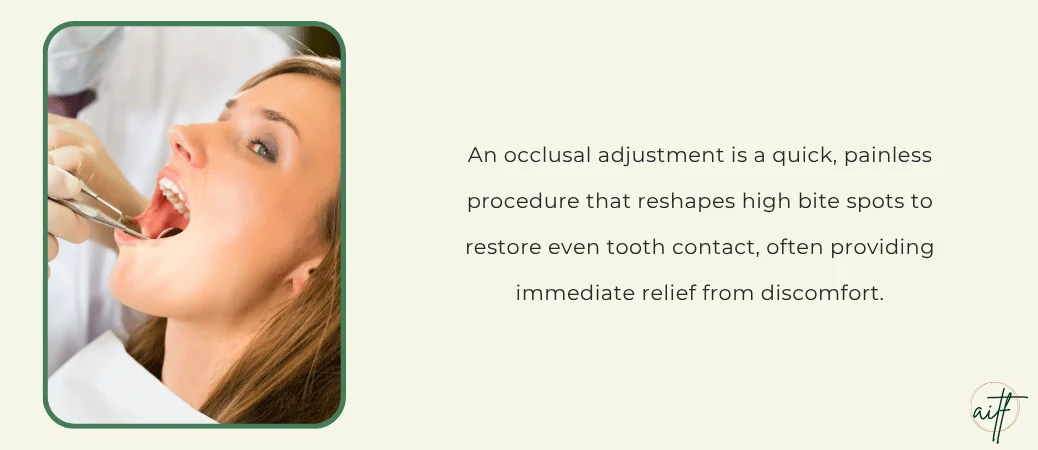
An occlusal adjustment is a quick and painless procedure to fix bite problems. Your dentist uses special marking paper to identify exactly where your teeth contact first when you bite down.
You’ll tap your teeth together several times while the paper marks high spots in a different color. The dentist then carefully removes tiny amounts of material from those specific areas using a polishing tool.
The process typically takes 10 to 20 minutes and doesn’t require anesthesia. You won’t feel pain during the adjustment, though you might sense slight vibration or pressure.
Your dentist will have you test your bite multiple times to ensure the correction feels comfortable and balanced.
Most patients experience immediate relief after a proper bite adjustment. Your teeth should meet evenly without any single tooth hitting first.
Tips for Preventing and Managing Bite Problems
Taking the right steps after dental work and knowing what questions to ask can help you avoid bite issues or catch them early.
Simple care practices and clear communication with your dentist make a big difference in your comfort.
What to Do After Dental Fillings and Crowns
Wait until the numbness wears off completely before testing your bite. Your mouth can’t sense properly when it’s numb, so you might bite incorrectly and get a false sense of how things feel.
Eat soft foods for the first 24 to 48 hours after getting a dental filling or crown. This gives inflamed tissues time to settle down. Avoid sticky or hard foods that put extra pressure on the new restoration.
Pay attention to how your bite feels over the next few days. A slightly high feeling that goes away within 3 to 5 days is usually normal.
But if the problem gets worse or doesn’t improve, schedule a bite check with your dentist.
Don’t try to adjust the filling or crown yourself by grinding your teeth together. This won’t fix a high filling and could damage your other teeth or the new restoration.
Oral Care Practices to Minimize Discomfort
Avoid clenching or grinding your teeth, especially at night. This puts extra stress on new dental work and can make bite problems worse. If you grind your teeth during sleep, ask your dentist about a night guard.
Chew evenly on both sides of your mouth when possible. This helps distribute bite forces and prevents one side from becoming overworked.
Use over-the-counter pain relievers if you have mild soreness, but don’t mask severe pain for too long. Pain that lasts more than a few days often means you need a bite adjustment.
Keep up with regular brushing and flossing around the new restoration. Good oral care reduces inflammation that can make your bite feel off.
Questions to Ask Your Dentist
Before you leave the dental office, ask how long you should expect any unusual sensations to last. This helps you know what’s normal versus what needs attention.
If your bite still feels wrong after a few days, call and ask: “Can you check my occlusion and do a bite adjustment if needed?” Most dentists include follow-up bite adjustments as part of crown placement.
Ask what specific symptoms mean you should come back sooner. Your dentist should tell you warning signs that need immediate care.
If you’ve had multiple adjustments and your bite is still off after several attempts, ask about getting a second opinion. Sometimes a fresh perspective helps solve persistent problems.
Don’t hesitate to speak up about discomfort. Clear communication with your dentist about bite issues is key to getting the treatment you need.
Frequently Asked Questions
Many people wonder if their bite will adjust on its own or if they need professional help. Understanding the timeline and warning signs can help you decide when to wait and when to take action.
Is it normal for my bite to feel slightly different after a crown or filling, even a few weeks later?
Yes, it’s normal for your bite to feel a bit different for up to two weeks after getting a crown or filling. Your mouth is very sensitive to even tiny changes in tooth shape.
Your jaw muscles and teeth need time to adapt to the new surface. The difference might feel more noticeable when you first start chewing or talking.
If the odd feeling continues beyond two weeks, your crown or filling might need a small adjustment. This doesn’t mean anything went wrong with your dental work.
How long should it take for a new crown or filling to feel completely natural when I chew or close my mouth?
Most people find that their bite feels normal again within one to two weeks. During this time, your mouth naturally adjusts to the restored tooth.
Your tongue, teeth, and jaw are highly sensitive to changes right after treatment. This sensitivity fades as everything settles into place.
If discomfort lasts longer than two weeks or gets worse, you should contact your dentist. A quick adjustment can make the restoration feel completely natural.
What are the most common reasons a crown or filling can feel too high or uneven after the appointment?
Numbness from anesthesia makes it hard to judge your bite accurately during the appointment. Once the medication wears off, you might notice that one tooth hits first when you bite down.
The angle of your jaw while lying back in the dental chair can also affect how the restoration feels. Your natural jaw position changes when you sit or stand up.
Even a tiny difference in height or texture can feel significant to your mouth. Your body has adapted to your old tooth shape over many years.
Which symptoms suggest the tooth or nerve might be irritated and need a dentist to check it?
Sharp pain when biting down or chewing is not normal after the first few days. This could mean the filling is too high or the tooth nerve is irritated.
Persistent sensitivity to hot or cold that lasts more than a week needs attention. Worsening pain instead of improvement is also a warning sign.
Throbbing pain or discomfort that keeps you awake at night should be checked right away. These symptoms might indicate that the tooth needs further treatment.
Can jaw soreness, headaches, or tooth sensitivity be caused by an adjustment issue with a crown or filling?
Yes, an uneven bite can cause jaw tension and muscle strain over time. When one tooth hits first, your jaw works harder to find a comfortable position.
This extra strain can lead to headaches, especially in your temples. You might also notice soreness in your jaw joint or face muscles.
Tooth sensitivity can happen if the restoration is pressing too hard against the opposing tooth. Leaving a high filling or crown untreated can cause bigger problems later.
When should I call my dentist for a bite adjustment, and is it usually a quick fix?
Call your dentist if the odd feeling lasts beyond two weeks or causes pain when chewing. You should also reach out if you notice jaw soreness or headaches that started after your dental work.
A bite adjustment is fast and painless. Your dentist uses colored marking paper to find the high spot, then gently smooths it down.
Most adjustments take just a few minutes, and relief is immediate. This is a routine part of crown and filling care, not a sign of a mistake.