Dental implants work well for most people, but problems can happen.
Early warning signs of dental implant failure include persistent pain lasting more than a few weeks, swelling or redness that won’t go away, a loose or wobbly implant, bleeding or pus around the gum line, gum recession exposing the implant, difficulty chewing, and bad breath that doesn’t improve.
Catching these signs early gives you the best chance to save your implant.
Most dental implants succeed, but failure can occur in 5 to 10 percent of cases. Some problems show up right after surgery, while others develop months or years later. Knowing what to watch for helps you protect your investment and your smile.
Your body will often tell you when something isn’t right with your implant. Pain that gets worse instead of better, gums that stay swollen, or an implant that feels loose are all signs you need to see your dentist right away. Quick action can mean the difference between saving your implant and needing a replacement.
Key Takeaways
- Watch for persistent pain, swelling, or a loose implant as these are major red flags that need immediate attention
- Early detection through regular dental checkups and monitoring symptoms greatly improves your chances of saving a failing implant
- Good oral hygiene, avoiding smoking, and following your dentist’s care instructions help prevent most implant failures
Understanding Dental Implant Failure
Dental implant failure happens when the implant doesn’t properly bond with your jawbone or develops problems that affect its stability. This can occur weeks after surgery or years later, making it important to understand the different types and what causes them.
What Is Dental Implant Failure?
Dental implant failure occurs when your implant post doesn’t successfully integrate with your jawbone or when it loses stability after initially healing. A failed implant can’t support the artificial tooth placed on top of it.
Your implant might fail to fuse with the bone during the healing process. It could also develop infections or bone loss that compromise its function. In either case, the implant can’t serve its purpose of replacing your missing tooth.
Common reasons for failure include:
- Infection at the implant site
- Poor bone quality or density
- Inadequate implant maintenance
- Improper surgical placement
- Medical conditions like diabetes
- Smoking or tobacco use
The good news is that dental implants succeed in 90-95% of cases. Failures happen, but they’re relatively uncommon when you follow proper care instructions and work with an experienced dentist.
Types of Implant Failure: Early vs. Late
Early implant failure happens within the first few months after your surgery, usually during the initial healing period. This type of failure typically occurs because your bone doesn’t properly accept the implant post.
You might experience early failure due to infection at the surgical site, poor bone quality, or issues during the placement procedure. Your body’s healing response plays a critical role during this time.
Late implant failure develops months or even years after your implant has been functioning normally. This usually results from peri-implantitis, which is an infection of the tissues around your implant. Bone loss around the implant, excessive force on the crown, or poor oral hygiene can trigger late failures.
Late failures are often preventable with proper implant maintenance and regular dental checkups. Your dentist can spot warning signs before they become serious problems.
Osseointegration and Implant Stability
Osseointegration is the process where your jawbone grows around and bonds with the titanium implant post. This biological fusion creates the stable foundation that makes dental implants work like natural tooth roots.
The process typically takes 3-6 months to complete. During this time, bone cells grow directly onto the implant surface, creating a strong mechanical bond. Without successful osseointegration, your implant will remain loose and eventually fail.
Factors that affect osseointegration:
| Factor | Impact on Integration |
| Bone density | Higher density improves bonding |
| Smoking | Reduces blood flow and healing |
| Diabetes | Slows healing process |
| Implant surface | Textured surfaces bond better |
| Immediate loading | May disrupt early integration |
Your implant needs to remain undisturbed during this healing period. Any movement or excessive pressure can prevent proper bone growth and cause the osseointegration process to fail.
Key Early Warning Signs of Dental Implant Failure
Recognizing problems with your dental implant early can make the difference between saving it and needing a replacement. Pain that won’t go away, movement in the implant, swollen gums, and trouble eating are all red flags that need immediate attention.

Persistent Pain or Discomfort
Some discomfort is normal right after getting your implant, but pain shouldn’t last more than a few weeks. If you’re experiencing ongoing pain or throbbing around your implant site after the initial healing period, something might be wrong.
Pain is one of the most common early signs of implant failure and shouldn’t be ignored. The pain might feel sharp when you touch the area or could be a constant dull ache. You might also notice increased sensitivity when you eat hot or cold foods.
Pain that gets worse over time instead of better is especially concerning. This could mean your implant isn’t bonding properly with your jawbone or that an infection is developing. Don’t wait to see if it goes away on its own, contact your dentist right away.
Movement or Loose Implant
Your dental implant should feel as stable as a natural tooth once it heals. Any movement or wiggling is a serious warning sign that needs immediate attention.
Implant mobility indicates the implant hasn’t properly integrated with your bone. A healthy implant is completely fixed in place and won’t shift when you touch it with your tongue or finger. Even slight movement means the bond between the implant and bone has failed or never formed correctly.
You might notice your implant feels loose when you’re brushing your teeth or eating. Sometimes a shifting implant will make your bite feel different or uneven. This is one of the clearest signs of dental implant failure and requires urgent dental care to prevent further damage.
Gum Inflammation and Swelling
Your gums around the implant should look pink and healthy, just like the tissue around your natural teeth. Redness, puffiness, or swelling that lasts beyond the first few weeks after surgery signals a problem.
Gum inflammation around an implant can indicate infection or poor healing. You might see that your gums look darker red than usual or feel tender when you touch them. Bleeding when you brush or floss around the implant is another warning sign.
Swollen gums might also pull away from the implant, creating pockets where bacteria can collect. This can lead to a foul taste in your mouth or bad breath that doesn’t go away with regular brushing. These symptoms need professional treatment before they cause permanent damage.
Difficulty Chewing or Biting
Once fully healed, your implant should let you eat normally without any problems. If you’re having trouble chewing or feel pain when you bite down, your implant may be failing.
Difficulty chewing often means your implant isn’t stable enough to handle the pressure of normal eating. You might avoid certain foods because they hurt or feel uncomfortable. Some people notice their implant feels different from their other teeth when they bite down.
Pressure on the implant can contribute to failure, so problems with chewing create a cycle that makes things worse. Your bite might feel off-balance, or you might unconsciously start chewing only on one side of your mouth. These changes in how you eat are important clues that something’s wrong with your implant.
Gum and Bone Health Concerns Around Implants
The tissues surrounding your dental implant need to stay healthy for long-term success. Problems with your gums or bone can show up as visible changes around the implant or as signs of infection that need quick treatment.
Gum Recession and Visible Implant Threads
Gum recession happens when the tissue around your implant pulls back and exposes parts that should stay covered. You might notice metal threads or the implant post becoming visible near your gum line.
This pulling back of tissue often points to bone loss underneath. When bone deteriorates, the gums follow and recede with it.
Gum recession around implants can result from several issues. Poor oral hygiene lets bacteria build up. Aggressive brushing damages delicate tissue. Smoking reduces blood flow to your gums.
If you see visible implant threads, contact your dentist right away. Early treatment can prevent further bone loss and save your implant.
Peri-Implantitis and Infection
Peri-implantitis is a serious gum disease that attacks the soft tissue and bone around your implant. It starts with inflammation but can quickly progress to implant infection if you don’t get treatment.
Common signs include red or swollen gums, bleeding when you brush, and a bad taste in your mouth. You might also notice pus or discharge around the implant site.
This condition develops when bacteria collect around the implant. The infection spreads from the gums into the surrounding bone. Without treatment, peri-implantitis leads to bone loss and eventual implant failure.
Your dentist can treat early-stage peri-implantitis with deep cleaning. More advanced cases might need laser treatment or surgery to remove infected tissue and restore health.
Facial Swelling and Systemic Symptoms
Facial swelling around your implant signals a more serious infection that has spread beyond the immediate area. Your cheek or jaw might feel puffy and tender to touch.
Watch for these warning signs that need immediate attention:
- Swelling that gets worse instead of better
- Fever or feeling unwell
- Difficulty opening your mouth or swallowing
- Severe pain that doesn’t respond to medication
Systemic symptoms like fever mean bacteria from the infection have entered your bloodstream. This is rare but requires urgent care.
Call your dentist right away if you experience facial swelling. Don’t wait to see if it improves on its own. Quick treatment with antibiotics and drainage can stop the infection from spreading further.
Underlying Causes and Risk Factors
Several factors can increase your chances of implant problems, from daily habits like oral care to medical conditions that affect healing. Understanding these risks helps you protect your investment and catch problems early.
Poor Oral Hygiene and Implant Maintenance
Your daily cleaning routine directly impacts how long your implant lasts. Bacteria can build up around the implant just like natural teeth, leading to infection and dental implant failure.
Without proper brushing and flossing, you risk developing peri-implantitis. This condition causes inflammation and bone loss around the implant. The infection weakens the bond between your jawbone and the implant.
You need to brush twice daily and floss around your implant every day. Regular dental cleanings also remove buildup you might miss at home. Treating gum disease early and maintaining consistent oral hygiene helps reduce failure risk.
Skipping dental implant maintenance appointments means problems go undetected. Your dentist checks for early warning signs during these visits.
Medical Conditions and Medications
Certain health issues affect how well your body heals and supports an implant. Uncontrolled diabetes slows wound healing and increases infection risk after surgery.
Autoimmune diseases can interfere with your body’s ability to integrate the implant with bone. Osteoporosis weakens bone density, making it harder for the implant to stay secure.
Some medications also create complications. Bisphosphonates for osteoporosis can affect jawbone healing. Blood thinners may cause excessive bleeding during placement.
Common medical risk factors:
- Uncontrolled blood sugar levels
- Weakened immune system
- Low bone density
- Blood clotting disorders
- Radiation therapy to the head or neck
Talk to your dentist about all your medical conditions before getting implants. They may adjust your treatment plan or work with your doctor to optimize your health first.
Teeth Grinding (Bruxism)
Grinding or clenching your teeth puts excessive pressure on implants. This constant force can loosen the implant or damage the crown on top.
Bruxism often happens during sleep, so you might not realize you’re doing it. Signs include jaw soreness, headaches, or worn tooth surfaces.
The pressure from grinding prevents proper healing after implant placement. It can also cause bone loss around established implants over time.
Your dentist may recommend a custom night guard to protect your implant. This device cushions the force and distributes pressure more evenly. Treating bruxism before getting implants improves your success rate.
Improper or Failed Implant Placement
Technical errors during surgery can lead to immediate or delayed failure. Poor placement angle, incorrect depth, or wrong implant size all create problems.
Insufficient bone volume at the implant site requires bone grafting first. Placing an implant without adequate bone support leads to instability. The implant won’t integrate properly with weak or insufficient jawbone.
Damage to nearby nerves, blood vessels, or sinuses during placement causes complications. Your surgeon needs proper training and experience to avoid these issues. Advanced imaging like CT scans helps plan accurate placement.
Choosing a qualified oral surgeon or periodontist with extensive implant experience reduces placement errors. Ask about their success rates and how many procedures they’ve performed.
Prevention and Monitoring for Implant Success
Regular check-ups and proper daily care form the foundation of long-term implant health, while understanding available treatments helps you address problems before they become serious. Your dentist can catch early complications through professional monitoring and X-rays that reveal issues not visible to the naked eye.
Follow-Up Appointments and Monitoring
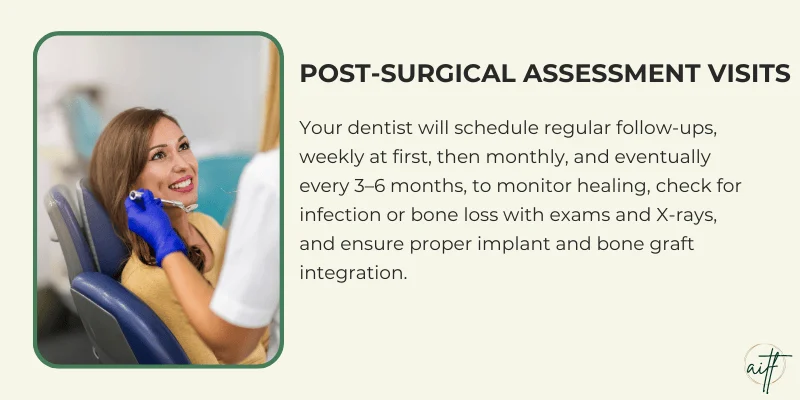
Your dentist will schedule follow-up appointments at specific intervals to track your healing progress. You’ll typically need weekly visits during the first month after implant placement, then monthly or bi-monthly check-ups throughout your first year.
These appointments let your dentist examine the implant site for signs of infection or inflammation. X-rays taken during these visits reveal bone integration problems or bone loss around the implant that you can’t see on your own.
After your first year, you should visit every 3-6 months for professional cleanings and monitoring. Your dentist will measure pocket depths around the implant and check for any mobility or mechanical issues.
If you received a bone graft during implant placement, your dentist pays special attention to how well the grafted bone has integrated with your natural bone structure.
Daily Care and Oral Hygiene
You need to brush your implants gently twice daily using a soft-bristled toothbrush. Focus on the area where the implant crown meets your gum line, as bacteria can accumulate there and cause infection.
Your daily routine should include:
- Brushing for two minutes twice per day
- Flossing with implant-specific tools or water flossers
- Using antimicrobial mouthwash to reduce bacteria
- Avoiding hard or sticky foods that stress the implant
Proper implant maintenance prevents most complications from developing. You should never skip daily cleaning, even if your implant feels completely normal. Bacteria buildup leads to peri-implantitis, which can destroy the bone supporting your implant.
Treatment Options for Complications
Your dentist can treat implant complications more successfully when caught early. For minor infections, professional cleaning and antibiotic therapy often resolve the problem without surgery.
More serious issues may require surgical intervention. Your dentist might perform tissue regeneration procedures or bone grafting to restore lost bone structure around failing implants. In severe cases where the implant cannot be saved, removal and replacement becomes necessary after proper healing time.
If implant removal is required, you have several replacement options. Your dentist might place a new implant once the site heals completely, or recommend dental bridges as an alternative solution.
Frequently Asked Questions
Dental implant problems can show up through pain, swelling, loose implants, or signs of infection. Knowing what to watch for helps you get treatment quickly.
What are the common indicators that a dental implant might not be successful?
A loose or wobbly implant is one of the clearest signs something is wrong. Your implant should feel completely stable, just like a natural tooth.
Pain that lasts more than a few weeks after surgery signals a problem. While some discomfort is normal right after the procedure, ongoing or worsening pain means you need to see your dentist.
Swelling and redness that don’t go away are also warning signs. Most dental implants succeed, but failures can occur in 5-10% of cases depending on various factors.
How can I recognize if my dental implant is not healing properly?
Gum recession around your implant means the tissue isn’t healing correctly. You might notice the metal post or parts of the crown becoming visible.
Persistent bleeding or discharge from the gum tissue points to poor healing. After the first week or two, you shouldn’t see much blood when brushing.
Difficulty chewing or feeling like your bite is off suggests the implant hasn’t integrated with your jawbone. You should be able to eat normally once healing is complete.
Are there any specific symptoms that suggest an issue with my recent dental implant?
Throbbing or sharp pain that spreads to other areas of your mouth indicates a problem. The pain might get worse when you bite down or touch the area.
An unpleasant taste in your mouth or bad breath that won’t go away often means infection. This symptom is especially concerning if it comes with other warning signs.
Numbness or tingling in your lips, chin, or tongue can mean nerve damage. This happens when an implant presses on or damages nearby nerves during placement.
What signs should prompt me to contact my dentist about a potential dental implant issue?
You should call your dentist right away if you notice pus, bleeding, or discharge around the implant site. These are clear signs of infection that need immediate treatment.
Contact your dental office if you feel any movement in your implant. Even slight shifting means the implant isn’t fusing properly with your bone.
Fever, swelling in your face, or symptoms that keep getting worse need urgent attention. Don’t wait for your next scheduled appointment if you’re experiencing these issues.
Can you tell me about the early signs of infection around an implant site?
Red, puffy gums around your implant are often the first sign of infection. The tissue might look darker than normal and feel tender to touch.
Pus or other fluid coming from the gum line means bacteria has entered the area. You might notice this discharge when you brush or press gently on the gums.
The area around your implant might feel warm compared to other parts of your mouth. This warmth, combined with swelling, usually indicates peri-implantitis or bacterial invasion.
What might pain around my dental implant mean for its longevity?
Short-term pain during the first few days after surgery is normal and expected. This type of discomfort should gradually decrease as you heal.
Pain that continues beyond two to three weeks suggests your implant isn’t integrating properly. The bone might not be growing around the implant as it should.
Sharp or severe pain can indicate serious problems like infection or implant failure. Getting treatment early gives you the best chance of saving your implant or preparing for a replacement if needed.