Teeth that look too short or worn down can make your smile appear older and unbalanced. This happens for many reasons, including grinding your teeth at night, natural genetics, or years of wear from daily use.
When you look in the mirror and feel unhappy with how your teeth appear, it affects your confidence in social situations and professional settings.
Veneers offer a non-surgical way to lengthen and reshape your teeth, giving you back a proportionate and youthful smile.
These thin shells of porcelain bond to the front of your teeth and can instantly transform the size of your teeth, making them look longer and fuller. Unlike surgical options that require recovery time, veneers provide immediate results with minimal discomfort.
The good news is that modern cosmetic dentistry makes it easier than ever to fix short or worn teeth. Whether your teeth became small from grinding, were always naturally tiny, or got shorter with age, veneers can restore proportion and improve balance in your smile. You can achieve the look you want in just a few dental visits.
Key Takeaways
- Veneers lengthen short or worn teeth without surgery and provide results in two to three visits
- Custom porcelain veneers last 10 to 15 years with proper care and match your natural teeth perfectly
- You can choose between porcelain veneers and dental bonding depending on your budget and goals
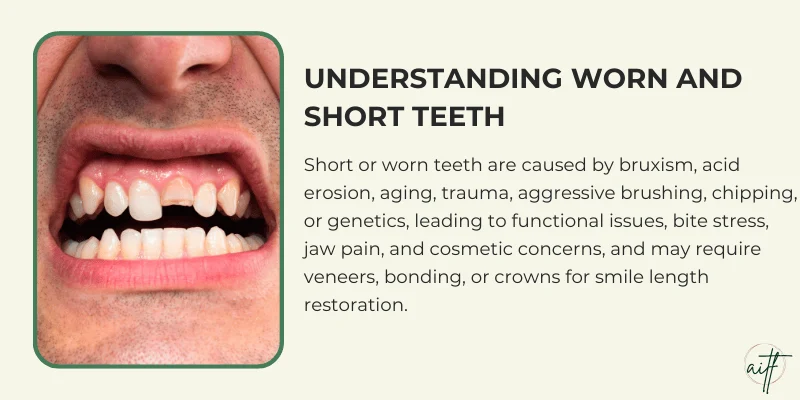
Understanding Worn and Short Teeth
Teeth can become shorter or more worn down for several reasons, from nighttime grinding habits to natural aging processes. These changes affect both how your smile looks and how your teeth function day to day.
Common Causes of Short or Worn Teeth
Bruxism, or teeth grinding, is one of the main reasons your teeth might look shorter than they should. Many people grind their teeth during sleep without even knowing it, gradually flattening the biting edges over time.
Acid erosion wears down your enamel when you consume acidic foods and drinks regularly. Conditions like acid reflux can also expose your teeth to stomach acid, which weakens the protective outer layer.
Natural aging plays a role too. Your enamel thins out over the years, making teeth appear shorter and less defined.
Other causes include:
- Aggressive brushing that wears away enamel near the gum line
- Physical trauma from accidents or sports injuries
- Chipping that creates uneven, jagged edges
- Genetics that result in naturally small teeth
Impact of Tooth Length on Smile and Confidence
Short or worn teeth can make your smile look older or unbalanced. When your teeth lose their proper length, it affects facial proportions and the overall harmony of your appearance.
You might notice that your smile doesn’t show as much tooth surface as it used to. This can make you feel self-conscious about smiling in photos or social situations.
Beyond looks, worn teeth can create functional problems. Your bite might feel off, making chewing less comfortable. The uneven wear patterns can put extra stress on certain teeth, leading to jaw pain or headaches.
A gummy smile can also make teeth appear shorter than they actually are, even when the teeth themselves haven’t worn down.
Identifying When Smile Length Restoration Is Needed
You might need smile length restoration if your teeth look noticeably shorter than they used to be. Compare old photos to current ones to see if there’s a visible difference in tooth length.
Signs that restoration could help include:
- Flat or worn biting edges instead of natural curves
- Teeth that appear square rather than rectangular
- Visible shortening compared to neighboring teeth
- Sensitivity from exposed inner tooth layers
If tooth grinding has created an uneven smile line, or if your teeth feel weak or fragile, it’s time to talk with a dentist. Professional evaluation helps determine whether veneers, bonding, or crowns would work best for your situation.
How Veneers Restore Smile Length
Veneers work by adding a thin layer of porcelain or composite material to your tooth surface, which allows your dentist to customize both the shape and visible length of your teeth. This process can address issues from natural genetics to years of grinding that have left your teeth looking shorter than you’d like.
Veneers for Lengthening Short Teeth
Veneers for short teeth provide a direct solution when your teeth appear smaller than you want them to be. Your dentist bonds thin porcelain shells to the front of your teeth to add visible length without surgery.
The treatment begins with minimal preparation of your tooth surface. Your dentist removes a small amount of enamel to create space for the veneer. This step helps the veneer sit flush with your surrounding teeth.
Digital or physical impressions capture the exact measurements of your teeth. These impressions guide the creation of custom veneers designed to match your desired length. Each veneer is crafted to add the right amount of length while maintaining natural proportions with your facial features.
Smile Design and Planning with Veneers

Your dentist evaluates several factors during the smile design phase. They measure your facial proportions, lip line, and the relationship between your upper and lower teeth.
Key considerations include:
- Natural tooth color and translucency
- Desired tooth length and width
- Gum line symmetry
- Bite alignment and jaw position
Digital imaging software often shows you a preview of your expected results before treatment begins. This technology helps you visualize how longer teeth will change your appearance. Your dentist can adjust the design based on your feedback to create a smile that matches your goals.
Transforming Small or Worn Teeth with Veneers
Worn or short teeth from grinding, acid erosion, or natural aging respond well to veneer treatment. The veneers rebuild what wear has taken away from your tooth structure.
Your dentist can reshape teeth and restore lost length in a single treatment plan. The porcelain material resists staining from coffee and wine better than natural enamel. It also provides durability that can last 10 to 15 years with proper care.
The final result gives you a smile that looks balanced and proportionate. Your teeth will appear fuller and more youthful without looking artificial or overly large.
Types of Veneers and Alternative Treatments
Different veneer materials offer unique benefits for restoring worn or short teeth, from highly durable porcelain to same-day composite options. Understanding these choices alongside dental bonding helps you select the best treatment for lengthening your smile.
Porcelain Veneers for Smile Restoration
Porcelain veneers are thin ceramic shells that bond to your tooth surface to add length and improve appearance. They closely mimic natural enamel in color and translucency, making them ideal for a natural-looking smile restoration.
These dental veneers last 10 to 20 years with proper care. They resist stains better than other materials, so your restored smile stays bright over time. Porcelain works particularly well if you have severely worn teeth or want to add significant length to short teeth.
The process typically requires two to three dental visits. Your dentist removes a thin layer of enamel, takes impressions, and sends them to a lab where technicians create your custom veneers. You wear temporary veneers while waiting for your permanent ones.
The main drawback is cost, ranging from $200 to $2,300 per tooth depending on your location. You also can’t reverse the treatment because some enamel must be removed.
Composite and Minimal-Prep Veneers
Composite veneers use tooth-colored resin applied directly to your teeth, often completed in a single appointment. They cost less than porcelain, typically $90 to $1,380 per tooth, making them a budget-friendly option for smile lengthening.
Your dentist can sculpt composite resin to add length to short teeth without removing much enamel. This makes them less invasive than traditional porcelain options. Minimal-prep veneers require only light enamel reshaping while still providing good results.
The downside is durability. Composite veneers typically last 4 to 8 years and stain more easily than porcelain. You’ll need to avoid coffee, tea, and red wine to keep them looking their best.
No-prep veneers like Lumineers require little to no enamel removal. They work best for patients with small teeth or spacing issues, though they may look bulky on larger teeth.
Dental Bonding and Other Options
Dental bonding applies composite resin directly to worn tooth edges to restore length quickly and affordably. Your dentist roughens the tooth surface, applies the resin, shapes it, and hardens it with a special light in about 30 to 60 minutes per tooth.
Bonding costs significantly less than veneers, usually $100 to $400 per tooth. It requires minimal enamel removal and can often be completed without anesthesia. This makes it a good choice if you have minor wear or want to test how added tooth length looks before committing to veneers.
However, bonding material stains easily and chips more readily than porcelain. It typically lasts 3 to 7 years before needing replacement or touch-ups.
Crowns may be better if your teeth are severely worn down to the gumline. They cover the entire tooth and provide more structural support than veneers or bonding. Your dentist can help you decide which treatment best fits your specific situation.
The Veneer Treatment Journey
Getting veneers involves several carefully planned steps that transform your smile over a few weeks. Your cosmetic dentist will guide you through preparation, design, and placement to ensure your new teeth look natural and feel comfortable.
Veneers Consultation and Smile Assessment

Your first visit focuses on evaluating your teeth and discussing your goals. A cosmetic dentist will examine your short or worn teeth to determine if veneers are the right solution for you.
During this appointment, your dentist will take photos and digital scans of your smile. These images help create a treatment plan that addresses the specific issues affecting your tooth length. You’ll discuss the shade, shape, and size you want for your new smile.
The consultation also covers what to expect during treatment. Your dentist will explain how many veneers you need and review the timeline for completion. This is when you can ask questions about the process and share any concerns about the results.
Tooth Preparation and Temporary Veneers
The next step involves preparing your teeth to receive the veneers. Your dentist removes a thin layer of enamel from the front surface of each tooth, usually less than a millimeter. This creates space for the veneer to fit properly without making your teeth look bulky.
After tooth preparation, your dentist takes detailed impressions of your prepared teeth. These impressions get sent to a dental lab where skilled technicians craft your custom veneers. The lab work typically takes one to two weeks to complete.
You won’t leave the office with exposed teeth. Your dentist places temporary veneers over your prepared teeth to protect them and maintain your appearance. These temporaries give you a preview of your new smile length, though they’re not as strong or polished as the final versions.
Custom Veneer Creation and Placement
A dental laboratory creates your custom veneers using high-quality porcelain that matches your natural teeth. The technicians shape each veneer to add the exact length and proportion your smile needs.
When your veneers are ready, you return for veneer placement. Your dentist removes the temporary veneers and cleans your teeth thoroughly. Each custom veneer gets checked for fit and color before being permanently bonded to your tooth.
The bonding process uses a special adhesive that creates a strong connection between the veneer and your tooth. Your dentist applies the adhesive, positions the veneer carefully, and uses a curing light to harden the bond. Final adjustments ensure your bite feels comfortable and your new smile looks balanced.
Care, Longevity, and Special Considerations
Veneers can last 10-15 years or more with proper maintenance, but teeth grinding and inadequate protection can significantly shorten their lifespan. Understanding how to care for your veneers and protect them from damage will help you get the most value from your investment.
Caring for Veneers and Maximizing Durability
Your daily habits play a major role in how long your veneers last. Brush twice daily with a soft-bristled toothbrush and non-abrasive toothpaste to avoid damaging the veneer surface.
Floss at least once per day to remove plaque between teeth. Waxed floss works well with veneers and slides more smoothly between teeth than unwaxed varieties.
Avoid biting into hard foods like ice, hard candy, or nuts with your front teeth. Don’t use your teeth as tools to open packages or bottles, as this puts unnecessary stress on the veneers.
Visit your dentist every six months for professional cleanings and examinations. Your dentist can spot early signs of veneer damage or loosening before they become serious problems.
Watch your intake of staining substances like coffee, red wine, and dark berries. While porcelain veneers resist stains better than natural teeth, the adhesive holding them in place can discolor over time.
Solutions for Bruxism and Teeth Grinding
Bruxism, or teeth grinding, poses one of the biggest threats to veneer longevity. The constant pressure from grinding can crack or chip your veneers, especially if it happens during sleep when you can’t control the behavior.
Many people grind their teeth without realizing it. Common signs include jaw pain, headaches upon waking, or worn tooth surfaces. If you notice these symptoms, talk to your dentist right away.
Stress management techniques can help reduce grinding. Try relaxation exercises before bed, reduce caffeine intake, or practice meditation. Some people find that avoiding alcohol in the evening helps decrease nighttime grinding.
Your dentist may recommend wearing a night guard to protect your veneers while you sleep. This is especially important if you’ve had grinding problems before getting veneers.
Night Guards and Protecting Your New Smile
A custom-fitted night guard creates a protective barrier between your upper and lower teeth. This prevents direct contact that could damage your veneers during grinding episodes.
Custom night guards from your dentist fit better and last longer than over-the-counter options. They’re made from impressions of your teeth, so they stay in place comfortably throughout the night without causing irritation.
Types of night guards:
- Soft guards: Comfortable but may wear out faster
- Dual laminate: Soft inside, hard outside for better durability
- Hard acrylic: Most durable option for severe grinders
Clean your night guard daily with cool water and mild soap. Store it in a ventilated case to prevent bacterial growth. Bring it to dental appointments so your dentist can check for wear patterns and proper fit.
Athletes should also wear a mouthguard during physical activities to protect veneers from impact injuries. Your dentist can create a sports guard that fits over your veneers comfortably.
Optimizing Smile Results and Beyond
Achieving the best results with veneers sometimes requires addressing other dental concerns first. Issues like excess gum tissue, tooth alignment problems, or habits that damage teeth can affect how well veneers work and how long they last.
Managing Gummy Smile and Gum Line Issues
If you show a lot of gum tissue when you smile, veneers alone might not give you the look you want. A multidisciplinary approach combining crown lengthening surgery and veneers can create better proportions between your teeth and gums.
Crown lengthening removes excess gum tissue to expose more of your natural tooth. This procedure fixes uneven gum lines and makes short teeth appear longer. After your gums heal, veneers can be placed to complete your transformation.
Benefits of combining treatments:
- More tooth structure visible for veneer placement
- Better balance between tooth and gum proportions
- Correction of asymmetric gum margins
- Natural-looking smile proportions
Your dentist might also reshape your gum line to create symmetry. This step happens before veneers so the final result looks harmonious and balanced.
Orthodontics and Full Smile Makeovers
Sometimes straightening your teeth first leads to better veneer results. Smile makeover strategies often combine multiple treatments for the most complete transformation.
Clear aligners can fix spacing issues and minor misalignment before veneers. This approach means your veneers don’t have to compensate for crooked teeth. You get more natural-looking results that last longer.
A full smile makeover might include teeth whitening, orthodontics, and veneers in sequence. Whitening happens first so your dentist can match veneer color to your brightened natural teeth. Then aligners correct positioning before final veneer placement.
When Veneers May Not Be the Best Option
Veneers aren’t right for everyone. If you grind or clench your teeth, the thin veneers may chip, break, or peel under the constant pressure.
You might need alternatives if you have:
- Severe teeth grinding (bruxism)
- Significant tooth decay
- Advanced gum disease
- Insufficient tooth enamel
For people who grind their teeth, special bruxism veneers can replace lost enamel on worn teeth. These are stronger and more durable than standard veneers. You’ll also need a night guard to protect your investment.
Your dentist might suggest crowns instead if your teeth have too much damage. Crowns cover the entire tooth and provide more protection than veneers for severely compromised teeth.
Frequently Asked Questions
Veneers can add visible length to teeth that appear too small, resist staining better than natural enamel, and provide a long-lasting solution when cared for properly. The placement process typically takes two to three visits, with minimal discomfort during recovery.
How can veneers improve the appearance of short teeth?
Veneers are thin porcelain shells that bond to the front of your teeth to add length and improve their shape. Your dentist customizes each veneer to match the proportions of your smile, making short teeth appear longer and more balanced.
Dental veneers help lengthen teeth without requiring surgery or extensive orthodontic treatment. The porcelain material looks natural and blends seamlessly with your surrounding teeth.
What are the long-term benefits of choosing veneers for tooth lengthening?
Veneers offer natural-looking color and translucency that mimics real tooth enamel. They resist stains from coffee, wine, and everyday foods better than your natural teeth do.
With proper dental care, your veneers can last many years. You’ll likely experience increased confidence in your smile after treatment.
The durability of veneers depends on several factors including the quality of materials used and your oral hygiene habits. Regular dental checkups help ensure your veneers stay in good condition over time.
Can veneers provide a solution for teeth that have been worn down over time?
Yes, veneers can restore length to worn teeth caused by grinding, acidic foods, or normal aging. Teeth grinding, also called bruxism, gradually wears down enamel and makes your teeth look shorter.
Age-related wear from years of biting and chewing also contributes to tooth shortening. Veneers add back the lost length and protect your teeth from further damage.
Your dentist can address multiple causes of tooth wear at once, including erosion from acid reflux or acidic beverages. This makes veneers a practical option for many patients with shortened teeth.
Are there any special care instructions for maintaining veneers on shortened teeth?
You should brush and floss your veneers just like you do with natural teeth. Use a soft-bristled toothbrush and non-abrasive toothpaste to avoid scratching the porcelain surface.
Avoid biting directly into very hard foods like ice or hard candy. If you grind your teeth at night, your dentist may recommend wearing a night guard to protect your veneers.
Visit your dentist regularly for checkups and professional cleanings. These appointments help catch any potential issues early and keep your veneers looking their best.
What is the typical procedure and recovery time for getting veneers to restore tooth length?
The process begins with a light preparation of your tooth surface to create the right conditions for bonding. Your dentist then takes detailed impressions to ensure your veneers are customized to fit your smile perfectly.
You’ll need two to three appointments to complete the veneer placement. At your final visit, your dentist securely places the veneers and adjusts them for a comfortable, natural fit.
Recovery time is minimal, with most patients returning to normal activities immediately. You may experience slight sensitivity for a few days, but this usually goes away quickly.
How do veneers compare to other dental procedures in terms of restoring a youthful smile?
Veneers can correct multiple cosmetic complaints at one time, including short teeth, gaps, chips, and discoloration. Other treatments like bonding or crowns may only address one specific issue.
Dental bonding uses composite resin applied directly to your tooth, which can be a faster option for minor length adjustments. However, bonding doesn’t last as long as porcelain veneers and is more prone to staining.
Crowns cover the entire tooth rather than just the front surface, requiring more tooth reduction. Veneers preserve more of your natural tooth structure while still providing excellent cosmetic results.