Going to the dentist can make many people nervous or scared. If you feel anxious about dental work, sedation dentistry can help you stay calm and comfortable during your appointment. Two common options are oral sedation and IV sedation.
Oral sedation uses a pill you take before your visit to help you relax while staying awake, while IV sedation delivers medication through a vein for deeper relaxation and more precise control. The choice between oral and IV sedation depends on your anxiety level, the type of dental work you need, and your overall health.
Understanding how each method works will help you pick the right option for your needs. Both types of sedation are safe when given by trained professionals, but they have different benefits and drawbacks worth knowing about.
Key Takeaways
- Oral sedation is convenient and simple but takes longer to work and varies from person to person
- IV sedation works faster and allows better control but costs more and needs extra monitoring
- Your choice depends on your anxiety level, the dental procedure type, and your medical history
What Is Sedation Dentistry?
Sedation dentistry uses medication to help you relax during dental procedures, making treatment more comfortable if you experience anxiety or need extensive work done. Different sedation options are available depending on your needs and the type of procedure.
Purpose of Sedation Dentistry
Dental sedation helps manage fear and stress that can prevent you from getting necessary dental care. Many people avoid the dentist due to anxiety, which can lead to serious oral health problems over time.
Sedation dentistry offers solutions to help you receive treatment in a relaxed state. You might benefit from sedation if you have a strong fear of dental work, need a lengthy procedure, or have difficulty sitting still in the dental chair. Some people also choose sedation when having multiple treatments done in one visit.
Sedation can range from minimal relaxation to deep sleep, depending on what you need. Your dentist will consider your anxiety level, medical history, and the complexity of your dental procedure when recommending a sedation option.
Common Sedation Options in Dentistry
Dentists use several types of sedation dentistry to meet different patient needs:
Nitrous Oxide – Also called laughing gas, this is the mildest form of sedation. You breathe it through a mask during your procedure and feel relaxed while staying fully awake.
Oral Sedation – You take a pill before your appointment that makes you drowsy and calm. You remain conscious but may not remember much about the procedure.
IV Sedation – Medication goes directly into your bloodstream through an IV line. This provides deeper sedation that your dentist can adjust during treatment.
General Anesthesia – Used for major procedures, this puts you completely to sleep.
Local anesthesia is typically used alongside these sedation options to numb the specific treatment area. Your dentist will help you choose the right sedation based on your comfort needs and the dental work required.
Understanding Oral Sedation
Oral sedation uses prescription medications taken by mouth to help you feel calm and relaxed during dental procedures. The medication comes in pill or liquid form and creates a state of conscious sedation where you remain awake but feel less anxious.
How Oral Sedation Works
When you take an oral sedative, it travels through your digestive system and enters your bloodstream. The medication affects your central nervous system to reduce anxiety and help you feel more at ease.
You’ll typically take the pill about 30 to 60 minutes before your appointment. This gives the medication enough time to start working. During your procedure, you’ll stay awake and can respond to questions or instructions from your dentist.
Most patients describe feeling drowsy and deeply relaxed. You might not remember much about the procedure afterward, which many people find helpful. You’ll need someone to drive you home since the effects can last for several hours.
Types of Medications Used
Dentists commonly use benzodiazepine medications for oral sedation during dental procedures. These medications have proven effective at reducing anxiety while maintaining patient safety.
Halcion is one of the most popular choices. It works quickly and wears off faster than other options.
Diazepam (also known as Valium) provides longer-lasting effects. Your dentist might choose this for procedures that take more time.
Triazolam offers moderate sedation levels. The dosage can be adjusted based on your anxiety level and the complexity of your treatment.
Your dentist will choose the right medication based on your medical history, the type of procedure, and how anxious you feel about dental work.
When Oral Sedation Is Recommended
Oral sedation works well for patients with mild to moderate dental anxiety. If you feel nervous about routine cleanings or fillings, this option can help you get through your appointment more comfortably.
Comfortable dentistry through oral sedation suits procedures that take 30 minutes to a few hours. This includes fillings, crowns, root canals, and some extractions.
You might be a good candidate if you:
- Have a strong gag reflex that makes dental work difficult
- Need multiple procedures done in one visit
- Feel uncomfortable with dental sounds or smells
- Have had negative dental experiences in the past
Your dentist will review your medical history and current medications to make sure oral sedation is safe for you.
Exploring IV Sedation
IV sedation delivers medication directly into your bloodstream through a small needle in your vein. This method provides fast-acting relaxation and allows your dental team to adjust your sedation level throughout the procedure.
How IV Sedation Works
Intravenous sedation puts medication straight into your bloodstream for immediate results. A dentist or trained professional places a small needle into a vein in your arm or hand.
The sedative effects begin within 2-3 minutes of administration. You’ll feel deeply relaxed but remain conscious during your treatment.
Your dental team can adjust the medication flow during your procedure. This gives them precise control over how relaxed you feel from start to finish.
The IV line stays in place throughout your entire appointment. This means you won’t need additional needle sticks if your sedation level needs adjustment. Most patients remember very little about their procedure afterward because of the medication’s amnesia effect.
Medications and Administration
Dental professionals typically use medications like midazolam or propofol for IV sedation during dental procedures. These drugs belong to a class of sedatives that calm your central nervous system.
An anesthesiologist or certified registered nurse anesthetist monitors you throughout the procedure. They watch your vital signs including heart rate, blood pressure, oxygen levels, and breathing pattern.
Your sedation provider can increase or decrease your medication as needed. This flexibility is one of the key advantages of IV sedation compared to oral options.
You’ll need to avoid eating or drinking for several hours before your appointment. Your dental office will give you specific instructions about preparation.
When IV Sedation Is Appropriate
IV sedation works best for complex dental treatments that take several hours. Procedures like dental implants, wisdom tooth removal, and full mouth reconstructions often require this deeper level of sedation.
You might need intravenous sedation if you have severe dental anxiety that prevents you from getting necessary care. It’s also helpful if you have a strong gag reflex or difficulty sitting still for long periods.
The benefits of IV sedation include:
- Complete comfort during lengthy procedures
- Little to no memory of the treatment
- Ability to complete multiple procedures in one visit
- Better control over sedation depth
People with certain medical conditions should discuss oral sedation vs. IV sedation safety with their dentist. Your overall health and the complexity of your procedure will help determine which option suits your needs.
Oral vs IV Sedation: Key Differences
The way sedation is given and how it affects your body differs significantly between oral and IV methods. Each approach has unique characteristics in terms of how fast it works, how deeply you’re sedated, and what you’ll remember afterward.
Administration and Onset
Oral sedation involves taking a pill or liquid before your dental appointment. You typically take the medication 30 to 60 minutes before your procedure starts. This gives the drug time to enter your bloodstream through your digestive system.
The downside is that you need to plan ahead. You’ll need someone to drive you to the office since the medication starts working before you arrive.
IV sedation works differently. Your dentist delivers the sedative directly into your bloodstream through a small needle in your arm or hand. The effects begin within seconds to minutes, which means you don’t need to take anything before you arrive.
This faster onset gives your dentist more flexibility with timing. They can start your treatment as soon as you’re comfortable.
Depth and Control of Sedation
The level of sedation you experience varies greatly between these two sedation options. With an oral sedative, you’ll feel drowsy and relaxed, but you remain conscious throughout the procedure. You can still respond to questions and follow instructions from your dentist.
However, the depth of sedation is harder to adjust. Once you’ve taken the pill, your dentist can’t easily increase or decrease how sedated you feel.
IV sedation provides much more control. Your dentist can adjust the medication level throughout your appointment based on how you’re responding. This allows them to keep you at the exact level of sedation you need.
IV sedation also provides deeper relaxation, which can range from moderate sedation to deep sedation. Some patients become semi-conscious or feel like they’ve fallen asleep during treatment.
Comfort and Convenience
Oral sedation offers several convenience benefits:
- No needles required
- Take medication at home
- Less invasive process
- Lower cost option
- Simpler equipment needed
The main drawback is that you need to arrange transportation well in advance. The medication also takes longer to wear off, so you’ll feel groggy for several hours after your appointment.
IV sedation provides different advantages:
- Immediate effect
- Adjustable throughout procedure
- More predictable results
- Faster recovery in some cases
- Better for longer procedures
The need for a needle insertion bothers some patients. Sedation dentistry with IV methods also requires more specialized equipment and monitoring, which increases the cost.
Memory and Amnesia Effects
One major difference between these sedation methods is what you’ll remember afterward. Oral sedation typically allows you to retain some memory of the procedure. You might recall parts of the appointment, though your memory may be fuzzy or incomplete.
This partial memory can be reassuring for some patients who want to maintain some awareness. For others who prefer not to remember anything, this might not be ideal.
IV sedation often creates stronger amnesia effects. Many patients have little to no memory of their dental treatment. You might feel like you fell asleep and woke up when everything was done, even though you were responsive during the procedure.
This complete or near-complete memory loss helps patients with severe dental anxiety feel more comfortable about future appointments.
Factors to Consider When Choosing Your Sedation Type
Your anxiety level, the type of dental work you need, and your health background all play important roles in determining which sedation option works best for you. Understanding these factors helps you and your dentist make the right choice for your comfort and safety.
Level of Dental Anxiety or Fear
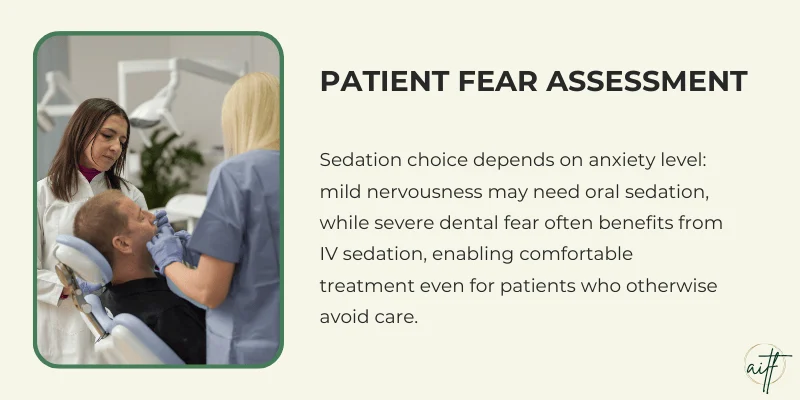
Your comfort level with dental procedures matters when selecting sedation. If you experience mild nervousness during routine cleanings or fillings, oral sedation might be all you need to feel relaxed.
Patients with severe dental anxiety or dental fear often benefit from IV sedation because it provides deeper, more predictable relaxation. IV sedation allows your dentist to adjust the medication level during your appointment to keep you comfortable throughout the entire procedure.
Some people avoid dental care completely because of fear. If dental anxiety has kept you from getting treatment, IV sedation can make comfortable dentistry possible even for the most anxious patients.
Procedure Complexity and Duration
The type of dental work you need affects which sedation method is appropriate. Simple procedures like cleanings or single fillings typically work well with oral sedation.
More complex treatments require different considerations. Oral surgery, multiple extractions, or lengthy procedures often call for IV sedation because it gives your dental team better control over your sedation level.
Longer appointments mean you need consistent comfort, and IV sedation can be adjusted as needed throughout your treatment.
Dental implant placement, wisdom teeth removal, and full mouth restorations are examples of procedures where IV sedation provides advantages over oral options.
Medical History and Safety Considerations

Your health background plays a key role in sedation selection. Certain medical conditions or medications you take may make one sedation type safer than another for you.
IV sedation requires trained medical professionals like an anesthesiologist or certified registered nurse anesthetist to monitor you during the procedure. This level of oversight makes IV sedation appropriate for patients with specific health concerns that need close monitoring.
You should tell your dentist about all medications you take, any allergies, and past reactions to sedation. Some conditions may limit your options, while others might make IV sedation the safer choice despite the higher cost and monitoring requirements.
Safety, Cost, and Recovery: What to Expect
Both sedation methods are safe when administered properly, but they differ in monitoring requirements, recovery times, and costs. Your medical history and the complexity of your procedure will influence which option works best for you.
Safety and Monitoring During Sedation
Both oral sedation and IV sedation are safe when used correctly, but they require different levels of monitoring. With oral sedation, your dentist can typically monitor you using standard equipment like pulse oximeters and blood pressure cuffs. The sedative effects develop slowly, giving your dental team time to adjust your care.
IV sedation requires more intensive supervision. An anesthesiologist or certified registered nurse anesthetist often administers and monitors the medication throughout your procedure.
They can adjust sedation levels instantly through the IV line, which provides better control but needs specialized training and equipment.
Your safety depends on careful screening before the procedure. Medical history and overall health play important roles in determining which sedation type suits you. People with certain medical conditions or those taking specific medications may have limitations with one method over the other.
Side Effects and Recovery Times
Oral sedation typically causes drowsiness that can last several hours after your appointment. You’ll need someone to drive you home and stay with you until the sedative effects wear off completely. Some people experience mild nausea, headaches, or grogginess the rest of the day.
IV sedation recovery is usually swift, but you may feel groggy for several hours afterward. The medications leave your system faster than oral sedatives, though you’ll still need a ride home. Most patients feel back to normal within 24 hours.
Both methods require you to avoid driving, operating machinery, or making important decisions for at least 24 hours after sedation.
Cost Overview and Insurance Considerations
IV sedation is generally more expensive than oral sedation. The higher cost reflects the specialized training, equipment, and additional staff needed to administer it safely.
Oral sedation costs less because it doesn’t require an anesthesiologist or certified registered nurse anesthetist. Your dentist can prescribe and monitor the medication without extra personnel.
Insurance coverage varies between the two options. Some dental plans cover sedation for complex procedures or severe anxiety, while others don’t. Check with your insurance provider before your appointment to understand your out-of-pocket costs for each sedation type.
Frequently Asked Questions
Oral and IV sedation each work differently in your body, affect recovery times in distinct ways, and suit different procedures and patient needs. Understanding these differences helps you choose the safest and most comfortable option for your situation.
What are the main differences between oral and IV sedation?
Oral sedation involves taking a pill before your procedure. You swallow the medication about an hour before your appointment starts.
IV sedation delivers medication directly into your bloodstream through a small needle in your arm or hand. This method works much faster than oral sedation.
The biggest difference is control. Your dentist can’t adjust oral sedation once you’ve taken the pill. With IV sedation, your dentist can increase or decrease the medication level during your procedure.
Oral sedation makes you drowsy and relaxed but you stay awake. IV sedation can create a deeper level of relaxation where you might not remember the procedure at all.
How do I know if I’m a good candidate for oral sedation?
You’re likely a good candidate for oral sedation if you have mild to moderate dental anxiety. This option works well for people who get nervous but don’t panic at dental appointments.
Oral sedation works best for simpler dental treatments that don’t take too long. If you need a routine filling or cleaning and just want to feel more relaxed, oral sedation might be perfect for you.
You should have a relatively healthy medical history. People with certain heart conditions, respiratory problems, or sleep apnea may not be good candidates.
Tell your dentist about all medications you take. Some drugs don’t mix well with oral sedatives.
Are there any specific benefits of choosing IV sedation over oral?
IV sedation gives your dentist precise control over your sedation level throughout the procedure. If you need to be more relaxed, your dentist can adjust the medication right away.
IV sedation provides a deeper sense of relaxation than oral options. This makes it better for longer or more complex dental work.
You’ll likely remember very little or nothing about the procedure with IV sedation. Many patients find this comforting, especially if they have severe dental fear.
The medication works almost immediately. You won’t need to wait an hour like you would with oral sedation.
IV sedation may be the better choice for severe anxiety or complex procedures. Your dentist can keep you comfortable for the entire appointment, no matter how long it takes.
What should I expect in terms of recovery from each type of sedation?
Both types of sedation will make you drowsy after your procedure. You’ll need someone to drive you home because you won’t be safe behind the wheel.
With oral sedation, the effects can last several hours after your appointment. You might feel groggy or sleepy for the rest of the day.
IV sedation often wears off more predictably. Most people feel normal within a few hours, though you should still rest for the remainder of the day.
Don’t plan to work, make important decisions, or sign legal documents for at least 24 hours after either type of sedation. Your judgment and reaction time will still be affected even if you feel okay.
Stay hydrated and eat soft foods after your procedure. Have someone stay with you for at least 12 to 24 hours to monitor your recovery.
Can oral sedation be used for all types of dental procedures?
Oral sedation works well for many common dental procedures. It’s great for routine cleanings, fillings, and simple extractions if you have anxiety about these treatments.
Oral sedation may not provide enough comfort for major procedures like dental implants or wisdom teeth removal. These longer, more invasive treatments often require deeper sedation.
The limitation is that oral sedation can’t be adjusted once you’ve taken it. If your procedure takes longer than expected or becomes more complicated, your dentist can’t increase your sedation level.
Some people don’t respond strongly to oral sedation. If this happens to you, IV sedation might be a better option for future appointments.
How does the safety profile compare between oral and IV sedation methods?
Both methods are safe when trained professionals administer them. The key is working with a dentist who has proper training and credentials in sedation dentistry.
IV sedation requires more monitoring during your procedure. Your dentist will watch your heart rate, blood pressure, and oxygen levels throughout the appointment.
Oral sedation has fewer monitoring requirements. However, this also means less control if something unexpected happens.
Your medical history matters most for safety. Be completely honest with your dentist about any health conditions, medications, allergies, or past reactions to sedation.
People with certain conditions like severe heart or lung disease need special evaluation before any sedation. Your dentist may consult with your doctor before recommending either option.