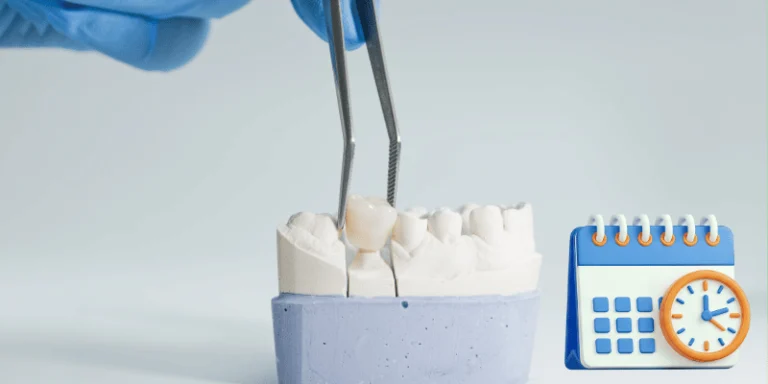
When you need a damaged tooth fixed, you want to save as much of your natural tooth as possible.
Onlays preserve more of your natural tooth structure than same-day crowns because they only cover the damaged areas, while crowns require removing more tooth material to fit over the entire visible tooth.
Understanding this difference between crown vs onlay dentistry helps you make the right choice for your dental health.
Same-day dental crowns offer speed and convenience since you can get them in one visit. Onlays are considered more conservative because they bond to just the damaged parts of your tooth. This keeps more of your healthy enamel intact.
Your dentist can use modern technology to create both options quickly with materials that look natural and last for years. The right choice depends on how much damage your tooth has and how much strength it needs. Both treatments restore your smile, but they work in different ways.
Key Takeaways
- Onlays preserve more natural tooth structure than crowns by covering only damaged areas
- Same-day technology allows you to get either restoration in a single dental visit
- Your choice depends on the extent of damage and how much protection your tooth needs
Table of Content
- How Same-Day Crowns and Onlays Preserve Tooth Structure
- When to Choose an Onlay vs a Crown
- Materials and Technology: Modern Restorative Options
- Longevity, Durability, and Success Rates
- Cost, Insurance, and Treatment Process Overview
- Caring for Your Onlay or Crown
- Frequently Asked Questions
How Same-Day Crowns and Onlays Preserve Tooth Structure
Both same-day dental crowns and onlays restore damaged teeth, but they preserve natural tooth structure in different amounts. Onlays remove less healthy tooth material than crowns, making them a more conservative option when appropriate for your situation.
Conservative Restoration Explained
Conservative restoration means removing only the damaged parts of your tooth while keeping as much healthy structure as possible. A dental onlay is designed to cover just the damaged areas, typically one or more cusps on the biting surface.
Your dentist removes only what is broken or decayed, then bonds the onlay directly to the remaining tooth.
Same-day crowns require more tooth reduction because they cap the entire visible portion of your tooth above the gumline. Your dentist must remove structure from all sides to create space for the crown to fit over your tooth.
This approach becomes necessary when large portions of your tooth are compromised.
A dental onlay preserves more natural tooth structure when your tooth walls remain strong, and damage is limited to specific areas. The partial crown approach of an onlay maintains the natural flexibility of your tooth by reinforcing only the weakened sections.
Comparison of Tooth Removal with Crowns vs Onlays
The amount of tooth structure removed differs significantly between these two restorations:
Dental Onlay:
- Removes only damaged cusps and decay
- Preserves outer tooth walls
- Maintains healthy enamel on sides of tooth
- Requires preparation only where needed
Dental Crown:
- Reduces tooth structure on all sides
- Removes 1-2 millimeters around entire tooth
- Creates space for full coverage cap
- Involves more extensive tooth preparation
Your dentist typically recommends an onlay when more than 50% of your natural tooth remains intact. Crowns become the better choice when extensive damage affects most of your tooth structure.
Why Preservation Matters for Long-Term Tooth Health
Preserving more natural tooth structure maintains your tooth’s inherent strength and reduces future complications. Your natural tooth enamel is stronger than any restoration material, so keeping it provides better long-term durability.
Bonding a dental onlay directly to your remaining enamel and dentin helps prevent future fractures. The preserved tooth structure continues to flex naturally during chewing, which distributes forces more evenly.
This natural flexibility reduces stress on both the restoration and your remaining tooth.
Conservative tooth restoration also means your tooth retains better blood supply and sensation. More natural structure typically leads to fewer sensitivity issues after treatment.
Your preserved tooth will likely require less intervention in the future compared to heavily reduced teeth.
When to Choose an Onlay vs a Crown
The choice between an onlay and crown depends on how much tooth damage exists and where it’s located. Your dentist looks at the size of decay or cracks, the tooth’s strength, and whether other treatments like inlays or fillings can work instead.
Assessing Tooth Damage
The extent of damage determines which restoration suits your tooth best. If decay or damage affects one or two cusps but leaves most of the tooth structure intact, an onlay works well. You keep more natural tooth this way.
When damage covers more than half the tooth or multiple cusps are weak, a crown becomes necessary. Crowns also make sense if your tooth has large cracks running deep into the structure.
For moderate damage that’s too big for dental fillings but doesn’t need full coverage, onlays offer a middle ground. They repair the damaged areas without removing healthy tooth material unnecessarily.
Clinical Indications and Decision-Making
Your dentist considers several factors during the decision process for dental restorations. Teeth that had root canal treatment usually need crowns because they become brittle and need full protection.
When choosing the right restoration, your bite force matters too. Back teeth that handle heavy chewing pressure often benefit from crowns. Front teeth with less stress can use onlays if damage is limited.
The onlay procedure preserves more tooth structure than crowns. This makes onlays better for restorative dentistry when you want to keep as much natural tooth as possible.
If future dental work might be needed, starting with an onlay leaves options open since enough tooth remains for a crown later if necessary.
Role of Inlays and Large Fillings
Dental fillings fix small cavities, while inlays handle slightly larger damage within the cusps. When decay spreads beyond the cusps or large fillings fail, you move up to onlays.
Restoration options by damage size:
- Small cavities: standard dental fillings
- Moderate damage inside cusps: inlays
- Damage affecting one or more cusps: onlays
- Extensive damage or weakness: crowns
Inlays sit between the cusps and don’t cover them. Onlays extend over at least one cusp. If you already have large fillings that keep breaking or leaking, an onlay provides stronger, longer-lasting protection.
This step-up approach in restorative dentistry helps you avoid jumping straight to a crown when a less invasive option can save your tooth effectively.
Materials and Technology: Modern Restorative Options
Today’s dental restorations benefit from advanced technology that can create custom crowns and onlays in a single visit. The materials used and digital scanning methods have improved the fit, strength, and appearance of both treatment options.
Same-Day Dentistry and CEREC Technology
CEREC technology allows your dentist to design, create, and place your restoration in one appointment. This system uses a computer and milling machine to craft your crown or onlay right in the office.
You won’t need temporary restorations or multiple visits. Same-day CAD/CAM solutions can complete certain restorations during a single appointment, saving you time away from work or family.
The same-day process works well for both crowns and onlays. Your dentist takes digital scans of your tooth, designs the restoration on a computer, and mills it from a ceramic block while you wait. The entire process typically takes two to three hours.
Types of Materials Used for Crowns and Onlays
Several materials are available for modern restorations. Porcelain and ceramic options are the most popular because they match your natural tooth color.
Lithium disilicate is a strong ceramic material commonly used for both crowns and onlays. It bonds well to your tooth structure and can withstand normal chewing forces. Porcelain crowns and porcelain onlays made from this material offer good durability and natural appearance.
Metal alloys are another option, particularly for back teeth. Gold and other metal crowns are extremely durable and require less tooth removal during preparation. However, most patients prefer tooth-colored materials for aesthetic reasons.
The choice of crown materials depends on which tooth needs restoration and your preferences. Your dentist will recommend the best option based on the location and extent of damage.
Digital Scans for Custom Restorations
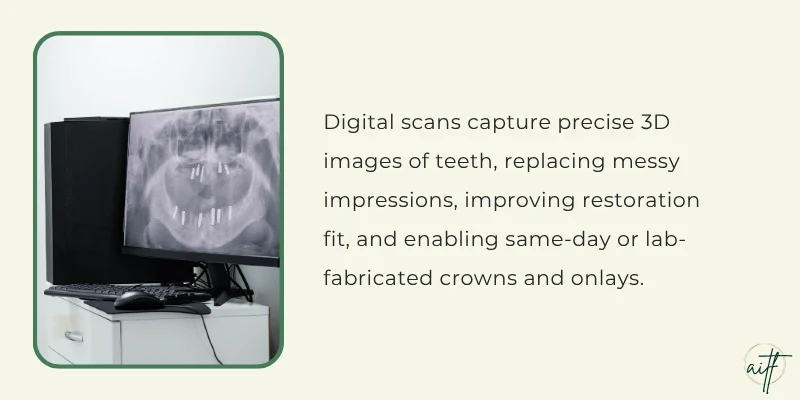
Digital scans have replaced messy impression trays in many dental offices. A small camera captures detailed 3D images of your teeth and gums.
These scans are more accurate than traditional impressions. Your dentist can see the digital image immediately and retake it if needed, ensuring a better fit for your final restoration.
The digital file goes directly to the milling machine for same-day restorations or to a dental lab for more complex cases. This technology improves the precision of both crowns and onlays, leading to better long-term results and fewer adjustments.
Both restorations offer reliable long-term performance when properly placed and maintained. Research shows that onlays and partial crowns perform as well as full crowns in terms of survival and success rates over multiple years.
Expected Lifespan of Onlays and Crowns
You can expect your onlay to last between 10 to 30 years with proper care. The wide range depends on factors like the material used and how well you maintain it.
Dental crowns typically last 5 to 15 years on average. Same-day crowns have survival rates of 90-95% after 5 years and around 85-90% after 10 years. Traditional crowns show similar longevity when you care for them properly.
Research on onlay versus crown longevity shows no significant difference in survival rates at 1 year and 3 years. Both types of dental restoration performed equally well in clinical studies.
The materials matter too. Ceramic and porcelain restorations generally outlast composite resin options. Your dentist can help you choose the best material for your specific situation.
Factors Affecting Restoration Success
Your oral hygiene habits play the biggest role in how long your restoration lasts. Brushing twice daily and flossing prevent decay around the edges of your onlay or crown.
Diet choices impact durability significantly. Hard foods like ice or nuts can crack or chip your restoration. Sticky candies may pull it loose over time.
If you grind your teeth at night, you might need a night guard to protect your restoration. Grinding creates excessive force that can damage even the strongest dental work.
The amount of remaining tooth structure affects success rates too. More natural tooth left after preparation means better long-term stability. This is where onlays have an advantage since they preserve more of your original tooth.
Regular dental checkups catch small problems before they become big ones. Your dentist can spot early signs of wear or decay around your restoration.
Long-Term Tooth Preservation

Onlays preserve significantly more of your natural tooth structure. Studies show they remove only 35.5 to 46.7% of tooth tissue during preparation.
Full crowns require removing 67.5 to 75.6% of your tooth structure. That’s nearly twice as much tooth lost compared to a partial crown or onlay.
Keeping more natural tooth tissue strengthens your overall tooth health. Your preserved tooth structure provides better support and is less likely to crack or fail over time.
The adhesive technology used with onlays actually reinforces your remaining tooth. This bonding process helps distribute chewing forces more evenly across your tooth.
Once you remove tooth structure for a crown, you can never get it back. If your crown fails years later, you’ll need an even larger restoration since less natural tooth remains.
Longevity, Durability, and Success Rates
cSame-day crowns typically range from $800 to $1,500 per tooth, while onlays cost between $650 and $1,200.
Both procedures follow similar appointment structures, though same-day options complete everything in one visit compared to traditional methods requiring two appointments with temporary restorations.
Procedure Steps: What to Expect
Your dentist will start by numbing the area and removing decay or damage from your tooth. For same-day crowns, a digital scanner captures images of your prepared tooth. The crown is then designed on a computer and milled in the office while you wait, usually taking 1-2 hours total.
Traditional crowns and onlays require impressions of your tooth. Your dentist sends these to a lab where technicians create your restoration over 2-3 weeks. You’ll receive a temporary restoration to protect your tooth until the permanent one arrives.
At your second appointment, your dentist removes the temporary and cements the permanent restoration.
Dental onlays preserve more tooth structure than crowns because they only cover the damaged portion. The preparation process is less invasive. Your dentist removes less healthy tooth material, which helps maintain your tooth’s natural strength.
Cost, Insurance, and Treatment Process Overview
Dental crowns average between $800 and $2,500 without insurance, depending on the material used. Onlays generally cost 10-20% less because they require less material and lab work.
Most dental insurance plans classify both as major procedures. Your plan typically covers 40-50% of the cost after you meet your deductible. Some insurers may have annual maximums of around $1,500-$2,000, which could affect your out-of-pocket expenses.
Same-day options might cost slightly more upfront, but you save on the second appointment and temporary restoration fees. You also avoid taking additional time off work. Payment plans are often available if you need to spread costs over several months.
Temporary and Emergency Restorations
A temporary restoration protects your prepared tooth between appointments for traditional crowns and onlays. These are made from acrylic or composite materials that aren’t as strong as permanent restorations.
You need to avoid sticky or hard foods while wearing a temporary. Be gentle when brushing around it. Call your dentist right away if your temporary falls off or breaks, as your prepared tooth is vulnerable without protection.
Temporary onlay coverage is thinner than crown temporaries since less tooth structure was removed. This makes them slightly more fragile. Same-day procedures eliminate the need for temporaries entirely, reducing your risk of complications between appointments.
Caring for Your Onlay or Crown
Both restorations need regular care to last as long as possible. Daily cleaning and regular dental visits help prevent damage and keep your restoration working properly.
At-Home Maintenance Tips
Brush your teeth twice daily with a soft-bristle toothbrush and fluoride toothpaste. Pay special attention to the area around your onlay or crown where it meets your natural tooth. This spot can collect food and bacteria if not cleaned well.
Floss once a day to remove plaque between your teeth. Slide the floss gently along the sides of your restoration rather than snapping it down hard. You can also use a water flosser if regular floss feels difficult to use.
Avoid chewing on hard objects like ice, pens, or hard candy. These can crack or chip your restoration. If you grind your teeth at night, ask your dentist about a night guard to protect your onlay or crown.
Professional Follow-Up and When to Seek Help
Visit your dentist every six months for cleanings and exams. Your dentist will check your restoration for signs of wear, damage, or looseness. Proper care is essential to ensure longevity and maintain your oral health.
Call your dentist right away if your restoration feels loose or falls out. Also contact them if you notice pain, sensitivity that doesn’t go away, or a change in how your bite feels. Rough edges or cracks in the restoration also need quick attention.
Watch for signs of decay around the edges of your crown or onlay. Dark spots or bad breath from that area might mean bacteria are getting underneath.
Frequently Asked Questions
Choosing between same-day restorations involves understanding how much tooth structure each option preserves, what your specific damage requires, and how long each restoration typically lasts.
What factors should I consider when choosing between an onlay and a crown?
The extent of damage to your tooth matters most when deciding between these options. If your tooth has significant decay or large cracks that affect multiple surfaces, a crown provides the full coverage you need.
An onlay works better when damage is moderate and tooth walls remain structurally sound.
Your dentist will also consider the location of your tooth. Back teeth that handle heavy chewing pressure might need the extra protection a crown offers.
How much natural tooth structure remains plays a key role too. Onlays preserve more of your original enamel, which keeps your tooth stronger over time. Crowns require reshaping the entire tooth to fit properly.
How do the costs typically compare between getting an onlay and a full crown?
Crowns generally cost more than onlays because they involve more material and preparation work. The dentist must reshape your entire tooth and create a restoration that covers all surfaces.
Onlays can be more cost-effective for smaller restorations. They require less tooth removal and use less material overall.
Your dental insurance coverage may affect your final cost. Some plans cover a portion of both procedures, but you should check with your provider about specific benefits.
Can you tell me about the longevity and durability of onlays versus crowns?
Both restorations can last 10 to 15 years or longer with proper care. Crowns tend to last longer under heavy chewing pressure, sometimes reaching 20 years when well-maintained.
Onlays typically last 8 to 15 years. They maintain their strength while protecting the surrounding natural enamel, which reduces your risk of future decay.
Your oral hygiene habits directly affect how long either restoration lasts. Brushing twice daily, flossing carefully around the treated tooth, and avoiding hard foods all help extend the life of your restoration. Regular dental check-ups every six months catch potential problems early.
What are the major differences in benefits and drawbacks of choosing an onlay over a crown?
The main benefit of an onlay is tooth preservation. You keep more of your natural enamel, which maintains your tooth’s inherent strength. Less tooth removal also means a less invasive procedure overall.
Onlays blend strength with conservation, making them ideal for moderate damage. They bond directly to your tooth for a strong, seamless fit.
The drawback is that onlays don’t work for extensive damage. If your tooth has severe decay or multiple large cracks, you need the comprehensive protection crowns provide.
Crowns offer maximum protection and coverage for weakened teeth. They completely encase the visible part of your tooth, providing superior strength. However, crowns require more natural tooth structure to be removed during preparation.
Is an onlay or a crown more suitable for a tooth that’s cracked?
The size and location of the crack determine which option works best. Small to moderate cracks that affect one or two cusps can usually be treated with an onlay.
Deep cracks that extend below the gum line or affect multiple tooth surfaces need a crown. The full coverage protects the entire tooth and prevents the crack from spreading.
Your dentist will examine the crack carefully using X-rays and visual inspection. If the remaining tooth structure is strong enough to support an onlay, this more conservative option preserves healthy enamel.
Teeth that have had root canals often need crowns regardless of crack size. The procedure weakens the tooth structure, making full coverage necessary.
Should I opt for a porcelain onlay or a crown for my dental restoration?
Porcelain works well for both onlays and crowns. It matches the color and texture of your natural teeth, making the restoration blend in seamlessly.
For front teeth where appearance matters most, porcelain crowns provide a uniform look. They can improve not just strength but also the shape and color of your smile.
Porcelain onlays offer excellent aesthetics while preserving more tooth structure. They’re custom-made to fit precisely over the damaged area. The material is strong enough to handle normal chewing forces while looking natural.
Your choice depends more on how much damage exists than on the material itself. Both porcelain onlays and crowns offer long-lasting results when properly bonded and maintained.