If you feel nervous about medical or dental procedures, IV sedation might be a good choice to help you stay calm. IV sedation works quickly and lets your doctor control how relaxed you feel throughout the process.
It’s often used for longer or more complex treatments where you need a deeper level of relaxation. Not everyone needs IV sedation, but if you have strong anxiety or a procedure that can take a while, this option may give you the comfort you need.
It’s different from oral sedation because it acts faster and can be adjusted during the appointment. Talking with your healthcare provider can help you decide if IV sedation is the right fit for you.
Key Takeaways
- IV sedation offers fast, controlled relaxation during procedures.
- It suits people with high anxiety or long treatments.
- Your healthcare provider will guide you in choosing the best sedation option.
What Is IV Sedation?
IV sedation helps you feel deeply relaxed during medical or dental procedures. It works fast and keeps you calm without making you fully unconscious.
Understanding how it works and how it differs from general anesthesia can help you decide if it’s the right choice for your needs.
How IV Sedation Works
With IV sedation, medicine is given directly into your vein through a small tube. This method brings the sedative quickly into your bloodstream, making you feel calm and drowsy within minutes.
You may stay aware enough to respond to simple questions or instructions, but you will likely feel very relaxed or even drift in and out of sleep. IV sedation often leads to partial or complete memory loss of the procedure, so you may not remember much afterward.
Because it works quickly and can be adjusted during your treatment, it offers a safe way to control anxiety and pain. You’ll need someone to drive you home since it wears off gradually.
Comparison to General Anesthesia
General anesthesia, unlike IV sedation, causes you to become fully unconscious. This means you won’t be awake or aware during your procedure.
It’s often used for major surgeries or very long treatments that require complete stillness and no awareness. IV sedation is less intense and doesn’t carry all the risks tied to general anesthesia.
You stay conscious, can follow simple directions, and recover faster afterward. The right choice depends on your health, anxiety level, and how complex your treatment is.
Who Should Consider IV Sedation?
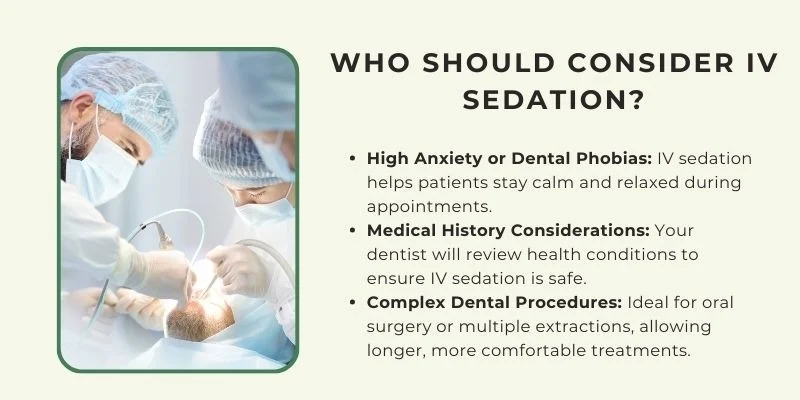
IV sedation can be a great choice if your dental visit causes high anxiety, if your health requires extra care, or if your treatment is complex. It provides a steady, controlled level of relaxation that helps many patients feel calm and safe during their dental work.
Dental Anxiety and Phobias
If you feel very anxious or scared about visiting the dentist, IV sedation may help you manage those feelings better. This type of sedation works faster and deeper than oral sedation, helping you stay calm during even long or difficult appointments.
Dental anxiety is more common than many people realize. Studies show that about 36% of people in the U.S. have a fear of dental treatment, and around 12% experience extreme dental fear.
For people with serious dental phobias, IV sedation can reduce stress to a level that allows treatment to happen smoothly. You will remain conscious but relaxed, and you won’t remember much of the procedure.
Medical History and Eligibility
Your health plays a big role in deciding if IV sedation is right for you. Certain medical conditions or medications may affect how safe IV sedation is.
Your dentist will review your medical history carefully before recommending this option. People with heart or lung problems, or allergies to sedation drugs, might need extra evaluation.
Sometimes, oral sedation can be a better choice if IV sedation carries risks due to your health status. Always share your full medical history so your care team can choose the safest method.
Complex Dental Procedures
When you face more difficult dental work, like oral surgery or multiple extractions, IV sedation often makes the process easier. It helps keep you calm and still for longer treatments without causing discomfort.
IV sedation also allows your dentist to adjust the sedation depth during the procedure. This kind of control is especially helpful when the work might be painful or take a long time.
IV sedation can make complex dental procedures more comfortable and manageable. Book a visit in Evansville, IN, to discuss sedation options for your upcoming treatment.
IV Sedation vs. Other Sedation Options
When deciding on sedation for a procedure, it’s important to know what each method offers in terms of comfort, awareness, and recovery. Some options help you stay awake but relaxed, while others guide you into a deeper state of unconsciousness.
The choice will depend on your anxiety level, the type of procedure, and your personal health.
IV Sedation vs. Oral Sedation
Oral sedation is taken as a pill and works by making you feel calm and relaxed. You stay awake and can respond to your dentist, but you may feel a bit drowsy or dreamy.
Recovery is quick, usually letting you get back to normal activities soon after your treatment. IV sedation, on the other hand, involves medication through a vein.
It acts faster and more deeply, making you drowsy or sometimes partially unconscious. You might not remember much about the procedure, and recovery takes longer.
You will need someone to take you home. Oral sedation is easier and less costly, but IV sedation provides stronger relief, especially for longer or more complex treatments.
Your medical history and how nervous you are will affect which option suits you best.
IV Sedation vs. Conscious Sedation
Conscious sedation usually refers to oral medication that relaxes you but keeps you awake and able to follow instructions. It often feels like a light, dreamy state without full sleep.
This method is great if you want some relaxation without losing control. IV sedation induces a deeper level of sedation where you might drift in and out of consciousness.
You may not be able to respond during the procedure, and memory of the event might be blurred or gone afterward. Because of this, you need more care while recovering.
Both reduce anxiety, but conscious sedation lets you stay more aware, while IV sedation offers stronger relaxation and suits patients with severe fear or for complex procedures.
Your dentist can help you compare these sedation dentistry options based on your needs and health.
Choosing the Right Sedation for You
Your anxiety level and the procedure’s complexity play big roles in picking sedation. If you have mild anxiety or a simple treatment, oral or conscious sedation could be enough.
For severe anxiety or longer dental work, IV sedation might be better. Your medical history also matters.
Some health conditions or medications might limit what sedation you can safely receive. Cost and recovery time are additional factors to think about.
Communicate openly with your dentist about your fears, medical background, and preferences. They will guide you through the sedation options and help choose the safest, most comfortable experience for you.
Benefits and Considerations of IV Sedation
IV sedation offers a way to feel relaxed and calm during dental care while managing pain effectively. It comes with some potential side effects and risks you should know about before deciding if it fits your needs.
Level of Comfort and Relaxation
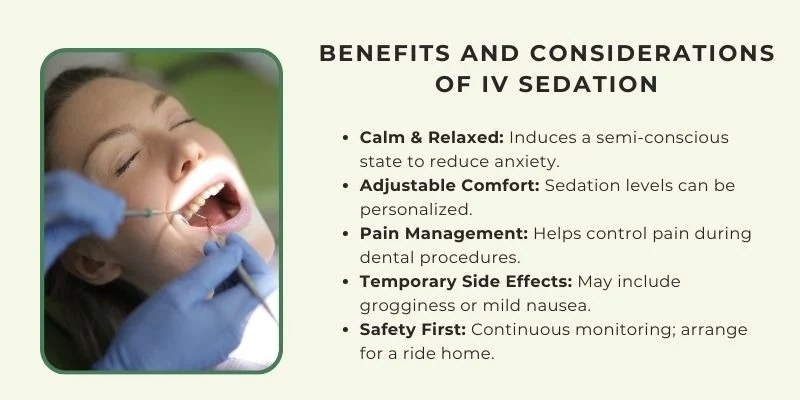
With IV sedation, you enter a calm, semi-conscious state, often called a “twilight” state. You stay awake but deeply relaxed, which helps reduce anxiety during your procedure.
This is especially helpful if you have a fear of dental visits or a sensitive gag reflex. Your provider can adjust the sedation level in real time through the IV, so you get just the right amount of relaxation.
Many patients say time feels shorter, so the procedure seems to pass quickly. This helps you feel more comfortable and less stressed before, during, and after dental care.
Pain Management During Dental Care
IV sedation helps control pain alongside local anesthetics used during dental treatment. The sedative not only relaxes you but also dulls pain sensations.
This combination allows complex or longer procedures to be done with minimal discomfort. Because the medication goes directly into your bloodstream, the effect is fast and reliable.
You won’t feel the usual strain caused by dental tools or injections as strongly. This makes IV sedation a good option if you have a low pain tolerance or need extensive dental work.
Potential Side Effects and Risks
While IV sedation is generally safe when given by trained professionals, some side effects can occur. Common ones include temporary grogginess, dry mouth, or mild nausea after the procedure.
Clinical data support the safety of IV sedation in dental settings. In a 2025 report reviewing 274 IV sedation cases, there were no serious adverse events, and only 2.9% of patients experienced short-term nausea or vomiting.
The overall sedation success rate was 98.9%, indicating that IV sedation is both effective and well-tolerated when properly administered.
Certain people might face more risks, such as those who are pregnant, have specific medical conditions, or are on certain medications. It’s important to share your full health history so your provider can decide if IV sedation is right for you. Your vital signs are closely monitored during sedation to keep you safe at all times. You’ll need someone to drive you home and help you rest afterward until the effects wear off.
Still have concerns about IV sedation safety? Schedule an appointment with us in Evansville, IN to discuss your health history and sedation options with our team.
What to Expect Before, During, and After IV Sedation
IV sedation is designed to help you feel calm and relaxed during a dental procedure. You’ll prepare in advance, experience careful monitoring, and follow simple steps afterward to recover safely and comfortably.
Preparing for Your Appointment
Before your appointment, your medical history and any medications you take will be reviewed. This helps your care team create a safe plan just for you.
You’ll be asked to fast for several hours, usually starting after midnight or at least 6-8 hours before your procedure. This means no food or drinks, including water.
It’s important to arrange for someone to drive you home. Sedation effects can last for hours, so you can’t drive or operate machinery afterward.
Wear comfortable clothes and avoid wearing jewelry or contact lenses. Following these steps will prepare your body and mind for the sedation and procedure ahead.
Monitoring and Safety Measures
During the procedure, the IV delivers sedation medicine right into your bloodstream. You will likely stay conscious but feel very relaxed or sleepy.
You might notice a warm or floating feeling soon after the sedation starts. Your vital signs, like heart rate, breathing, and oxygen levels, will be closely watched by your care team.
This ensures you stay safe and comfortable throughout. You may have little or no memory of the procedure once it’s done, which helps reduce anxiety about dental visits.
Recovery and Aftercare Tips
After your procedure, you will probably feel groggy or tired. Rest for the rest of the day and avoid making important decisions or doing heavy activity.
Mild side effects like dry mouth, slight nausea, or a headache can happen but usually pass quickly. Keep water nearby and sip it slowly to stay hydrated.
Don’t eat solid foods until you feel ready and your doctor or dentist says it’s okay. Having a trusted person stay with you is important for safety and support during recovery.
If you experience unusual symptoms, contact your healthcare provider right away. For more details on what happens during IV sedation, visit what to expect before, during, and after IV sedation.
Have questions about recovery or IV sedation care? Contact us in Evansville, IN for guidance and post-procedure support.
Frequently Asked Questions
IV sedation helps you stay calm and comfortable during dental work. You will likely feel relaxed and may have little memory of the procedure.
Afterward, recovery is usually quick, but you will need someone to drive you home.
What can I expect during and after IV sedation dentistry?
During IV sedation, you will be in a semi-awake state. You won’t feel pain, and your dentist can adjust sedation levels as needed.
You might feel drowsy but can respond to commands. After the procedure, you may feel a bit groggy.
It’s important to rest and have someone drive you home because your reflexes and judgment will be slowed. Most people recover well by the next day.
How does IV sedation compare to laughing gas?
Laughing gas is a mild form of sedation you breathe in. It works fast but wears off quickly, letting you drive yourself home after treatment.
IV sedation is stronger and given directly into your vein. It lasts longer and creates a deeper relaxation.
Unlike laughing gas, IV sedation usually needs someone to take you home.
Are there any discomforts or pain associated with IV sedation?
Most people do not feel pain under IV sedation. You might feel a small pinch when the needle is placed for the IV.
During treatment, discomfort is rare because the sedation blocks pain signals well. Your dentist will make sure you stay comfortable the entire time.
What are the common side effects or unusual behaviors after IV sedation?
Some people feel nausea, dizziness, or a headache after sedation. You might also feel tired or confused for a short time.
Memory loss about the procedure is common and expected. Strange behaviors are rare but can happen, so your dentist closely watches you throughout.
Who may not be suitable for IV sedation procedures?
People with certain health problems like severe heart, lung, or liver issues might not be good candidates for IV sedation.
Pregnant women or those allergic to sedation drugs should talk to their doctor first. Your medical history will be carefully reviewed before the dentist suggests IV sedation.
What are the potential drawbacks of choosing IV sedation?
IV sedation requires more preparation, like arranging a ride home. It can cost more than lighter sedation options.
You may need to avoid eating or drinking for some hours before your appointment. Some patients feel groggy or unsteady after, so recovery time is needed.