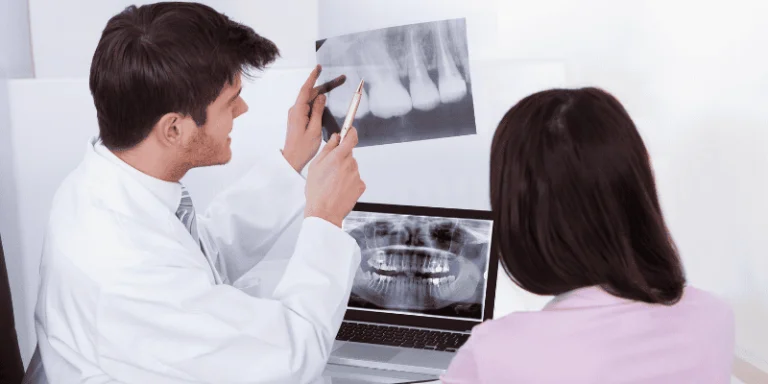
Losing jawbone density can feel like a major barrier to getting dental implants. Many patients worry that bone loss will prevent them from qualifying for a permanent tooth replacement.
All-on-4 implants for bone loss use strategically angled titanium posts to anchor in denser bone areas, which means most patients with bone loss can skip bone grafting and still get a full arch of teeth in a single day.
This treatment works differently from traditional implants because it only requires four implants per arch instead of six to eight. The back implants are tilted at 30 to 45 degrees to make contact with stronger bone and avoid areas of bone deterioration.
You can walk out of your appointment with a working set of temporary teeth attached to those implants right away.
Understanding how All-on-4 works for patients who have experienced bone loss helps you make an informed decision about your dental health. This guide covers what makes you a good candidate, what happens during the procedure, how to care for your new teeth, and what results you can expect long-term.
Key Takeaways
- All-on-4 implants use angled placement to avoid areas of bone loss and typically eliminate the need for bone grafting procedures
- You receive temporary teeth on the same day as your surgery and can expect full healing within three to six months
- Proper daily cleaning and regular dental visits help All-on-4 implants last for decades, with a success rate around 98%
How All-on-4 Dental Implants Address Bone Loss
All-on-4 dental implants work differently from traditional options by using angled placement and strategic positioning to make the most of your existing jawbone. This approach often eliminates the need for bone grafting procedures, even when you have experienced significant bone loss.
Strategic Placement and Angled Implants
The All-on-4 technique uses four dental implants placed strategically in your jaw to support a full arch of replacement teeth. The two front implants go straight into your jawbone, while the two back implants are placed at an angle of up to 45 degrees.
This angled placement is key to working around bone loss. By tilting the posterior implants, your dentist can position them in areas where you still have adequate bone density. The angle also increases the contact between the implant and your existing bone, which creates a stronger foundation.
The angled design lets you avoid areas where bone resorption has occurred. This means you can get implants even if you’ve been told you don’t have enough bone for traditional implants.
Minimizing the Need for Bone Grafting
Traditional implants usually require bone grafting when your jawbone has deteriorated too much. This adds months to your treatment time and increases costs. All-on-4 implants often avoid the need for bone grafting by maximizing your available bone.
The angled placement of the back implants allows them to anchor in denser areas of your jaw. They can use bone that exists toward the front of your mouth or along the sinus area without penetrating these sensitive structures.
In most cases, you won’t need a bone graft before getting All-on-4 implants. This means fewer procedures, less healing time, and lower overall costs. You can often get your new teeth in just one day instead of waiting six months or more for bone grafts to heal.
Difference from Traditional Implants
Traditional implants require vertical placement directly into the jawbone beneath each missing tooth. When you have bone loss, this method doesn’t work without first building up your bone through grafting procedures.
All-on-4 implants use only four implants per arch instead of six to eight that traditional full-arch restorations require. The reduced number of implants combined with strategic angling means you need less bone volume overall to support your new teeth.
Traditional implants also put stress on limited bone in a vertical direction. All-on-4 distributes forces across a wider area through the angled design. This helps preserve your remaining bone and can actually prevent further bone loss by stimulating your jawbone through normal chewing forces.
Patient Candidacy and All-on-4 Consultation
Your journey toward All-on-4 implants begins with a thorough evaluation to determine if this treatment matches your specific needs. The consultation process involves detailed imaging, bone assessment, and discussion of your oral health status to create a personalized treatment plan.

Assessing Jawbone Density and Oral Health
Your dental implant specialist will carefully examine your current oral health during the initial consultation. This includes checking for gum disease, identifying any remaining teeth that need removal, and evaluating the condition of your jaw tissue.
Jawbone density plays a critical role in implant success. Your dentist will assess whether you have the minimum bone requirements, which typically include at least 10mm of bone height in the front of your jaw and about 5mm of bone width. The quality of your bone matters just as much as the quantity.
If you have active gum disease, it must be treated before implant placement. Your specialist will create a treatment plan to address any infections first, usually requiring a 4-6 week healing period before moving forward with implants.
Your overall health also gets reviewed during this assessment. Conditions like diabetes, osteoporosis, or heart disease don’t automatically disqualify you, but they need to be well-controlled. Good candidates for All-on-4 include those with managed health conditions and adequate immune function.
Bone Loss Doesn’t Mean No Implants. Visit our Evansville, IN dental office to find out if All-on-4 implants are a safe, effective option for you.
Role of CBCT Scan and Diagnostic Workup
A CBCT scan provides three-dimensional images of your jaw that are essential for proper planning. This advanced imaging technology allows your dentist to measure bone dimensions precisely and identify important structures like nerves and sinuses that must be avoided during surgery.
The scan takes only a few minutes and is painless. It creates detailed images that show:
- Exact bone height and width measurements
- Bone density in different areas of your jaw
- Location of nerves and blood vessels
- Sinus positions in the upper jaw
Your dentist uses this information to simulate implant placement before the actual procedure. This digital planning helps determine the best angles and positions for your four implants to maximize the use of your available bone.
Additional diagnostic tools include intraoral photos, bite measurements, and impressions of your mouth. These help design your prosthetic teeth to fit properly and look natural.
Determining Eligibility for All-on-4
Your eligibility depends on several factors that your specialist evaluates together. Ideal candidates are missing most or all teeth in an arch, are unhappy with dentures, or have significant bone loss but want to avoid grafting.
You’re likely a good candidate if you:
- Have adequate bone in the front region of your jaw
- Are in generally good health or have controlled medical conditions
- Don’t smoke or are willing to quit temporarily
- Can commit to proper oral hygiene after treatment
- Have realistic expectations about results
Some situations may require additional consideration. Heavy smoking reduces success rates by 30-40%, though it doesn’t automatically disqualify you. Uncontrolled diabetes or other serious health issues may need to be stabilized first.
Your All-on-4 consultation should include a discussion about costs, timeline, and what to expect during recovery. Don’t hesitate to ask questions about success rates, potential complications, or alternative options if All-on-4 isn’t right for your situation.
All-on-4 Procedure Step-by-Step
The All-on-4 procedure follows a systematic approach that takes you from initial planning through final tooth restoration. Each phase builds on the previous one to ensure your implants integrate properly and your new teeth function correctly.
Initial Examination and Digital Planning
Your All-on-4 journey starts with a comprehensive evaluation of your oral health and bone structure. Your dentist will take X-rays and 3D CBCT scans to assess your remaining bone density and determine the exact locations for implant placement.
These scans allow your dental team to create a digital treatment plan that maps out where each of the four titanium implants will go. The two front implants are positioned vertically, while the back two are angled up to 45 degrees to avoid areas with less bone and maximize contact with existing bone structure.
Your dentist will also discuss your medical history, current medications, and any health conditions that might affect healing. During this visit, you’ll see digital previews of your final prosthesis and discuss the materials and appearance of your new teeth.
Implant Surgery and Placement
On surgery day, you’ll receive local anesthesia or sedation to keep you comfortable throughout the implant placement. If you have remaining teeth that need removal, your dentist will extract them first before placing the implants.
Your dentist then creates small access points in your gums and jawbone for the four titanium implants. The strategically positioned implants are placed at precise angles determined during your digital planning phase.
This angled placement is what allows the All-on-4 procedure to work even when you have significant bone loss in the back of your jaw.
The entire implant surgery typically takes 2-3 hours per arch. Your dentist verifies each implant’s position and stability before moving to the next step.
Immediate Provisional Prosthesis
One of the biggest advantages of All-on-4 is that you can leave the dental office with functional teeth the same day. Your dentist attaches a temporary full-arch prosthesis to your newly placed implants within hours of surgery.
This provisional prosthesis is made from lighter materials than your final teeth but looks natural and allows you to eat soft foods right away. You’ll need to stick to a modified diet of soft foods like scrambled eggs, yogurt, mashed potatoes, and smoothies for the first several weeks.
Your temporary teeth serve an important function beyond aesthetics. They protect the healing implant sites and maintain proper spacing while your jaw heals.
Healing Period and Osseointegration
Over the next 3-6 months, your titanium implants undergo osseointegration, which is the process where bone cells grow around and fuse with the implant surface. This biological bonding creates the strong foundation your final prosthesis needs.
During this healing period, you’ll continue wearing your provisional teeth and following dietary restrictions. Your dentist will schedule follow-up appointments to monitor your progress and make any needed adjustments to your temporary prosthesis.
Once osseointegration is complete and your dentist confirms the implants are fully stable, you’ll return for impressions of your mouth. These impressions are used to create your permanent full-arch prosthesis, which is designed to last for decades with proper care.
Your final prosthesis is typically made from more durable materials like porcelain or zirconia and is custom-colored to match your natural appearance.
Trust Your Smile to All In The Family Dental. Schedule a visit to evaluate bone loss and determine whether All-on-4 implants are right for your needs.
Benefits and Smile Restoration
All-on-4 implants offer multiple advantages for patients dealing with bone loss, from stopping jaw deterioration to restoring your ability to eat and speak comfortably. These implants also help rebuild facial structure and bring back the natural appearance of your smile.
Preventing Further Bone Resorption
When you lose teeth, your jawbone starts to shrink because it no longer gets the stimulation it needs from tooth roots. The four titanium implants used in All-on-4 full-arch restoration act like natural tooth roots.
They transfer chewing forces directly into your jawbone. This stimulation signals your body to maintain healthy, strong bone tissue.
Key benefits for bone preservation:
- Stops continued bone loss in the jaw
- Maintains bone density over time
- Prevents the sunken facial appearance that comes with bone deterioration
- Protects the remaining bone structure from further damage
The implants integrate with your existing bone through a process called osseointegration. This creates a permanent foundation that keeps working to preserve your jaw for years to come.
Improved Stability and Oral Function
Traditional dentures can slip and slide when you eat or talk. All-on-4 provides implant stability that gives you back normal mouth function.
Your prosthetic teeth attach firmly to the four implants. You can bite with much more force than you could with removable dentures. This means you can eat foods you may have avoided for years, like apples, corn on the cob, or steak.
Speaking becomes easier too because the prosthetic teeth stay in place. You won’t deal with the clicking sounds or slurred speech that sometimes happens with loose dentures. The fixed nature of the restoration means you never have to remove it for cleaning or worry about it falling out at the wrong time.
Facial Aesthetics and Confidence
Bone loss changes the shape of your face over time. Your cheeks may look hollow, and your chin might appear closer to your nose. Smile restoration with All-on-4 helps reverse these changes.

The implants support your facial tissues from the inside. This fills out sunken areas and gives you back a more youthful appearance. Your prosthetic teeth are designed to match the natural look of real teeth in color, shape, and size.
Many patients report feeling more confident in social situations after getting their full arch restoration. You can smile, laugh, and eat in public without worrying about your teeth. The natural appearance means most people won’t even know you have implants unless you tell them.
Explore All-on-4 Solutions at All In The Family Dental. Get expert guidance, personalized care, and long-term implant solutions designed for patients with bone loss.
Risks, Complications, and Longevity
All-on-4 implants work well for many patients with bone loss, but they do come with risks you should understand. Knowing about potential problems and how long these implants typically last helps you make a better choice for your dental health.
Potential for Implant Failure
Implant failure happens when the metal posts don’t fuse properly with your jawbone. Approximately 5-10% of dental implants fail, mainly because the bone doesn’t grow around the implant correctly.
You might notice signs of failure like pain, swelling, or looseness around the implant area. The implant may also feel wobbly when you touch it or eat.
Several factors increase your risk of failure. Smoking reduces blood flow to your gums and slows healing. Health conditions like diabetes affect how your body heals and fights infection. Poor oral hygiene lets bacteria build up around the implants.
If you have existing bone loss, your dentist needs to plan carefully. The four implants must be placed at specific angles to get enough support from your remaining bone. Without proper placement, the implants won’t hold your new teeth securely.
Addressing Peri-Implantitis and Bone Loss
Peri-implantitis causes inflammation and infection in the tissues around your implants. This condition can lead to bone loss and implant failure if you don’t treat it.
The infection starts when bacteria collect around the implant posts. Your gums become red and swollen. They may bleed when you brush or floss. Over time, the infection destroys the bone supporting your implants.
Warning signs include:
- Bleeding gums around implants
- Bad breath that won’t go away
- Pus near the implant site
- Loosening of the prosthetic teeth
You can prevent peri-implantitis through good daily care. Brush twice a day and use special floss or water flossers designed for implants. Visit your dentist every six months for professional cleanings. Your dentist will check for early signs of infection and remove bacteria buildup you can’t reach at home.
How Long Do All-on-4 Implants Last?
All-on-4 implants typically last 15 to 25 years with proper care. Some patients keep their implants for life without major problems.
The prosthetic teeth attached to your implants usually need replacement every 10 to 15 years. Normal wear and tear breaks down the materials over time. The metal posts in your jawbone last longer than the visible teeth.
Your lifestyle choices affect how long your implants last. Smoking and pre-existing medical conditions significantly increase the risk of complications. If you smoke, your implants may fail sooner.
Taking care of your implants extends their lifespan. Brush and floss daily to prevent infection. Avoid chewing hard foods like ice or hard candy that can crack the prosthetic teeth. See your dentist regularly for checkups and cleanings. These visits catch small problems before they become serious.
Aftercare, Maintenance, and Cost Considerations
Taking care of your All-on-4 implants requires daily cleaning with specialized tools and regular dental visits to keep them working properly for years to come. The investment includes not just the initial procedure but ongoing maintenance costs that differ from traditional dentures.
Cleaning and Oral Hygiene
You’ll need to clean your All-on-4 implants twice daily just like natural teeth. A soft-bristled toothbrush works well for the visible surfaces of your prosthetic teeth.
The spaces underneath your prosthesis need special attention. Interdental brushes help clean under and around the prosthesis where food particles can get trapped. A water flosser is essential for flushing out debris from beneath the artificial gums and around the implant posts.
Your cleaning routine should take about 5-7 minutes. You’ll brush all surfaces, use interdental brushes underneath the prosthesis, and finish with a water flosser on medium setting. An alcohol-free antimicrobial rinse can help too.
Avoid these products:
- Abrasive whitening toothpastes
- Hard-bristled brushes
- Alcohol-based mouthwashes
- Regular denture cleaners
These can scratch your prosthesis or damage the implant components. Stick with non-abrasive toothpaste and products made specifically for implant care.
Follow-Up Visits and Long-Term Maintenance
Your All-on-4 dentist will want to see you every 3 months during the first year. After that, professional maintenance visits every 4-6 months help catch problems early.
During these visits, your dentist checks implant stability, examines the prosthesis for wear or damage, and professionally cleans areas you can’t reach at home. They may remove the prosthesis completely for deep cleaning and inspection.
The prosthetic teeth typically need replacement after 10-15 years depending on the material used. Acrylic teeth wear faster than zirconia. Small parts like fixation screws may need tightening every 5-7 years.
The titanium implants themselves usually last a lifetime with proper care, unlike removable dentures that need replacement every 5-7 years.
Cost of All-on-4 Implants
The cost of All-on-4 implants ranges from $15,000 to $30,000 per arch. This is higher than traditional dentures, which cost $1,000 to $3,000 per arch.
Your ongoing costs include professional cleanings at $150-300 per visit twice yearly. Annual comprehensive evaluations run $250-500. Budget for prosthesis replacement after 10-15 years, which can cost $5,000-$15,000 depending on materials.
Most dental insurance plans cover only a small portion since they classify implants as cosmetic. Some offices offer financing plans to spread payments over time.
The higher upfront investment pays off through better function, no daily removal like removable dentures, and potentially lower lifetime costs when you factor in denture replacements and adhesives.
Schedule Your All-on-4 Consultation With All In The Family Dental. Take the next step toward a stable, confident smile with a personalized treatment plan built around your oral health.
Frequently Asked Questions
Patients considering All-on-4 implants often want to know about costs, alternatives, and specialized techniques for severe bone loss. Understanding these details helps you make informed decisions about your dental care.
How much does the All-on-4 dental implants procedure typically cost?
The cost of All-on-4 dental implants varies based on your location, the complexity of your case, and any additional treatments you need. On average, you can expect to pay between $15,000 and $30,000 per arch.
This price typically includes the consultation, surgery, implants, and the prosthetic teeth. Some dental practices offer financing options to help make the treatment more affordable.
Keep in mind that the exact cost depends on several factors, so it’s best to consult with your dentist for a personalized estimate. Many patients find that the long-term benefits justify the investment.
Where can I find the most affordable All-on-4 dental implants?
You can find more affordable All-on-4 options by researching dental schools, comparing prices between practices, and looking into dental tourism. Dental schools often offer reduced rates because students perform procedures under expert supervision.
Some practices in areas with lower costs of living may charge less than those in major cities. You should always verify the credentials and experience of any provider before committing to treatment.
Financing plans through dental offices or third-party lenders can also make the procedure more manageable. However, don’t sacrifice quality for price, as poorly placed implants can lead to costly complications.
Is it possible to get dental implants without a bone graft, and how?
Yes, All-on-4 implants are specifically designed to work without bone grafts in many cases. The procedure uses four strategically placed implants, with two positioned at an angle in the back of your jaw to maximize contact with available bone.
This angled placement allows the implants to anchor in denser bone areas, avoiding regions with significant bone loss. The technique eliminates the need for time-consuming bone grafting procedures for most patients.
Your dentist will evaluate your specific bone structure to determine if you’re a candidate. In some cases where bone loss is extremely severe, alternative solutions like zygomatic implants may be necessary.
What are zygomatic implants and how do they relate to severe bone loss?
Zygomatic implants are specialized implants that anchor into the cheekbone (zygoma) instead of the jawbone. These implants provide a solution when you have severe bone loss in your upper jaw that makes traditional implants impossible.
The zygomatic bone is denser and doesn’t experience the same resorption as jaw bone after tooth loss. This makes it an ideal anchor point for implants when other options aren’t viable.
The procedure is more complex than standard All-on-4 and requires a surgeon with specialized training. Zygomatic implants can support a full arch of teeth and often don’t require bone grafting.
What are some budget-friendly alternatives to traditional dental implants?
Mini dental implants offer a less expensive option, though they’re not as strong as full-sized implants. Implant-supported dentures require fewer implants than full All-on-4 systems, potentially reducing costs.
Traditional removable dentures are the most affordable option but don’t prevent bone loss and may feel less secure. Some patients choose a hybrid approach, receiving implants in one arch and dentures in the other.
You might also consider getting treatment in stages if your budget doesn’t allow for full treatment at once. Each option has different benefits and limitations that you should discuss with your dentist.
Can you explain the 3/2 rule in the context of dental implants?
The 3/2 rule refers to the minimum amount of bone needed around a dental implant for long-term success. You need at least 3mm of bone on the outside (buccal) surface of the implant and 2mm between implants.
This spacing ensures adequate blood supply and reduces the risk of bone loss around the implants. The rule helps dentists determine proper implant placement and whether bone grafting is necessary.
With All-on-4 implants, the angled placement and strategic positioning help meet these requirements even when bone volume is limited. Your dentist will use imaging technology to measure your bone and plan implant placement according to these guidelines.